Tell us about the job
Takes about a minute. No obligation.

A contractor quoting a central AC repair in Big Stone County has to decide what actually wore the system down before settling on a scope of work. 123 severe weather events were recorded in Big Stone County, Minnesota between 2015 and 2024. At that rate, severe weather is a standing part of life here, but it lands often enough to stress equipment without being so relentless that it explains every failure on its own. Compressor wear, refrigerant loss, and electrical faults each have signatures a contractor reads from the hardware itself, and a system that has been poorly maintained or is simply old will show damage patterns that have nothing to do with what the sky did.
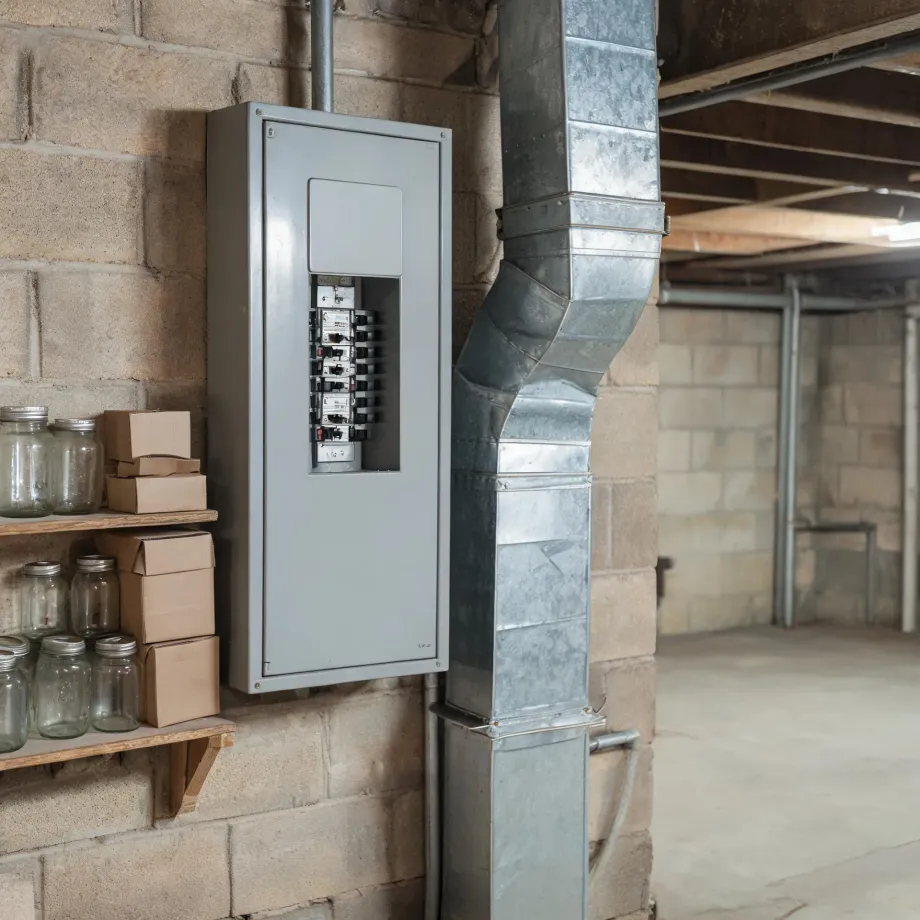
Ductwork and wiring that have been adapted across multiple equipment generations carry a repair history a contractor reads from what they find once the unit is open. Half the homes in Big Stone County, Minnesota were built in 1959 or earlier (2020-2024 ACS 5-year). Housing stock that old has seen systems come and go, and the central AC running in it today is working through whatever the previous owners left behind in the line set, the air handler, and the coil. When a part fails, the question a contractor has to answer is whether a replacement for that specific system is still in production or whether the repair opens into something larger.
The Parts of a Central AC a Contractor Checks First
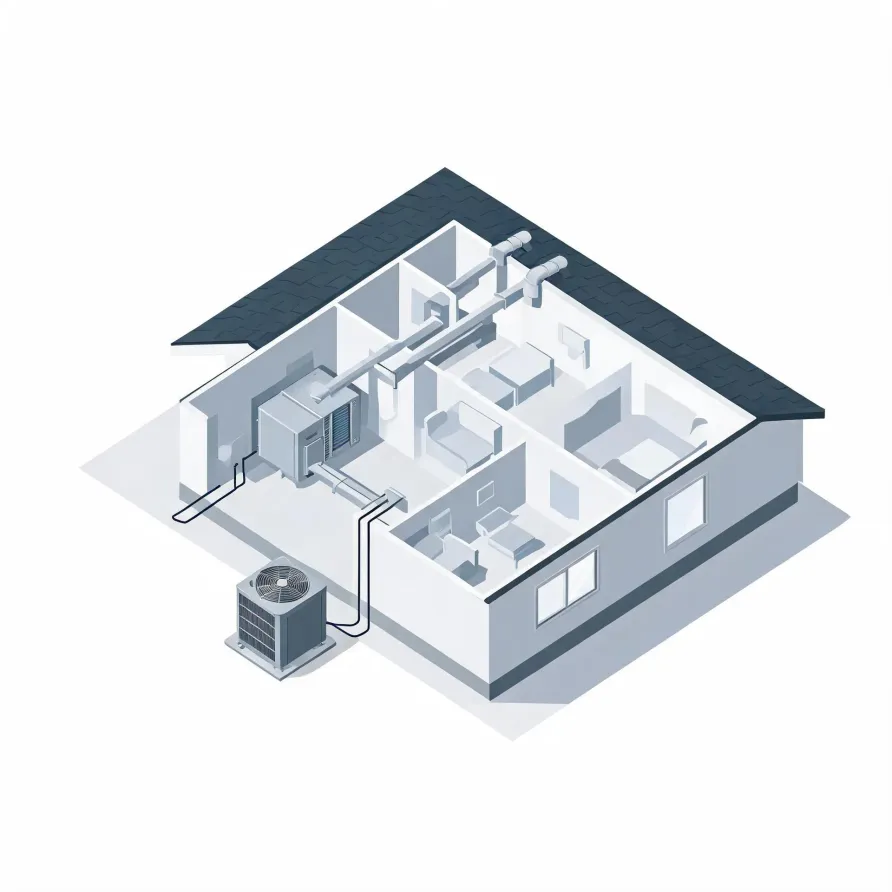
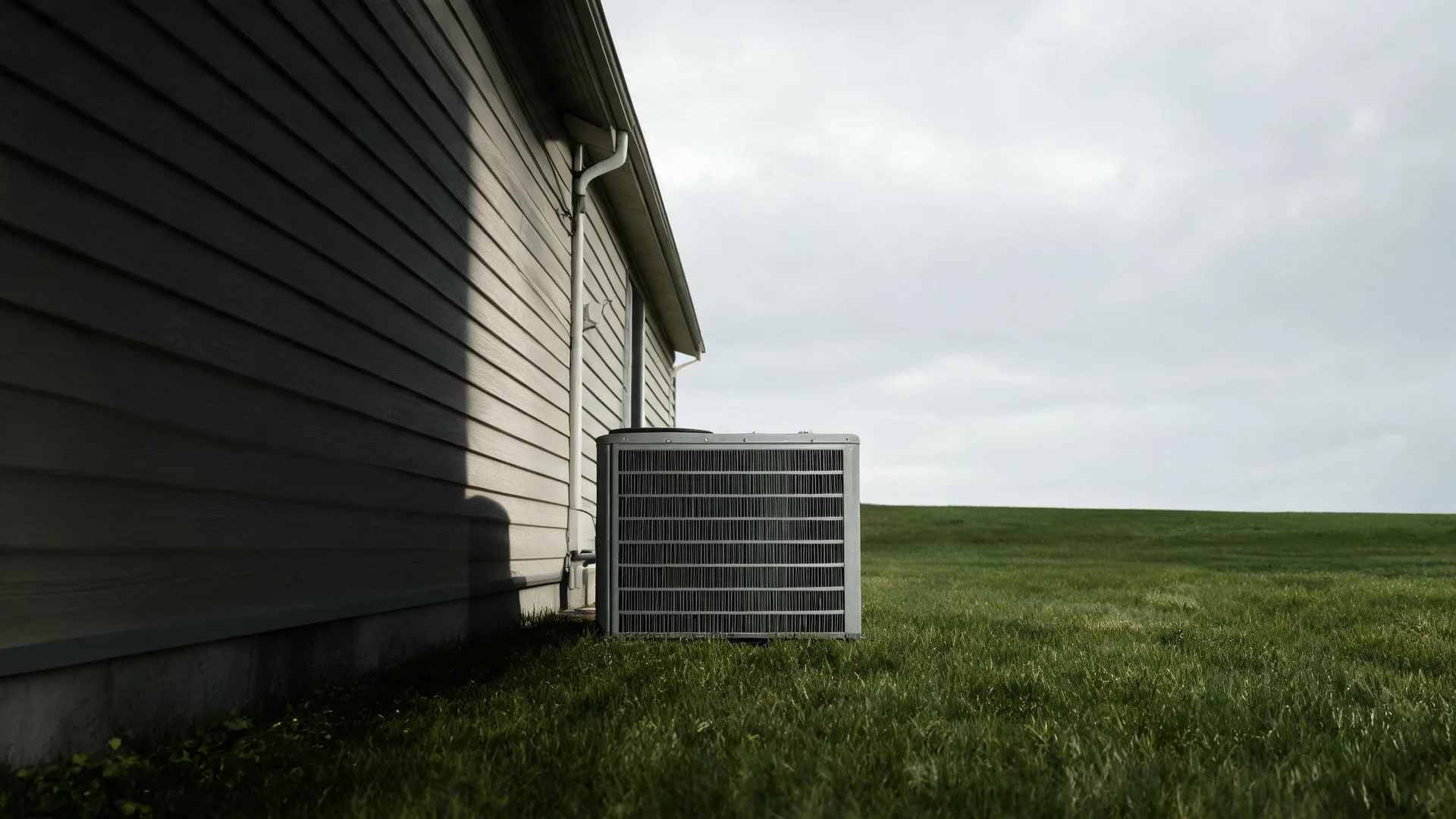
The outdoor condenser unit sits outside the house, usually on a concrete pad beside the foundation, and it holds the compressor and condenser coil. These are the pieces a contractor reaches first when the system stops cooling. The compressor is the most common source of serious failure, and the condenser coil is where dirt and damage show up plainly.
Inside the house, the air handler or furnace cabinet holds the evaporator coil and the blower, typically in a closet, basement, or utility room. The evaporator coil is a frequent culprit when cooling is weak or the unit ices over. The blower moves air across it and back through the house, and a failed motor there will stop airflow entirely. The refrigerant line set runs between the two units and carries the charge that makes the whole system work.
The drawing shows a typical layout, and a licensed contractor will determine which components apply to your specific system and what condition each one is in.
Find a contractor in Big Stone CountyBig Stone County, Minnesota, by the numbers
123 severe weather events were recorded in Big Stone County, Minnesota between 2015 and 2024.
NOAA National Centers for Environmental Information, Storm Events Database, bulk CSV export, events 2015-01-01 through 2024-12-31.Half the homes in Big Stone County, Minnesota were built in 1959 or earlier (2020-2024 ACS 5-year).
U.S. Census Bureau, 2020-2024 American Community Survey 5-Year EstimatesBig Stone County, Minnesota holds 3,001 housing units (2020-2024 ACS 5-year).
U.S. Census Bureau, 2020-2024 American Community Survey 5-Year EstimatesOwners occupy 79.7% of the occupied homes in Big Stone County, Minnesota (2020-2024 ACS 5-year).
U.S. Census Bureau, 2020-2024 American Community Survey 5-Year EstimatesCodes & Standards Governing Central AC Repair in Big Stone County, Minnesota10 sourced rules and standards
What HVAC Repair Looks Like in Big Stone County
Split-system central air conditioners rated below 45,000 Btu/h manufactured on or after January 1, 2023 must meet a federal minimum of 13.4 SEER2.
Split-system central air conditioners rated at or above 45,000 Btu/h manufactured on or after January 1, 2023 must meet a federal minimum of 13.4 SEER2.
Split-system central air conditioners manufactured between January 1, 2015 and December 31, 2022 had to meet 13 SEER, the metric that preceded SEER2.
Single-package central air conditioners manufactured on or after January 1, 2023 must meet a federal minimum of 13.4 SEER2.
Space-constrained central air conditioners manufactured on or after January 1, 2023 must meet a federal minimum of 11.7 SEER2.
Federal efficiency standards for split-system central air conditioners and heat pumps are set on each certified combination of outdoor unit and indoor coil rather than on the outdoor unit alone.
Residential and light commercial air conditioning and heat pump systems assembled in the field, including mini-splits and unitary systems, may not be installed on or after January 1, 2025 using a refrigerant with a global warming potential above 700.
A field-assembled system whose specified components were all manufactured or imported before January 1, 2025 carries no installation compliance date under the refrigerant restrictions and may still be installed.
Licensing Rules for HVAC Repair in Big Stone County, Minnesota
Minnesota defines a mechanical contractor as a business that installs, repairs or maintains heating, ventilating, cooling or refrigeration systems — the definition that carries the exemption from the residential contractor licence.
Minnesota's residential contractor licence does not reach HVAC work: the licensing section carries its own exemption list, and a mechanical contractor is exempt from the licence requirement by name.
Severe Weather Events in Big Stone County
Weather in Big Stone County puts real demands on cooling equipment. Stress from local conditions is a local repair question, and understanding that load is part of what a contractor here has to account for.
123 severe weather events, 2015–2024. Source: NOAA National Centers for Environmental Information, Storm Events Database.