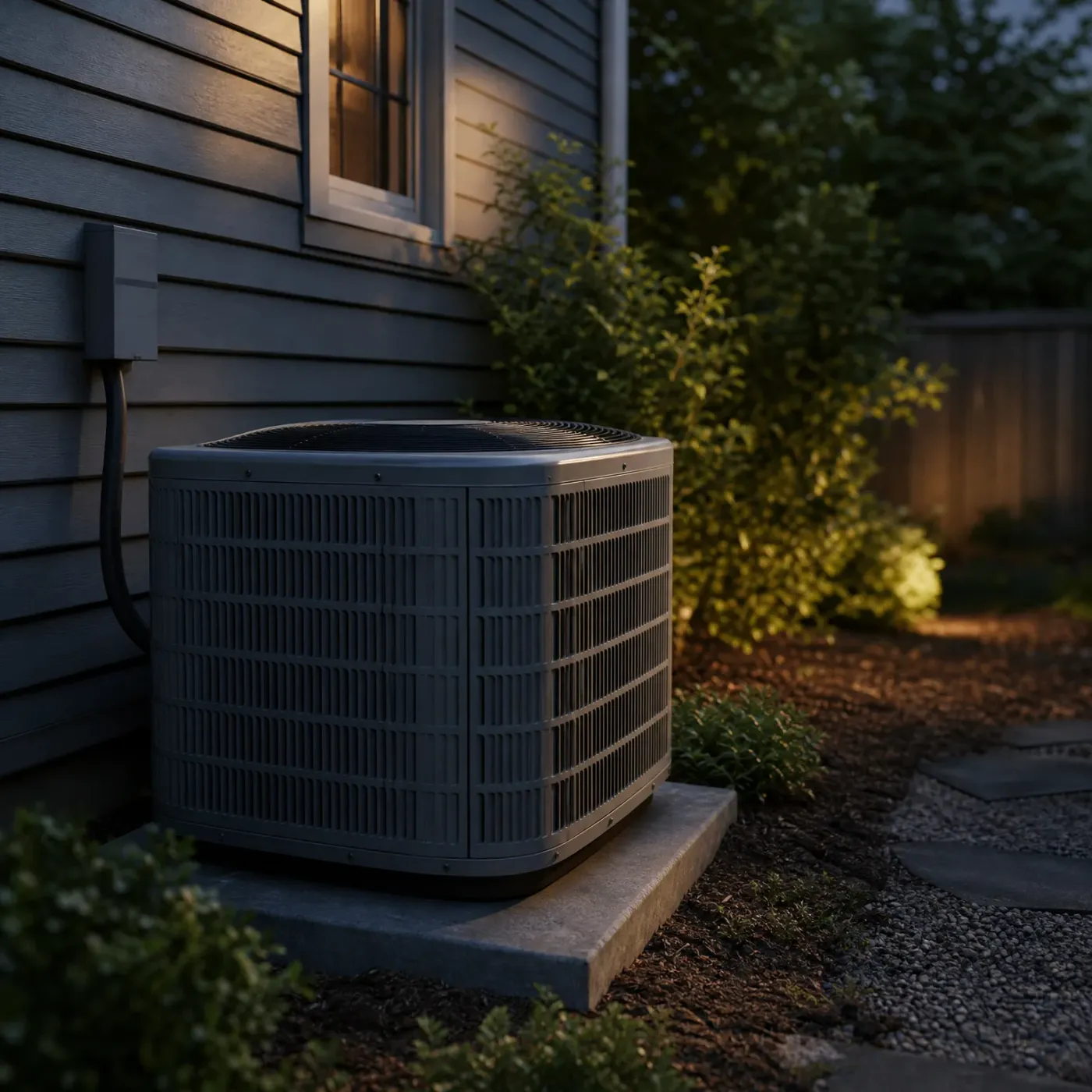
An outdoor air conditioner condenser unit on a concrete pad beside a gray horizontal-siding house at dusk, with a wall-mounted disconnect box, shrubs, and a gravel path with stepping stones nearby.

Matched to your air conditioner job

Central AC or mini split for a Minnesota home

Central air works with your ducts and keeps the whole house even. A mini split skips ductwork and lets you cool one room or a few, which matters if you've got an addition or a space the main system never reaches well. Minnesota summers don't push equipment as hard as the humid states, so this page looks at what fits your house. Send in your details and a contractor who installs both will reach out to go over which one makes sense for you.

Match me with a pro

Most Minnesota homes do fine with central air, since summers here rarely push a system hard the way they do further south. Central air also pairs naturally with a gas furnace, which is how most houses here heat, since the two can share the same ductwork and the same thermostat. A mini split makes sense in a different case: a room addition, a finished attic, a garage or porch the ductwork never reached. It cools that space on its own, without tying into the furnace's ducts at all. Some homes end up with both, central air for the house and a mini split for the one room that's always been too hot or too cold. The right choice depends on what you're actually trying to fix. If every room runs through the same ducts and stays close to the same temperature, central air is the simpler answer. If one space has never kept up with the rest, a mini split solves that without redoing ductwork for the whole house.

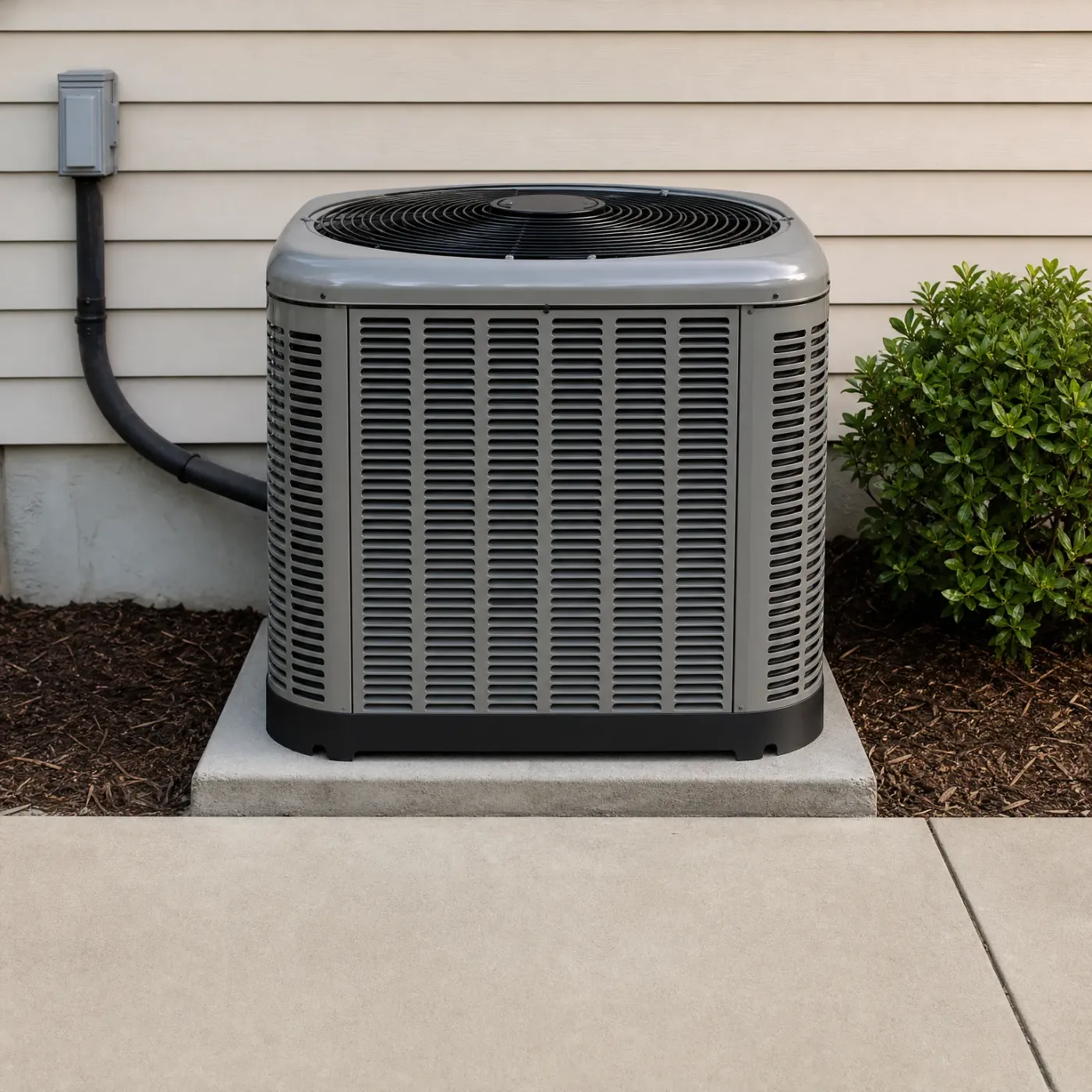
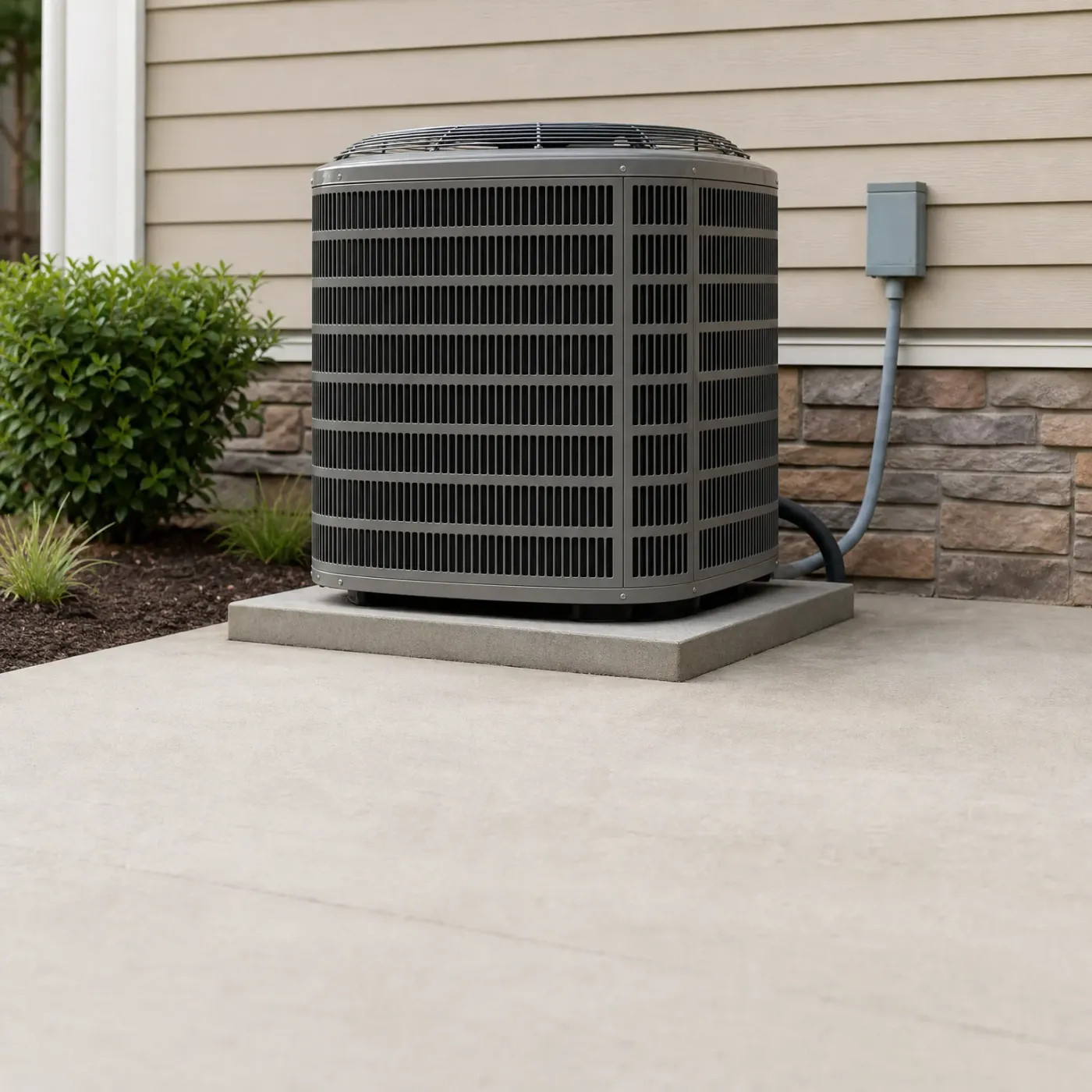
A gray outdoor air conditioning condenser unit on a concrete pad beside a house with horizontal siding and a stone veneer base, with a wall-mounted disconnect box and conduit, next to a shrub bed and a concrete patio.

Central air, holding up

This condenser sits on its pad doing what it's built to do, running the whole house off one system tied into your existing ducts. If yours looks like this, a straight swap when the time comes is usually the simplest path, since the ductwork and gas furnace pairing are already in place.
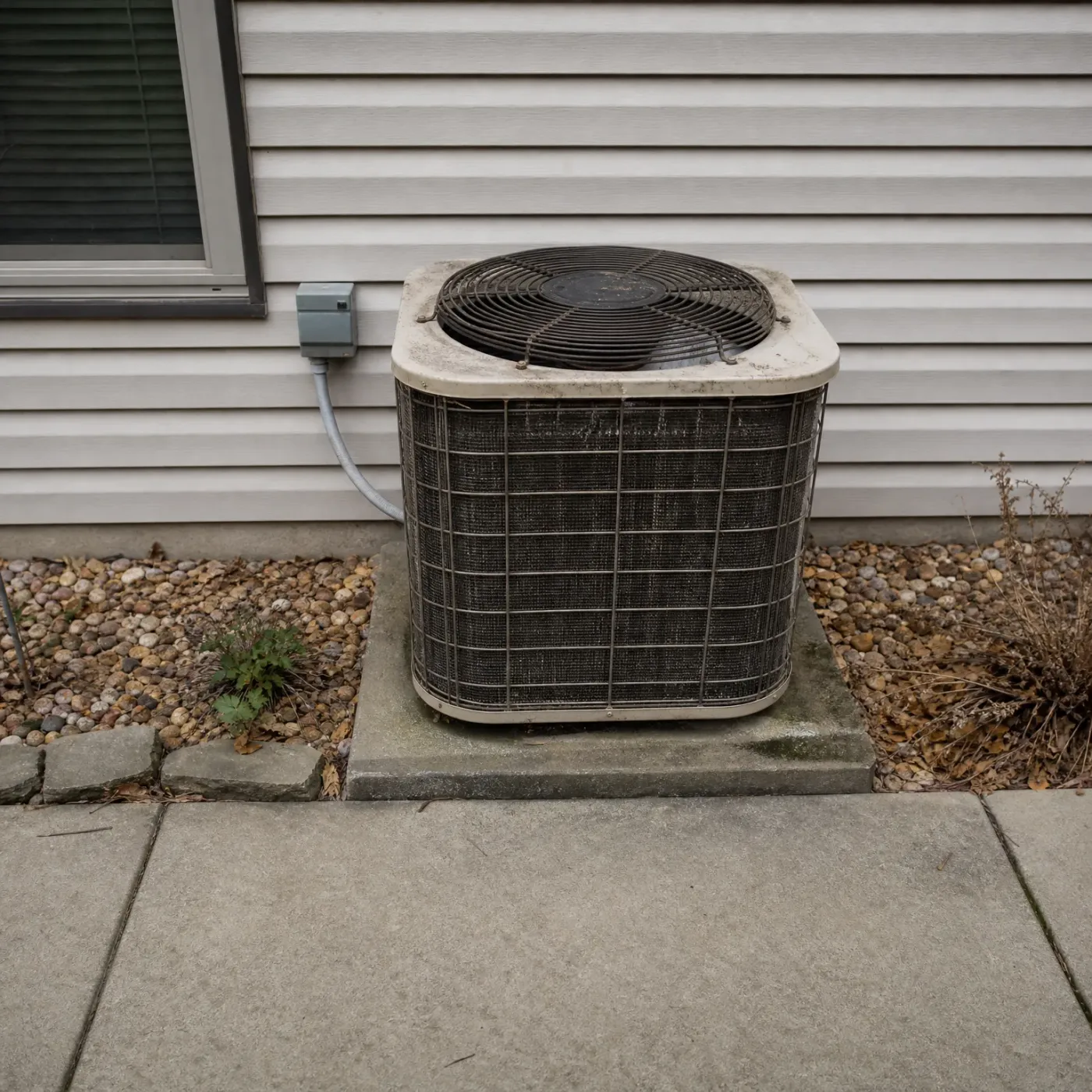

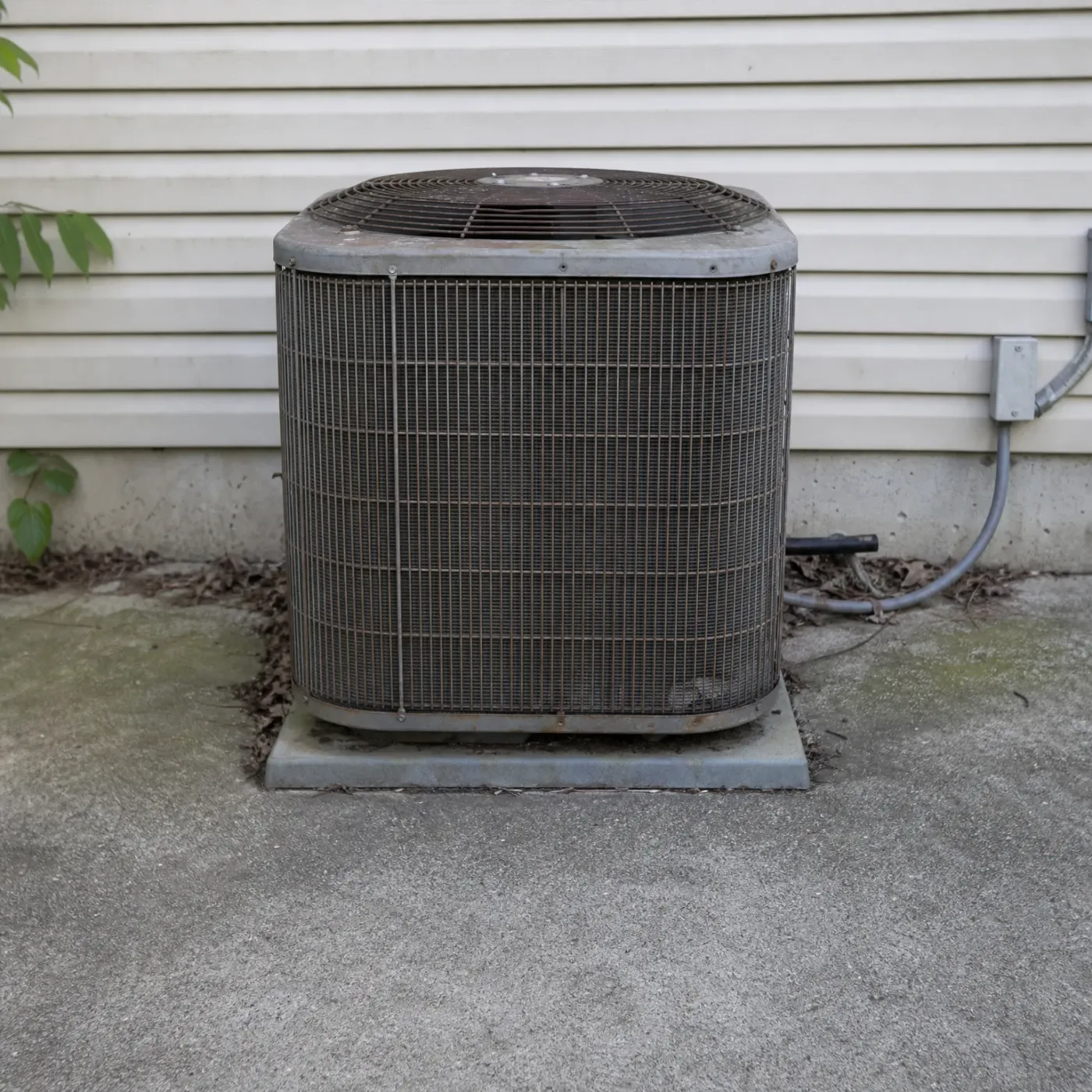
An outdoor air conditioner condenser unit on a concrete pad beside a house with light gray vinyl siding, with a gray electrical disconnect box and conduit on the wall, gravel beds and dried plants nearby, and a concrete sidewalk in the foreground.

Central air, worn down

Weeds growing up around the pad and a weathered cabinet are signs of age, not of a Minnesota summer working it too hard. If the unit looks like this, it's worth asking whether a mini split makes more sense for a room the ducts never cooled well, rather than replacing like for like.

A man in a dark blue shirt stands in an open front doorway of a stucco and wood-clad house, facing a blond woman seen from behind in the foreground on a stone walkway.

What this decision actually touches in your house

If you already have ducts and a gas furnace, central air uses what's there. The install goes faster and the system disappears into the house the way the old one did. You get one thermostat, one system to think about, and every room covered without weighing whether a particular room matters enough to run a line to it.

A mini split makes sense when some part of your house falls outside what the furnace and ducts were built to handle, a finished bonus room, a porch closed in for year round use, an addition that never quite cools. That's a judgment call specific to your layout, your ductwork, and what you're actually trying to fix, not something a general answer can settle. A contractor who's seen your situation can tell you which one solves it and quote the job once they know your house. Once you send the form, that's the next step, matched with someone who works on homes like yours, and they'll reach out to go over it.

Interior corner of a living room with a beige upholstered sofa and dark cushion in the foreground, a ceramic vase of leafy branches on a dark side table by a curtained window, a framed picture on the wall, and a wood-surround fireplace at right.
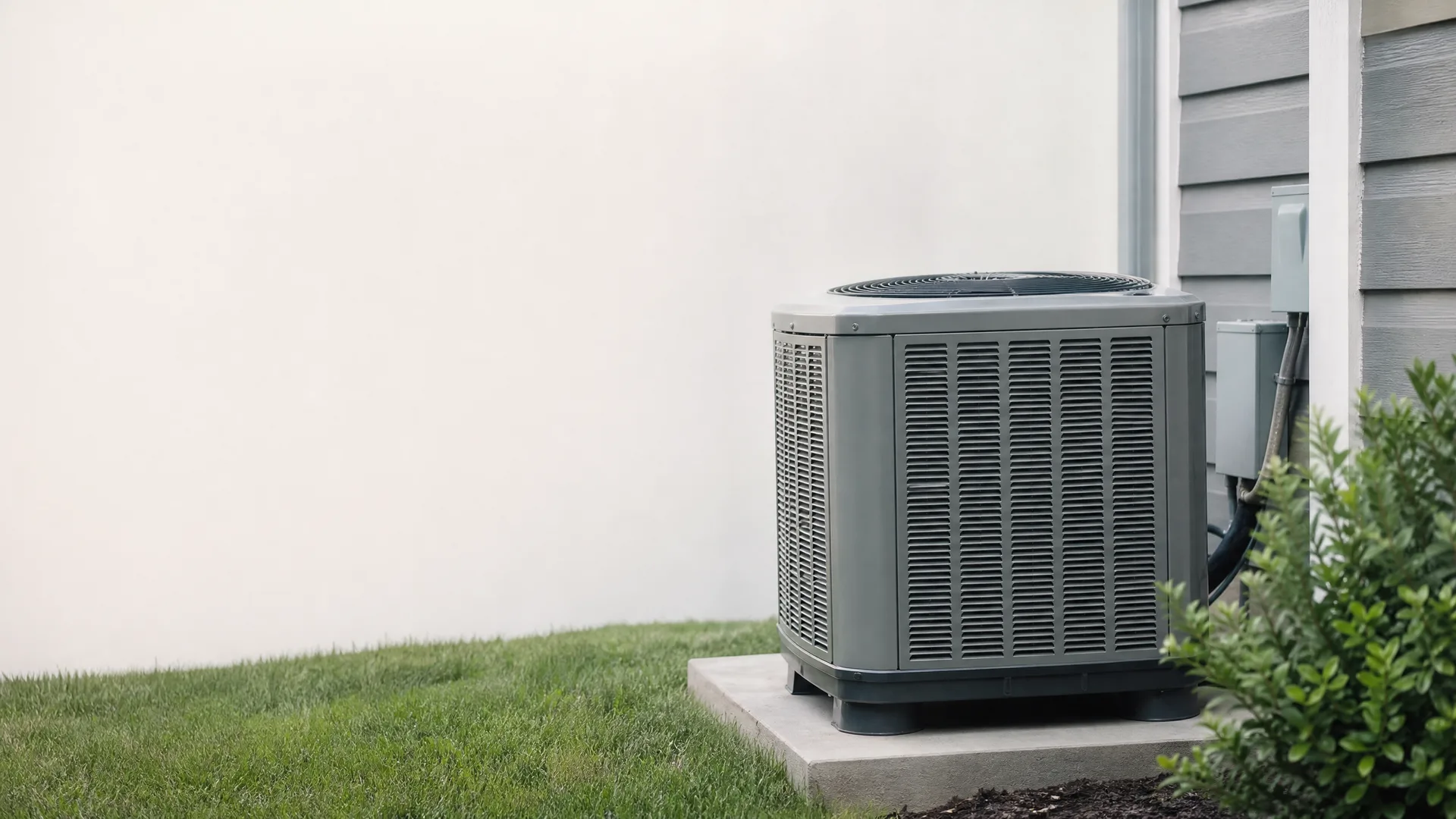
A gray outdoor air conditioner condenser unit on a concrete pad beside a house corner with lap siding and a stucco wall, surrounded by mown green grass.

Why ducts make central air simple

A central system moves air through ducts that already run to every room, so the installer isn't opening walls to get cooling where it needs to go. The furnace blower pushes the air and the coil in the plenum cools it. If your gas furnace and ducts are original to the house, matching a new coil and condenser to that setup is usually a known quantity, not a redesign.

An outdoor air conditioning condenser unit on a concrete pad beside a house with light stucco and lap siding, with mown grass to the left and a green shrub to the right.

What a mini split skips entirely

A mini split runs refrigerant lines through a small hole in the wall instead of ductwork, with an indoor head mounted in the room it serves. Each head has its own thermostat, so a three-season porch or a finished attic that the main ducts never reached gets cooled on its own terms. Nothing about the rest of the house changes.

Is a room in your house always the hot one

Maybe it's a bonus room over the garage, a finished attic, or an addition that was tacked onto the ductwork as an afterthought. You run a window unit in there every summer, or you just keep the door shut and write it off. If the rest of the house cools fine off the central system and it's really just that one space fighting you, that's not a sign your air conditioner is failing. It's a sign the ducts never reached that room well to begin with, and no amount of work on the condenser outside is going to fix it. A mini split in that one room solves exactly that problem without touching the rest of the house.

A gray-haired, bearded man in a dark coat dusted with snow stands smiling in a dimly lit room with a lamp, mirror, framed art, and a sofa in the background.
An older man with white hair and a beard, wearing a dark snow-dusted coat and scarf, stands in a warmly lit interior hallway with a framed landscape picture, a table lamp and a potted plant behind him, and a snowy view through a window at left.
An older man in a dark snow-flecked overcoat and scarf stands smiling in a warmly lit home entryway, with a glass-paned door showing darkness outside and a lamp-lit room visible through a doorway behind him.
An older man with gray hair and a beard, wearing a dark snow-dusted jacket and scarf, stands smiling in a warmly lit interior hallway with a lit table lamp, a vase of dried branches, and a framed picture in the background.

An air conditioner pro near you

You've read the difference. Now it's a question of which one fits the house you actually have. If your ducts reach every room and the air moves fine once it gets going, central air is the straightforward call, and it keeps working with the gas furnace you already run all winter. If one room never cools right no matter what the thermostat says downstairs, that's the mini split's job, and it won't touch the rest of the house or the ductwork that's working fine. Either way, the equipment has to be sized and installed for your home, not a general case, and that's a judgment a contractor makes standing in the space. You don't have to land on the answer yourself before reaching out. Send the request and let someone who installs these for a living look at what you've got.

A two-story house with light beige horizontal siding, a gabled roof, a small covered front porch with dark door, and shrubs along the foundation, set behind a mown lawn and wet sidewalk with large leafy trees on both sides.

The air outside your house averages a dew point of 59°F through June, July and August, based on NOAA climate records for Minnesota. That's on the comfortable side, nowhere near the thick, sticky air you'd get further south. It matters because a central air system doesn't have to fight hard to pull moisture out of the air before it can cool it. The coil isn't working against a constant wall of humidity, so the house cools evenly without that clammy feeling some climates leave behind. A mini split handles the same job fine in whatever room it's mounted in, since the moisture load it's dealing with is light either way.

NASA POWER T2MDEW county cells weighted by homes

Whole House or One Room

Central air

  • It cools evenly through every room the ducts already reach, so there's no hot bedroom at the end of the hall.
  • One thermostat runs the whole house, which is simpler to live with than juggling settings room by room.
  • If your ducts and furnace are already in good shape, the installer is working with what's there instead of opening up walls.
  • When the system eventually fails, swapping in a new condenser and coil is usually a known job, not a redesign.
  • It won't help a room the ducts never served well, like an addition or a converted attic.

Mini split

  • It cools one room or a few without touching your ductwork, which is what makes it worth considering for a space the main system misses.
  • Each indoor head has its own setting, so a bonus room or addition can run colder or warmer than the rest of the house.
  • It doesn't replace central air for the whole house, so you're still running your existing system everywhere else.
  • Installation means mounting an indoor head and running a line set to an outdoor unit, not tying into ducts that are already there.
  • It's a direct answer for the one room you've been running a window unit in or keeping shut all summer.
  1. A tech checks your ducts, electrical panel, and where the condenser will sit.

  2. The installer sets the new condenser on a pad outside your home.

  3. A coil goes into the plenum above your furnace to carry the cold air.

  4. Copper line set connects the coil to the condenser and gets charged with refrigerant.

A gray outdoor air conditioning condenser unit on a concrete pad beside a house with horizontal lap siding, with a conduit and electrical disconnect box on the wall and a green shrub in mulch to the right.
A condenser like this one is still doing its job, tied into the ducts that already reach every room.
A weathered outdoor air conditioner condenser unit on a concrete pad beside a house with horizontal vinyl siding, with a conduit and disconnect box on the wall to the right.
Years of dirt packed into the grille and leaves piled at the base choke airflow and strain the compressor.

Power costs 15.83 cents per kilowatt-hour statewide

At 15.83 cents a kilowatt-hour, running central air through a hot stretch costs about what you'd expect in a state with typical power rates, nothing unusual either way. A mini split can cost less to run if you're only cooling one room instead of pushing air through the whole house.

EIA-861 2025 statewide residential average

Which One Fits Your House

  • If your ducts reach every room and your gas furnace is still sound, central air is the straightforward choice.
  • A mini split earns its place when one room, like a bonus room or an addition, never cools right no matter what you do.
  • Minnesota's dew point stays comfortable through summer, so neither option has to fight the thick air you'd get farther south.
  • Power here runs at typical rates, so the cost to operate either system comes down to how much space you're actually cooling.
  • Once you send the form, you're done hunting for someone to call and quote the job.
  • A contractor who knows your ducts, your panel, and your house will reach out to work through the details with you.

The answer comes down to what your house already has. Ducts that reach every room and a gas furnace that still has years left in it point to central air. It uses what's already there, ties into the same system you're used to running, and keeps the whole house on one thermostat. A mini split earns its place somewhere narrower: the bonus room, the addition, the space your main system has never been able to cool right. You don't need to replace anything to fix that room. You just need the right equipment for it.

Minnesota's summer air works in your favor either way. The dew point stays comfortable through June, July and August, so you're not asking either system to fight the kind of thick air that wears equipment down faster farther south. Power rates here are typical too, so what you pay to run either system has more to do with how much space you're cooling than anything about the equipment itself.

What you don't have to do anymore is figure out who to call. Once the form is in, that part is off your plate. A contractor who works with your ducts, your panel, and your house gets in touch and takes it from there, matched to what your home actually needs rather than a generic answer. You've already done the hard part, which is understanding the choice. The rest is someone else's job now.

At dusk, a dark board-and-batten house with a standing-seam metal roof and lit entry walkway of stone pavers, with two large outdoor heat pump units on a stone-walled pad at right and trees and hills in the background.

Air Conditioner Installation

A local pro for your air conditioner installation

Step 1 of 3: Equipment
  • A corner of a room with an upholstered wood-framed armchair holding a floral pillow, a round side table with a ceramic lamp, books and a vase of greenery, a framed landscape painting on the wall, a patterned rug, and a sunlit multi-pane window.
    • Describe your air conditioner job, and a local pro who handles it gets in touch.
    • Say what's going on with your air conditioner, and a pro who works on them reaches out.
  • Interior corner with a wood-framed window showing green foliage outside, a framed landscape print on a beige wall, and a rounded stone vase of leafy branches on a wooden cabinet.
    • One request ends the search for an air conditioner installer.
    • Send the request and finding a pro stops being your problem.
  • A pale ceramic vase holding olive branches sits on a dark wooden countertop beside a carved wooden dough bowl, next to a wood-framed window and a light painted plank wall.
    • Fill out one short form instead of calling around.
    • Explain the job once and skip repeating it on every call.
  • A dark wood round side table holding a brass lamp with a cream shade, a blue-and-white patterned bowl, and a white textured pot of greenery, beside an upholstered chair with a gray patterned cushion and a white-framed window showing green trees and flowering shrubs.
    • One installer gets your project, so there's no bidding war over it.
    • The pro who reaches out is licensed in Minnesota.