 Get an air conditioner pro
Do you need a dehumidifier with AC in Minnesota
A local installer who puts in air conditioners gets your project.
Minnesota summers don't carry the heavy, sticky air you get further south. That's the main reason most homes here get by on AC alone. A properly sized air conditioner already pulls moisture out of the air as it cools, and for most houses in this state, that's enough.
Whether you actually need added dehumidification comes down to your specific house. A finished basement, a tight newer build, a home that always feels clammy even when the AC is running, these situations tip the answer differently than a typical upstairs bedroom.
That's the kind of judgment call worth getting from someone who looks at your actual space rather than a general rule. A local contractor who installs AC systems and whole-home dehumidifiers across Minnesota summers knows which houses in your area tend to need the extra equipment and which don't, because they've been inside enough of them to see the pattern.
When you request a match through this page, you're connected with one contractor, not several companies competing for your attention. That contractor serves your area and works on this exact kind of system and decision, sizing and humidity control for homes like yours, every season. They'll reach out to look at your situation directly: your house, your basement, your existing AC, and tell you straight whether a dehumidifier makes sense or whether your system is already doing the job.
No guesswork, no generic answer applied to a house they've never seen. Just a contractor who knows Minnesota homes, looking at yours specifically.
The answer below walks through how AC and dehumidifiers actually work together, and what tends to make one house need more help than another. But if you'd rather skip straight to finding out for your own home, that starts below.
Most homes in Minnesota don't need a separate dehumidifier running alongside the AC. Your air conditioner already removes moisture as part of cooling the air, and Minnesota summers aren't humid enough, day after day, to overwhelm that. The air here is warm but not heavy the way it gets further south, so the AC's normal cycle keeps indoor humidity in a comfortable range on its own. Where a dehumidifier earns its place is in specific trouble spots: a basement that stays damp even when the AC is running, a house that feels clammy on the muggier stretches of July and August, or rooms the ducts don't reach well. If none of that describes your house, the AC alone is doing the job it's supposed to do. If it does, a whole-home or basement dehumidifier installed alongside the AC can handle what the AC can't.




Cooling and drying the air happen in the same step. Warm air moves across the evaporator coil, which is cold enough that moisture in the air turns to water on contact. That water collects in a pan and drains off, usually toward the furnace or a floor drain, so you never see it. How much moisture comes out depends on how long the system runs. A unit matched to your house runs a full cycle, long enough to move real air across that coil and carry real moisture with it. One that's too big for the space cools the air fast, hits the thermostat setting, and shuts off before it's done much drying. You can have cold air and still feel damp if that's what's happening. Showers, cooking and laundry add moisture too, and a correctly sized AC generally keeps pace with that upstairs. Basements and crawlspaces are a separate problem. Cool air sinks, so the AC upstairs doesn't pull much moisture out of the space below it, and that's often where dampness shows up even when the rest of the house feels fine.
How your AC handles moisture
- Your AC pulls moisture out by running warm, humid air over a cold evaporator coil, where the water condenses and drains away.
- That condensate drips into a pan under the coil and runs out through a drain line, usually ending near your furnace or a floor drain.
- A unit sized correctly for your house runs long enough during each cooling cycle to pull real moisture out, not just drop the temperature fast.
- An oversized air conditioner cools the room quickly and shuts off before it's run long enough to dry the air much.
- Humidity inside your house also comes from showers, cooking and laundry, which a whole-home dehumidifier addresses but a correctly sized AC mostly keeps up with anyway.
- A basement or crawlspace can stay damp even when the AC is working fine upstairs, since cool air sinks and doesn't pull moisture from below.
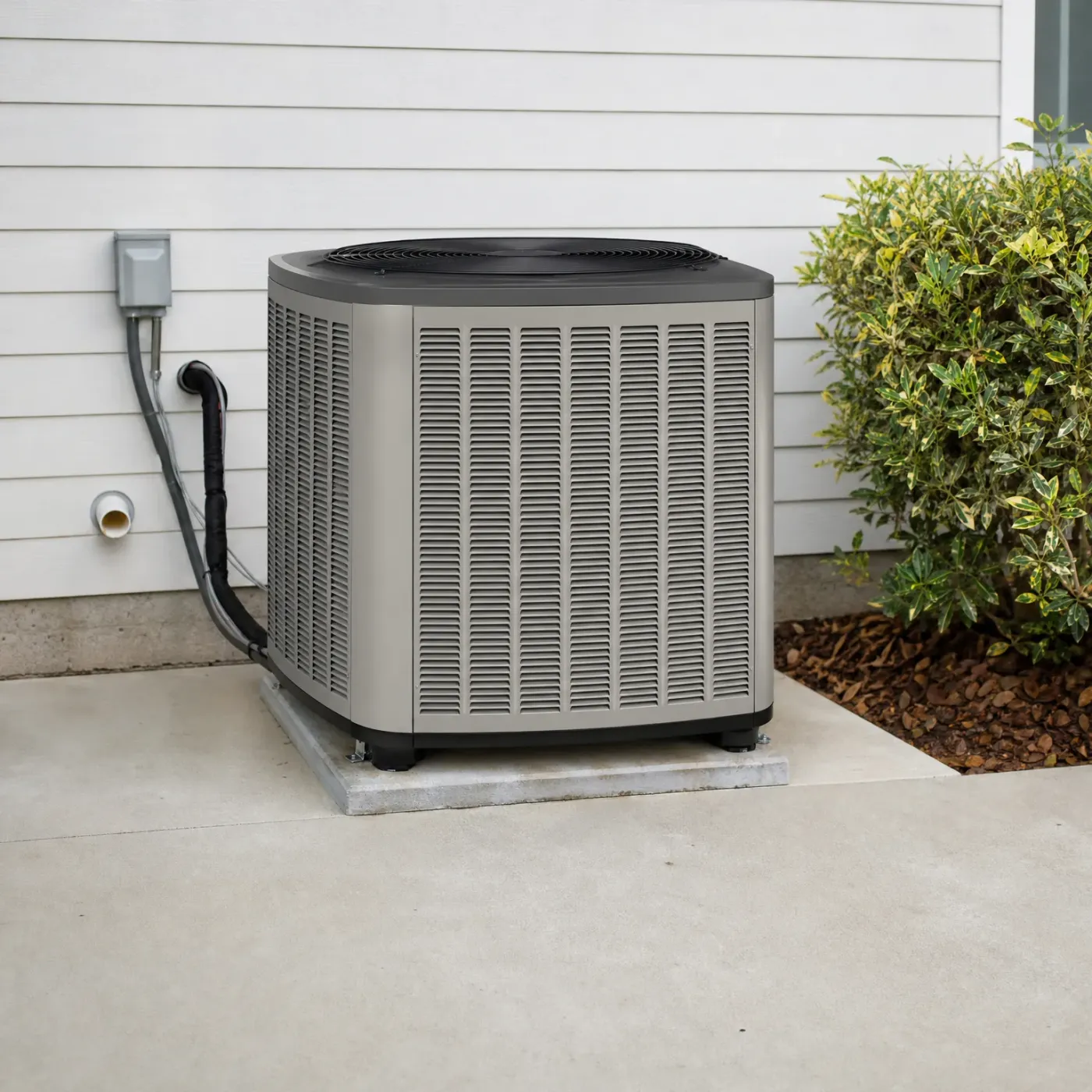
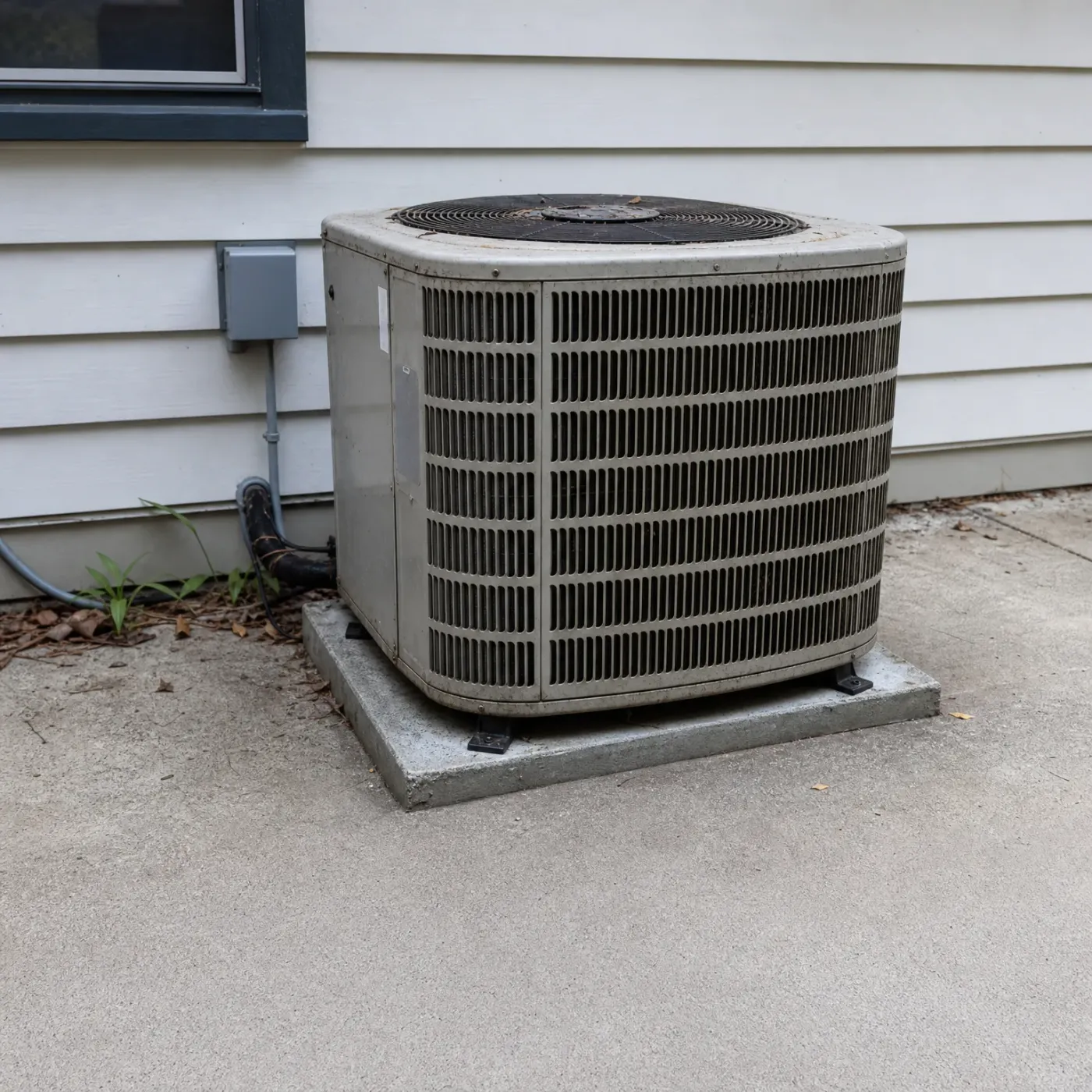

Warm, humid air from your house passes over the cold evaporator coil.
Moisture in that air condenses on the coil's cold metal surface.
Water collects in the drain pan under the coil.
Condensate drains out through the drain line near your furnace.


Get the right pro for your air conditioner

One installer gets your project, so there's no bidding war over it.
You only hire the pro if you want to.
Does your house feel damp even with the AC running
Windows fogging up, a musty smell in the basement, air that feels clammy even after the AC has been running a while. Those are the signs worth paying attention to, not how hot it feels outside. If the air still feels heavy with the thermostat set where you like it, the unit may be oversized for your house, running in short bursts that cool the air fast but don't give it time to pull moisture out. Left alone, that dampness gives mold and mildew a place to start, in the basement, along window frames, inside closets. It's not about comfort alone at that point. It's about what sits in your walls and carpet without you seeing it.
A summer dew point here averages 59°F, based on weather data for Minnesota. That's the number that matters more than the temperature on a given day. A dew point in the high 50s is on the comfortable side, below the mid-60s where air starts to feel sticky. It means your air conditioner isn't fighting a constant load of moisture every time it cycles on. You'll notice the air inside stays dry between runs instead of creeping back toward damp. It's part of why a dehumidifier running alongside your AC usually isn't doing much extra work in this state.
NASA POWER T2MDEW county cells weighted by homes

AC alone covers it for most houses here
A working air conditioner, sized right for your house, handles the moisture along with the heat. That's true for most of Minnesota, most summers. A separate dehumidifier is an extra expense most homes here don't need.
If your house still feels damp once the AC's been running a while, or if you noticed it during a stretch of hot weather this year, that's worth having someone look at. A local contractor who installs AC systems in this area sees the same housing stock and the same summers every year, and knows what tends to be the actual problem when a system runs but the air still feels wrong. Getting matched with one means a single contractor looking at your specific setup, not a handful of companies competing for the job.


Air Conditioner Installation
A pro who works on air conditioners

- Describe your air conditioner job, and a local pro who handles it gets in touch.
- Say what's going on with your air conditioner, and a pro who works on them reaches out.

- Send the form and the search for an installer is over.
- After this form, you can stop searching for an air conditioner pro.

- Skip the round of in-home estimates for a new air conditioner.
- Describe the project once instead of to every installer.

- The pro who reaches out is licensed in Minnesota.
- Only one pro gets your request, so you hear from one company.