How to get your AC ready for a Minnesota summer

Send the form, and lining up the air conditioner tune-up stops being yours to chase.

Hand it off

Getting your AC ready for summer means having it checked before the first real hot stretch, usually before May. A technician cleans the condenser coil outside, checks the refrigerant charge, and tests the capacitor and contactor, the parts that actually wear out from running. Minnesota summers don't carry the heavy humidity some places do, but the unit still works hard on the hottest days, and a dirty coil or a weak capacitor makes it strain harder than it should. Catching that now means your system runs the way it's supposed to when you need it most, instead of quitting on a 90 degree afternoon. A unit that's been checked over also tends to use less power to do the same job, which matters over a long cooling season even where electricity isn't expensive. The point isn't that your AC will fail without this. It's that a spring check means you find out about a problem on your own schedule, not during a heat wave.

A man in a blue sweatshirt reclines with closed eyes in a brown leather armchair in a living room with a bookshelf, houseplant, sofa, window, and a side table holding newspapers and a dark mug.
A bearded man in a gray pullover reclines with closed eyes on a brown leather sofa in a sunlit room with a window, framed picture, potted plant, and a wooden cabinet holding papers and a dark mug.
A man in a gray sweater leans back with closed eyes in a brown leather armchair beside a wooden side table holding a dark mug and a folded newspaper, with bookshelves and a window seat behind him.
A man in a green sweater reclines in an armchair with his eyes closed and a slight smile, beside a window with plants, a small table holding a mug and folded newspaper, and bookshelves behind him.

Why does your AC struggle on the first hot day?

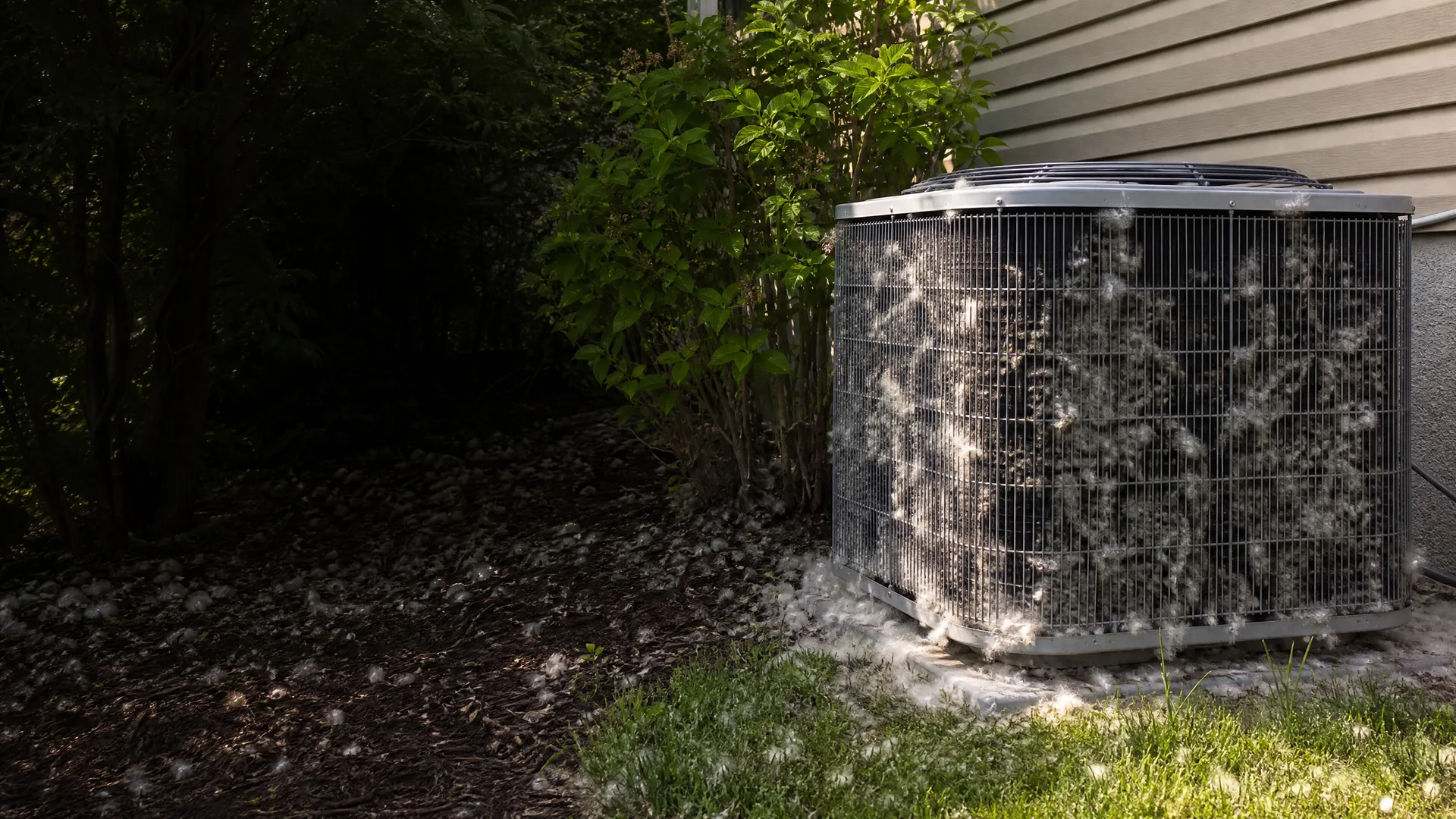
You turn it on after months of not touching it and it runs, but not right. Maybe it blows air that isn't quite cold, or it clicks and hums without starting, or it runs for an hour and the house still feels sticky. Outside, the condenser might be caked with cottonwood fluff and cut grass from being idle all winter, and that buildup chokes the airflow the coil needs to do its job. A system that has to work harder to cool the same room runs longer than it should, and a unit that strains through July is a unit more likely to quit on the one week you need it most.

An outdoor air conditioner condenser unit beside a house with horizontal siding and stucco, its coil fins covered in white cottonwood fluff that also collects on the surrounding grass and mulch.

You're out tying up the tomato stakes when you notice it, that cottonwood fluff drifting across the side yard and catching on everything. It's piled against the fence line and stuck to the grass. When you walk past the condenser you see it's caught there too, a white layer packed into the fins, thick enough that you can't see the metal underneath anymore. The unit is still running, you can hear the fan, but the air coming off it feels weak for how hard it's working. You make a note to deal with it before the real heat sets in, then go back to the stakes.


What You Can Check, What Needs a Tech

Do it yourself

  • You can rinse the condenser coil with a garden hose and clear leaves or fluff from around the cabinet.
  • You can swap the air filter and check that the vents inside aren't blocked by furniture or rugs.
  • You can straighten bent fins on the outdoor unit with a fin comb if they're blocking airflow.
  • You can watch for ice on the lines or a short cycle pattern, but you can't test the refrigerant charge yourself.
  • You can't check the capacitor or contactor without gauges and a meter, and a weak one won't show itself until it fails.

Have it serviced

  • A technician checks the refrigerant charge against what the unit calls for, something no amount of looking can tell you.
  • A technician tests the capacitor and contactor under load, the two parts most likely to fail on the first hot day.
  • A technician cleans the condenser coil from the inside out, not just the surface a hose reaches.
  • A technician checks the electrical connections and amp draw, catching a problem before it trips the breaker in July.
  • Booking it means you're not the one calling around in a July heat wave trying to find someone who'll answer.
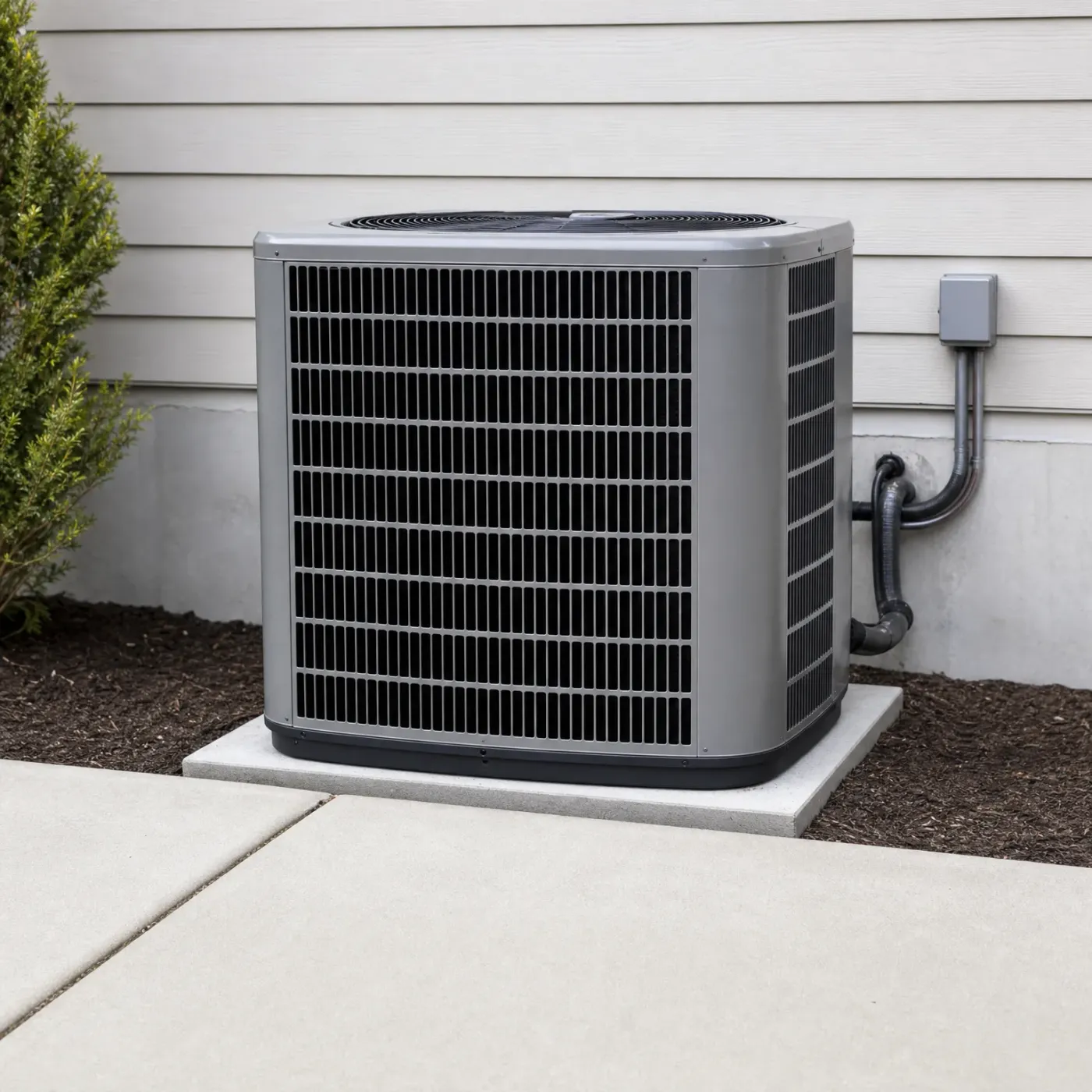
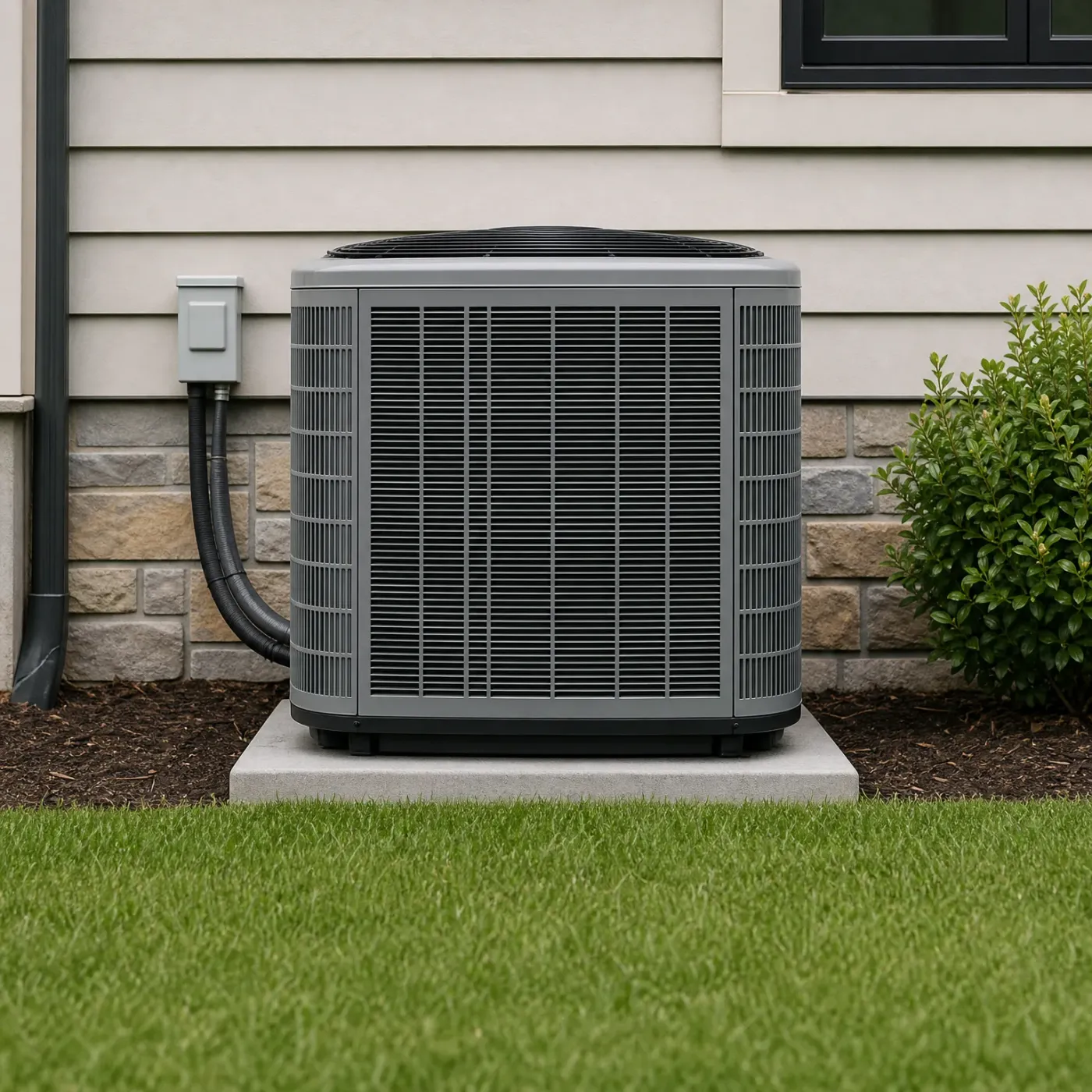
A gray outdoor air conditioner condenser unit sits on a concrete pad beside a house with horizontal lap siding, with conduit and an electrical disconnect box on the wall, dark mulch and a shrub to the left, and a concrete walkway in the foreground.

Running clean

This is your condenser doing its job. Clear grilles, a clean coil, lines that run straight to the wall. Air moves through it the way it's supposed to, and the unit holds up through a Minnesota summer without working harder than it has to.

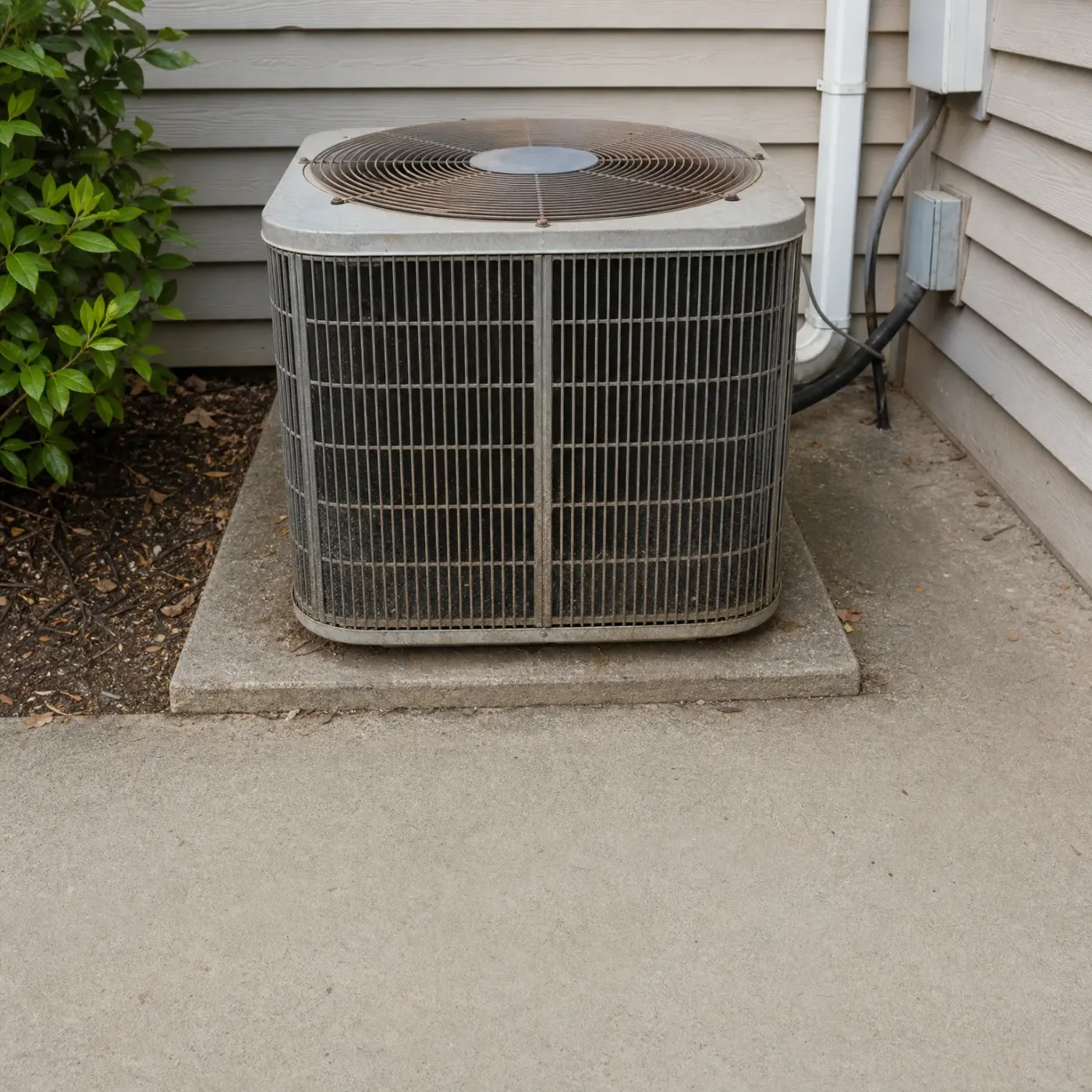
An outdoor air conditioning condenser unit on a concrete pad beside a house with horizontal lap siding, with a shrub and mulch bed to the left and conduit and a small electrical box on the wall to the right.

Falling behind

Grime like this across the fins means the coil can't shed heat the way it needs to. Dirt builds up over seasons nobody looked at it, and the unit starts pulling more power to do the same job, if it still keeps up at all.

Power costs 15.83 cents per kilowatt-hour statewide

At 15.83 cents a kilowatt-hour, a dirty coil or low charge shows up fast on your bill, since your AC runs longer to cool the same house. A unit that's been checked over before summer gets the house cold and shuts off, instead of running half the afternoon to do it.

EIA-861 2025 statewide residential average

A gray-haired man with a beard in a blue button-placket shirt reclines on a couch with his eyes closed, beside a sunlit window with a green plant.
A woman in a cream knit sweater sits in an armchair with her eyes closed near a window showing yellow autumn foliage, with a mug on a round wooden side table beside her.
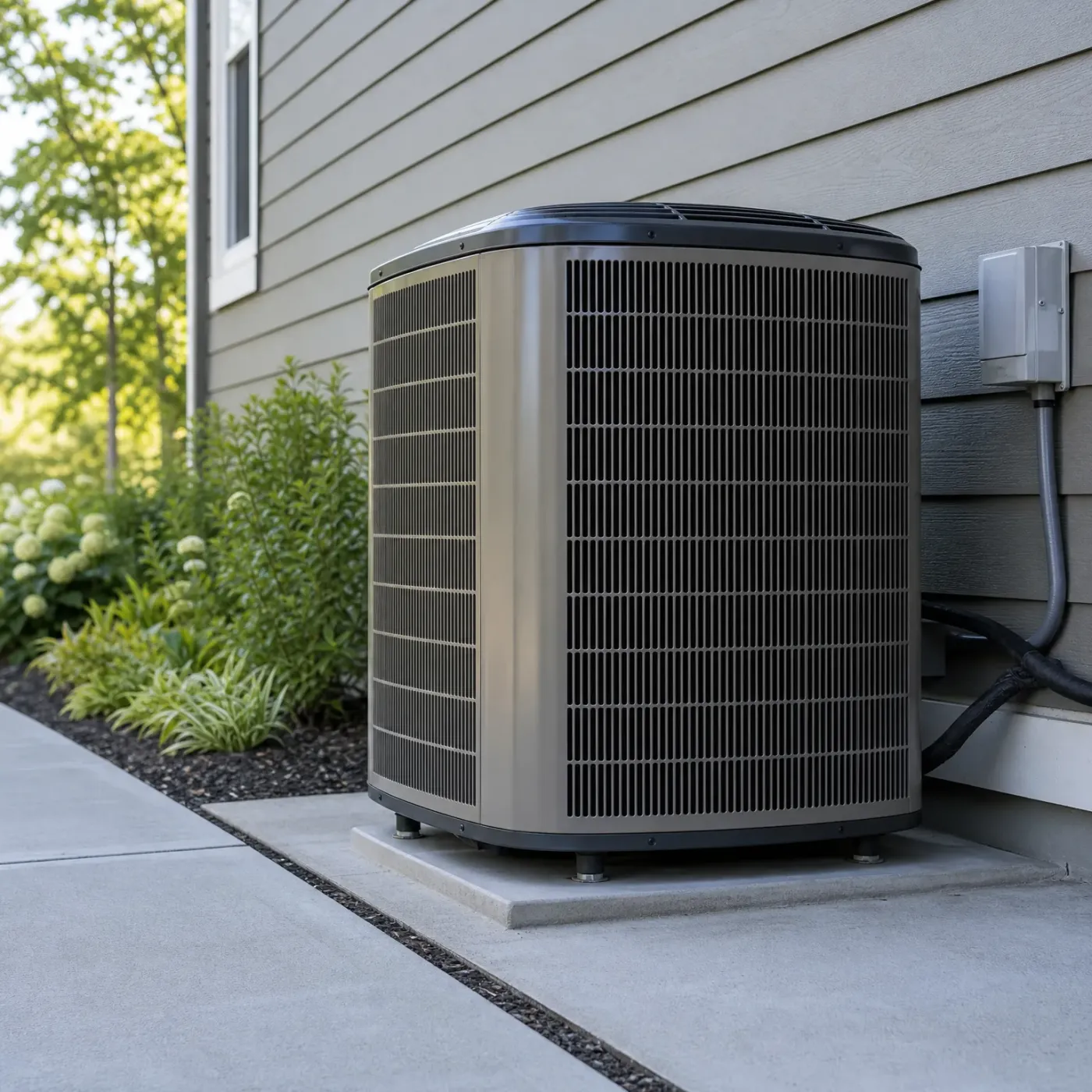
An outdoor air conditioning condenser unit on a concrete pad beside a house with horizontal lap siding, with a gray electrical disconnect box and conduit on the wall and green shrubs and trees to the left.

One request and it's handed off

Fill out one form instead of calling around for an air conditioner tune-up.

Send the form and the air conditioner tune-up stops being something to remember.

Start one form

You only hire the pro if you want to.

A gray outdoor air conditioning condenser unit on a concrete pad beside a house with horizontal lap siding and a stone veneer base, with a disconnect box and conduit on the wall, mulch bed and shrub to the right, and mowed grass in the foreground.
A clean coil and a clear cabinet let this unit pull heat out of the house without straining, pad to wall.
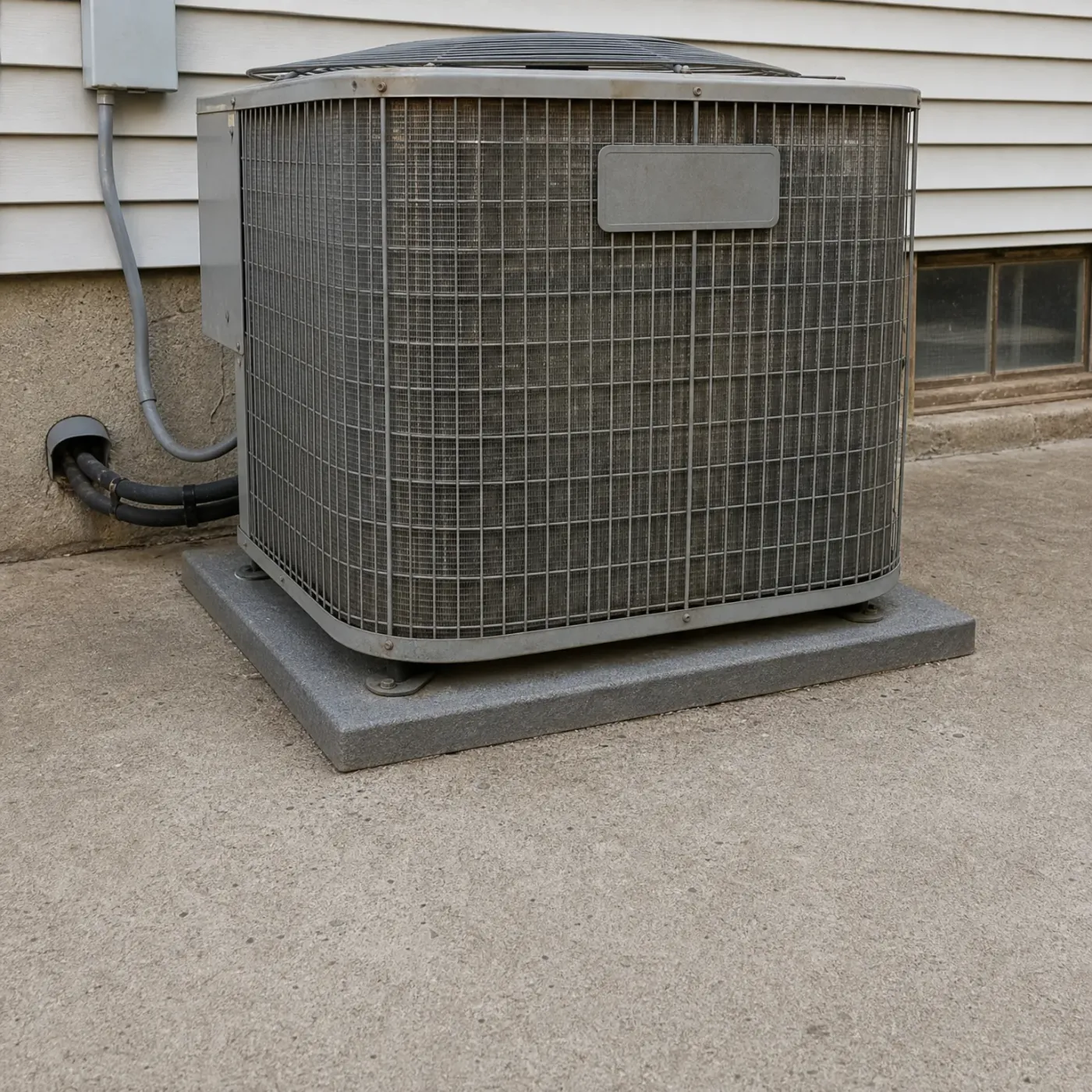
An outdoor air conditioner condenser unit on a gray composite pad beside a house with horizontal siding, a concrete foundation, a basement window, and a conduit and disconnect box on the wall.
Dust packed into the mesh cabinet blocks airflow, so the compressor runs longer and wears faster to cool the same rooms.

How your AC actually starts

  • The capacitor holds a charge that kicks the compressor and fan motor into motion, and a weak one makes the unit hum or click without starting.
  • The contactor is a switch that sends power to the compressor, and its contacts pit and burn a little every time it cycles.
  • Refrigerant doesn't get used up, so a low charge almost always means a leak somewhere in the line set or coil.
  • The condenser fan pulls outside air across the coil to dump the heat your house gave up, and a seized motor stops that cooling right away.
  • A technician checks the temperature split between the air going into the return and the air coming out of the vents, since that gap tells them whether the system is actually removing heat.
  • The start sequence matters: the thermostat calls, the contactor closes, the capacitor gives the motors their jolt, and only then does the compressor run, so a failure anywhere in that order stops the whole thing.

Flip the thermostat down and a chain of small parts has to work in order before cold air shows up. The thermostat calls for cooling, which closes the contactor, a switch that sends power out to the compressor. Closing that switch alone isn't enough to get the motors turning, so the capacitor fires next, giving the compressor and the condenser fan the jolt they need to start spinning. Any weak link in that chain and the unit hums or clicks without starting, which is usually a tired capacitor, or it gets power but nothing moves, which points to the contactor.

Once it's running, the condenser fan pulls outside air across the coil to carry off the heat your house gave up. If that fan motor seizes, the unit stops cooling even though it's still drawing power. Refrigerant should never need topping off between summers, since it doesn't get consumed the way fuel does. A system that's low almost always has a leak in the line set or the coil, and adding refrigerant without finding the leak just means doing it again next year.

To check whether all of this is actually working, a technician measures the temperature split between the air going into the return and the air coming out of the vents. That gap is the real test. A wide split means the system is pulling heat out of the house the way it should. A narrow one means something in the chain, the contactor, the capacitor, the fan motor, or the charge, isn't holding up its end.

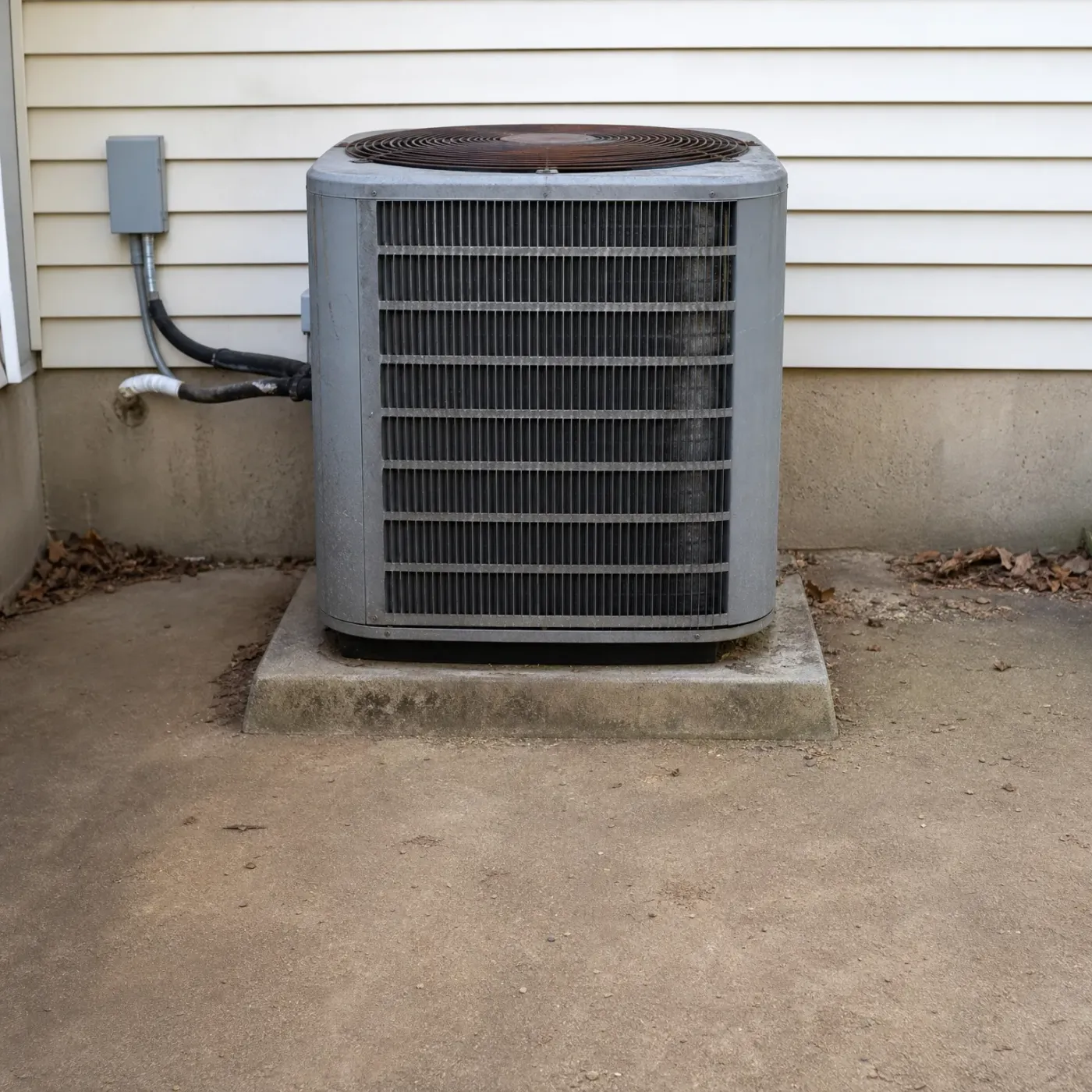
A gray outdoor air conditioner condenser unit on a concrete pad beside a house with beige horizontal siding, with an electrical disconnect box and insulated refrigerant lines on the wall and dry leaves on the ground.
Before you get your air conditioner maintenance
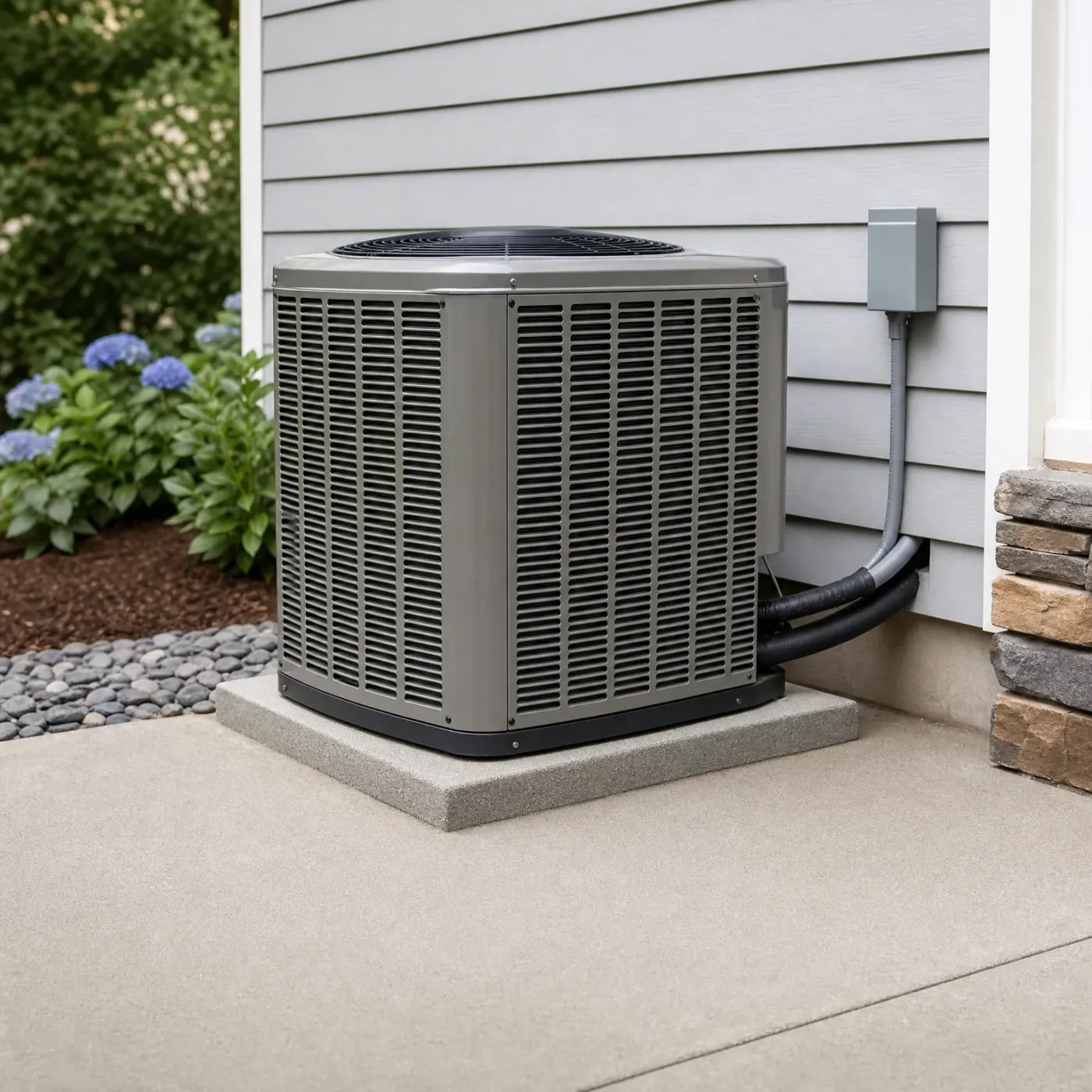
A gray outdoor air conditioning condenser unit on a concrete pad beside a house with horizontal gray siding, with a wall-mounted electrical disconnect box and insulated refrigerant lines, and blue hydrangeas in a mulched bed to the left.
After you get your air conditioner maintenance

15.83 cents per kWh

That's Minnesota's going rate for power. A dirty coil or weak charge makes your AC run longer to cool the same rooms, and that cost adds up fast.

Skip calling around

One visit before the heat hits

A technician catches a weak capacitor or clogged coil before it leaves you without cooling on the first ninety-degree day.

Skip calling around
A closed dark laptop and a ceramic mug of coffee on a wooden dining table, with wooden chairs, a dark kitchen cabinet with cutting boards and a potted plant, and a leafy plant by a window in the background.

Get it checked before the heat sets in

A clean coil, a solid capacitor, a charge that's where it should be. That's what gets your air conditioner through a Minnesota summer without running longer than it has to, and it's worth having someone look before the first hot stretch rather than after the house has already gone warm.

Finding that someone is the part you can skip. Instead of calling around to ask who does AC maintenance, waiting on hold, explaining the same thing to three different shops, and sorting through quotes that don't quite match, you send one form. From there, finding a contractor stops being your job.

A gray upholstered sofa with a matching cushion sits beside a potted plant and a wooden table holding a small green plant in a stone pot, near a curtained window.
An outdoor air conditioning condenser unit on a concrete pad beside a dark stucco wall, with gravel bedding, shrubs, an ornamental grass clump, and a lawn in the foreground.

It's off your list after this

One form instead of hunting for a pro who does air conditioner tune-ups.

Step 1 of 3: Equipment