A local pro who knows air conditioners gets your details and gets in touch.
Your AC runs most days from May through September here, but Minnesota summers don't put the strain on it that you'd see further south. The air isn't heavy, so the system isn't fighting humidity the way it does in a lot of other places. That matters for your bill. A unit that's clean and charged right doesn't have to work as hard to hit the temperature you set, and the difference shows up every month it runs.
Power rates here aren't unusual one way or the other, so the real lever is how much work the AC has to do to keep your house cool. A dirty coil, a weak capacitor, a filter that hasn't been changed, any of these make the system run longer than it should to do the same job. That's where the bill creeps up without anything actually breaking.
Most homes here heat with gas, so the furnace and the AC usually aren't tied together the way they are in an all-electric setup. That means the air conditioner can often be looked at and serviced on its own, without touching the heating side at all.
Getting someone out to look at the system is less about fixing something broken and more about catching what's about to cost you money. A contractor who works on AC units in Minnesota all summer knows what tends to go first in this climate and what doesn't, and that's a different read than a general checklist would give you.
When you put in a request here, it goes to one licensed contractor local to your area, not a handful of companies competing for the job. They'll look at your specific setup and reach out directly. Below, you'll find what actually drives a Minnesota summer electric bill up, and what's worth checking before it does.
The biggest drop in your AC bill comes from a dirty filter or a coil caked with dust, both of which make the system run longer than it needs to. A clogged filter cuts off airflow, so the compressor keeps running to reach the temperature on your thermostat, and that extra run time shows up on your bill. A dirty outdoor coil does the same thing from the other side, since it can't shed heat as well and the system has to work harder to do it. Checking the filter once a month and swapping it when it's gray instead of white costs you nothing but a few minutes. Keeping the outdoor unit clear of grass clippings and leaves helps the same way. Setting your thermostat a few degrees higher when you're not home, rather than shutting the system off and restarting it later, also keeps the compressor from working harder than it has to. None of this replaces a yearly tune-up, but it's what keeps your bill from creeping up between visits.
Your air conditioner cools your house by moving heat out of it, not by making cold air. Inside, warm air crosses the evaporator coil and gives up its heat to refrigerant. That refrigerant carries the heat outside, where the condenser coil and the fan next to it release it into the outdoor air. The compressor is what moves the refrigerant through that whole loop, and it's the only part that draws real power. Everything else in the system either helps it run less or makes it run more. A coil that can't shed heat because it's caked with cottonwood seed or cut grass makes the compressor work longer for the same amount of cooling. So does a refrigerant charge that's a little low. The thermostat in your house just tells the system when to turn on and off. It has no way of knowing whether the coil outside is dirty or the charge is off, so the system keeps running longer than it should and you see it on the bill, not on the thermostat.
How your AC spends power
Warm air crossing the evaporator coil gives up its heat to refrigerant, which is why a dirty coil can't pull heat out as fast as it should.
The compressor is the only part drawing serious power, so anything that makes it run longer, like low airflow or a dirty condenser coil outside, drives your bill up directly.
The condenser fan on the outdoor unit has one job: pull outside air across the condenser coil so the refrigerant can release the heat it carried from inside your house.
A refrigerant charge that's even a little low makes the compressor run longer to move the same amount of heat, so the system draws more power for the same cooling.
The thermostat only tells the system when to start and stop, it has no way to tell a tech if the coil is dirty or the charge is low.
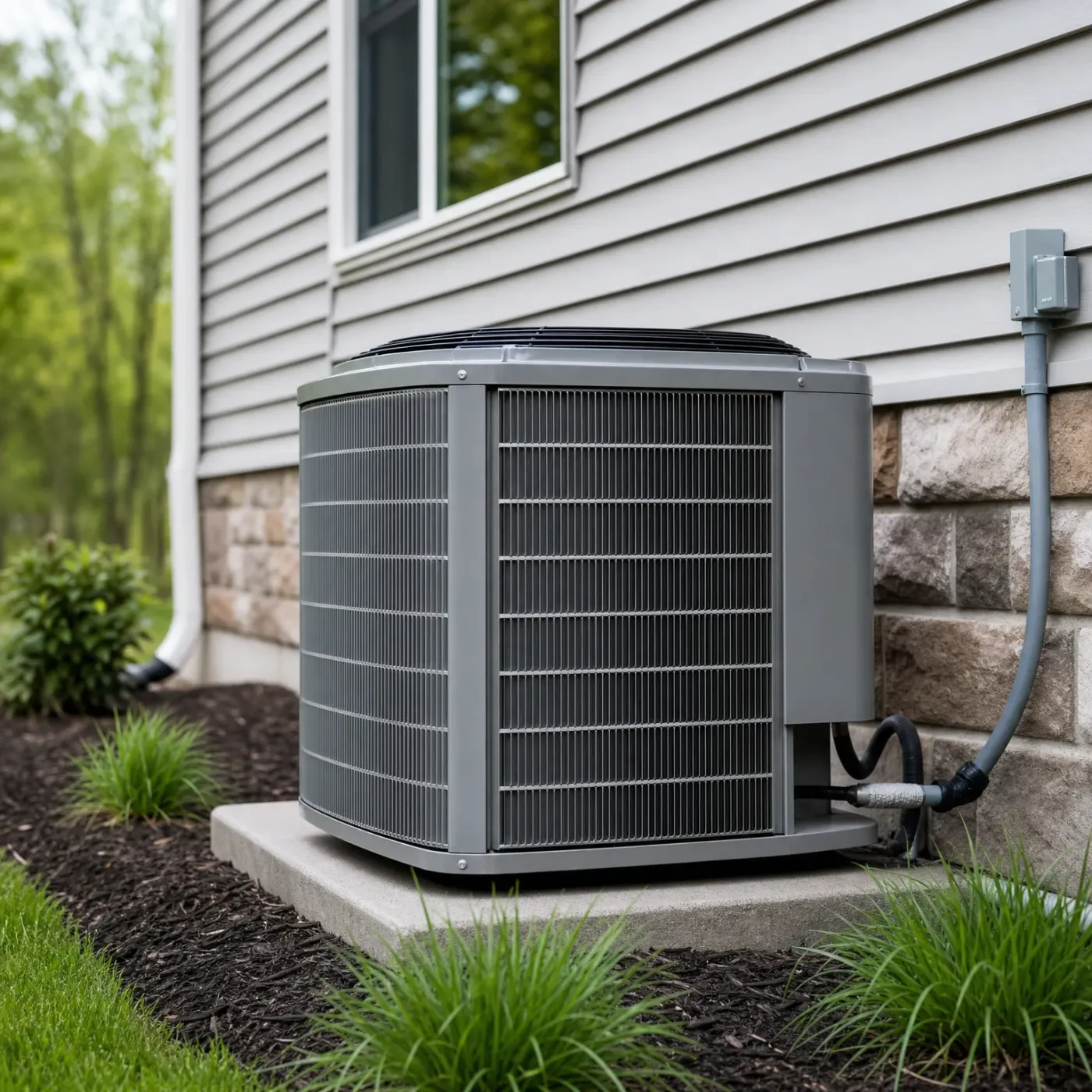
Outdoor condenser coils in Minnesota collect cottonwood seed and cut grass all summer, and that buildup works the same way a dirty filter does from the inside.
A clean coil and a clear filter let the compressor cycle off when the house hits temperature, instead of running straight through.
A unit left to sit in weeds and dust works harder every cycle, and the bill shows it by August.
1
Refrigerant absorbs heat from indoor air at the evaporator coil.
2
The compressor pressurizes that refrigerant and sends it outside.
3
The outdoor condenser coil releases the heat into the outside air.
4
Refrigerant cools back down and returns inside to start again.
Does running my AC fan help lower the bill?
You've heard that switching the thermostat fan from Auto to On keeps air moving and might even out the temperature in the house, so it seems like it could ease the load on the AC. Before you flip that switch for the summer, it's worth knowing what the fan actually does and whether it changes what you pay.
Running the fan on On costs you more, not less
The fan moves air through the ducts, but it doesn't cool anything by itself. That happens at the evaporator coil, and only when the compressor is running. Set the fan to On and it runs nonstop, pulling power around the clock whether the compressor is on or not. Set it to Auto and it shuts off between cycles, same as the compressor. Auto is the setting that keeps your bill down. Some homeowners run the fan on On to even out warm and cool spots between rooms, and that's a fair trade-off if comfort matters more to you than the bill, but it isn't a way to save money. Leave it on Auto and let the thermostat call for the fan only when the system is actually cooling.
Before you get your air conditioner maintenanceAfter you get your air conditioner maintenance
Get your air conditioner to the right pro
Only one pro gets your request, so you hear from one company.
A local pro who services air conditioners gets in touch about the tune-up.
You'll notice it first in the cycling. A unit that used to shut off once the house hit temperature starts running longer stretches, and the thermostat number stops meaning much because the house never quite gets there on the hottest afternoons. The bill catches up a month later. It's not dramatic, just a little higher each cycle, and by August it's added up to real money you can't easily point to one cause for.
The other risk is to the equipment itself. A compressor that runs long and often wears faster than one that gets to rest between cycles, and a coil caked with dust stays that way until someone pulls the panel and looks. If your system came with the house, you may not know when it was last serviced or by whom. A contractor who works on these units every summer in your area can look at yours specifically and tell you what it needs, not just what units like it generally need.
Power costs 15.83 cents per kilowatt-hour statewide
At 15.83 cents per kilowatt-hour, every extra hour your compressor runs shows up on the bill. A system that cycles off on schedule instead of running long stretches is the difference between a normal July bill and one that makes you check the meter.
EIA-861 2025 statewide residential average
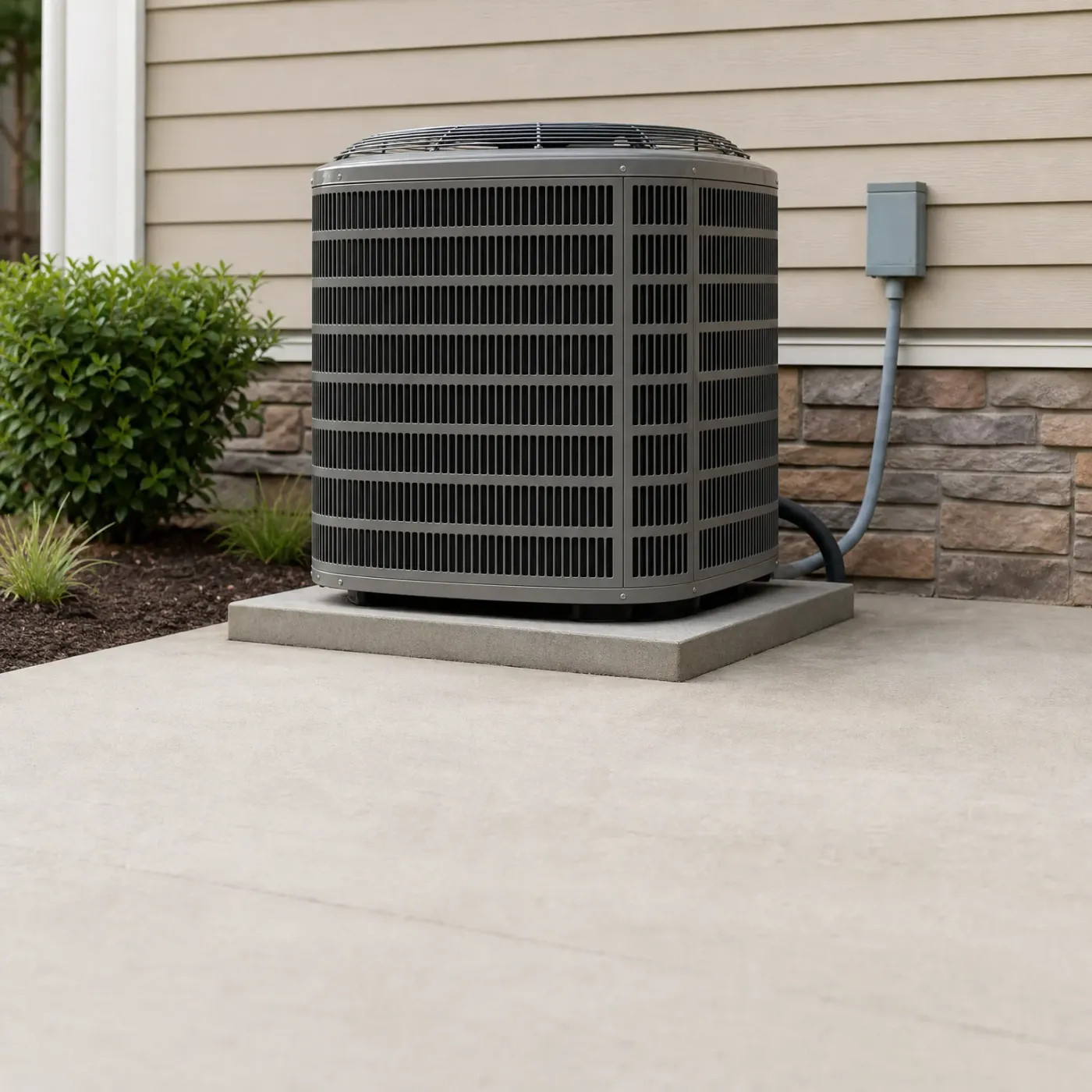
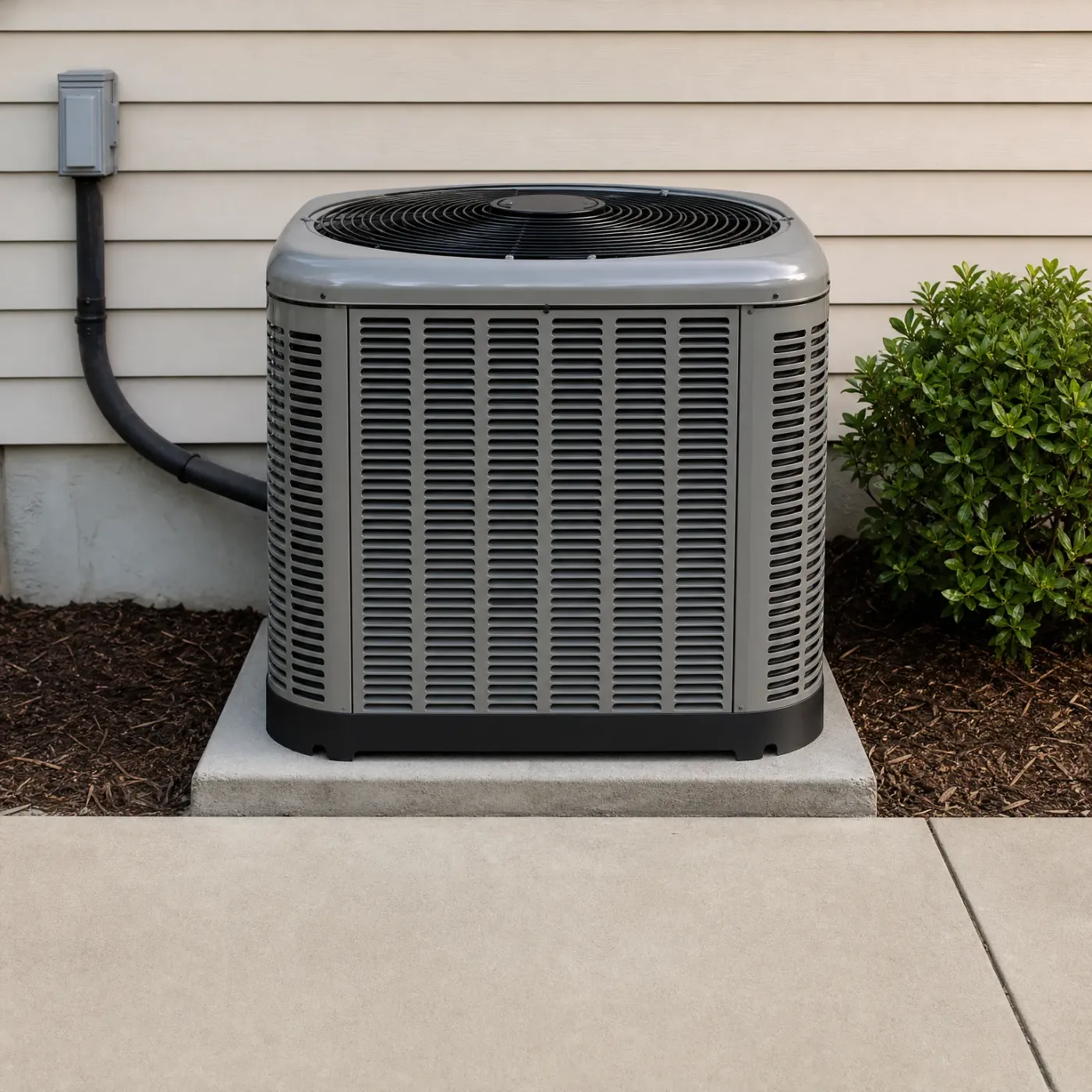
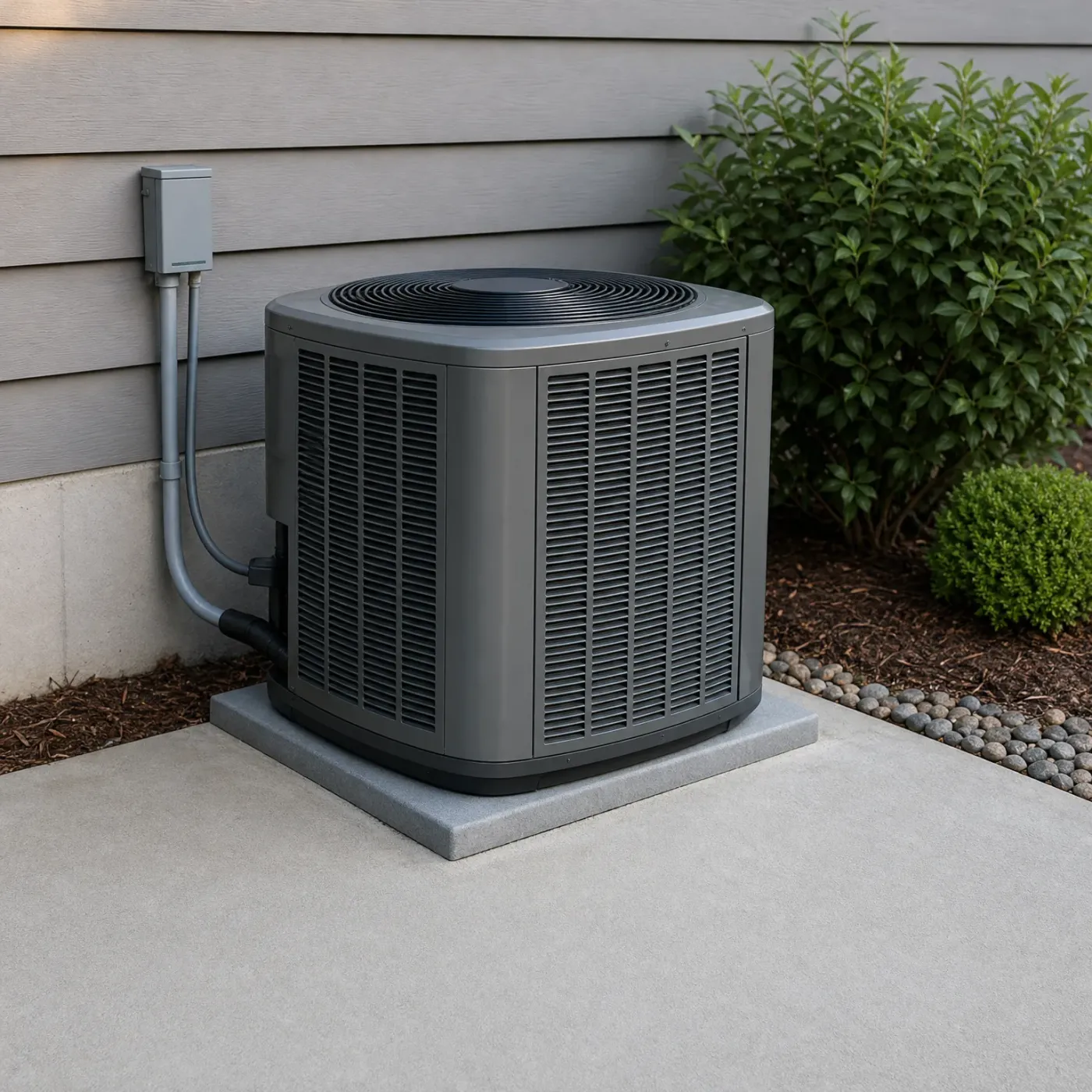
Running clean
The pad is clear, the mulch is tidy around it, and the unit has room to breathe on all sides. Air moves through the coil the way it's supposed to, so the compressor cycles off once the house hits temperature instead of running straight through the afternoon.
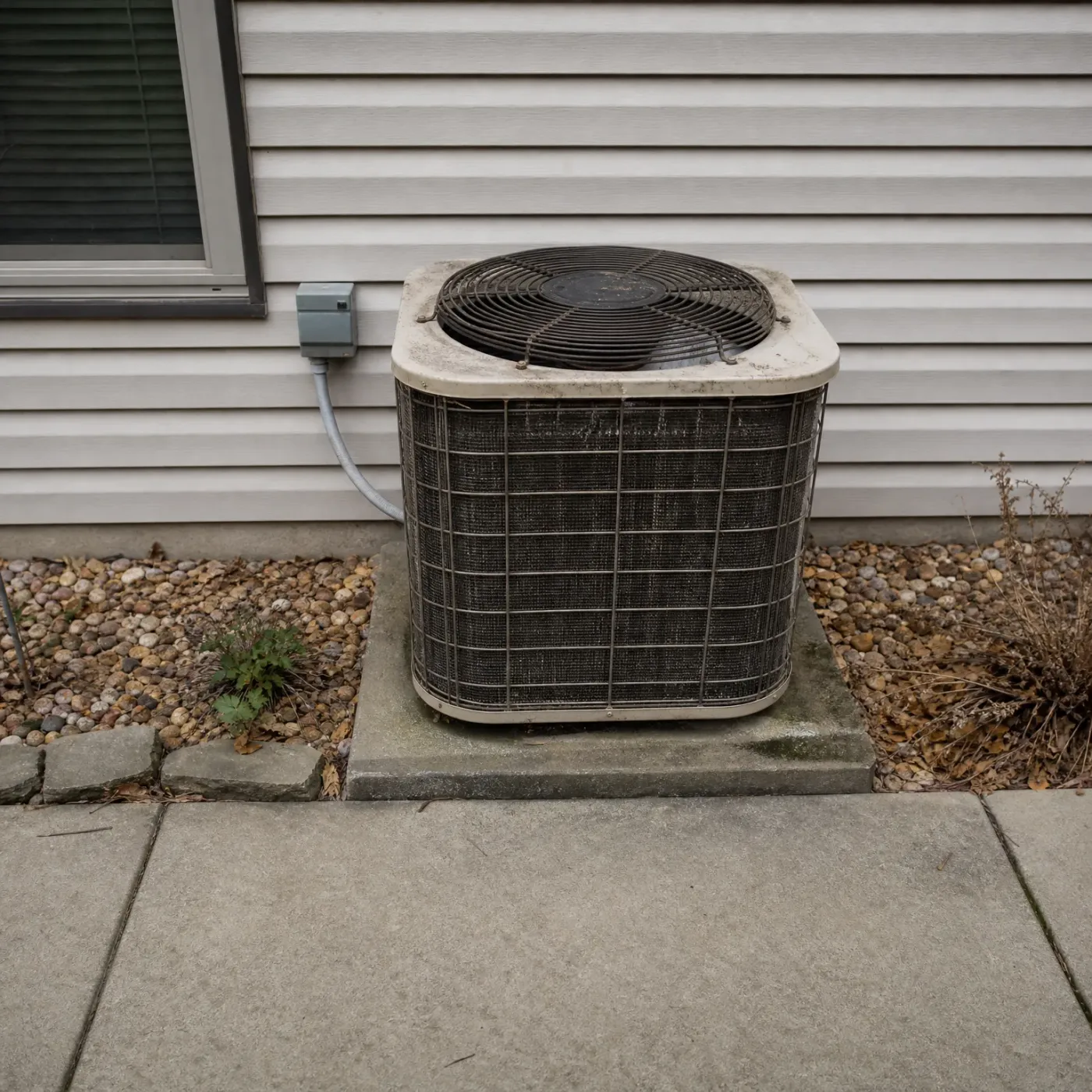
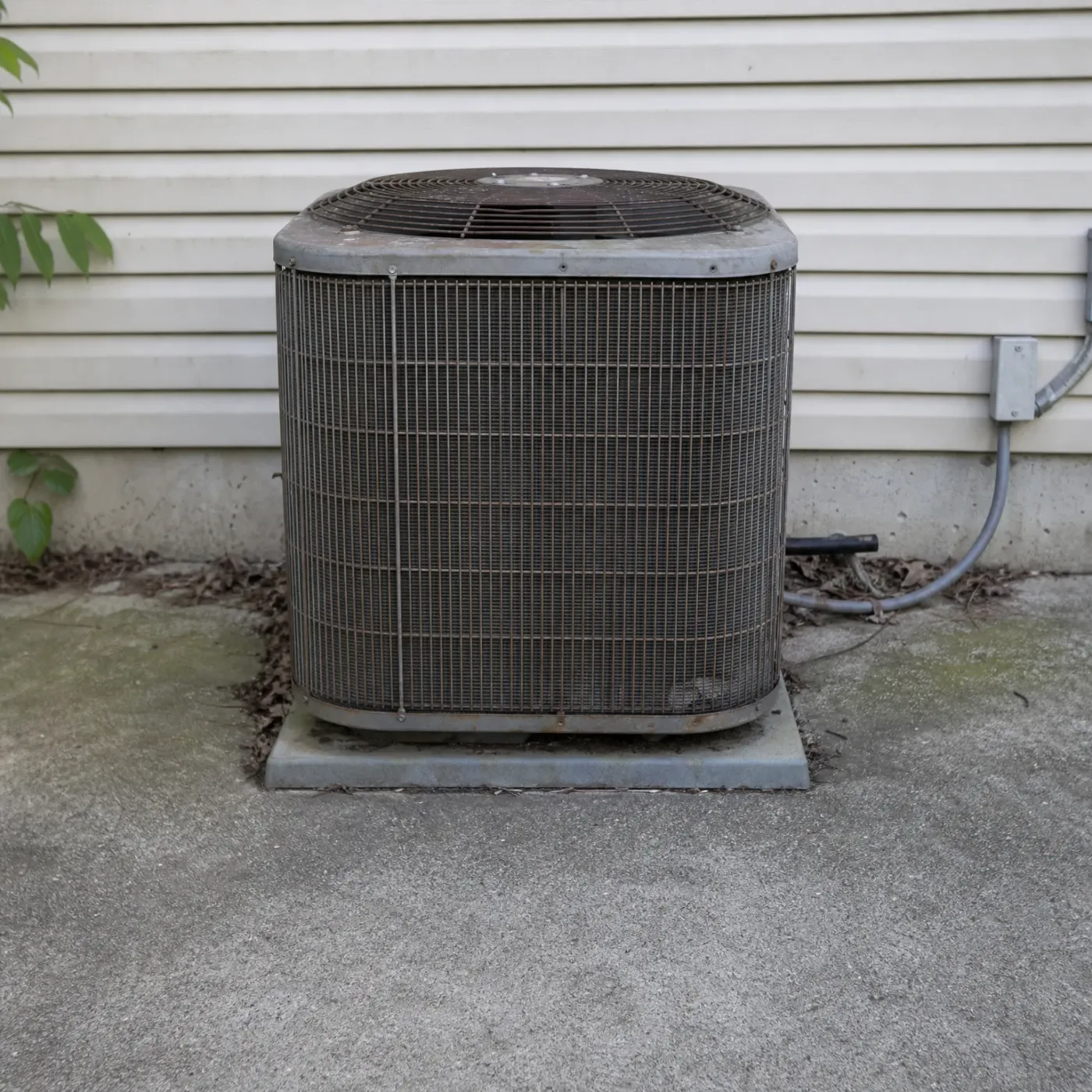
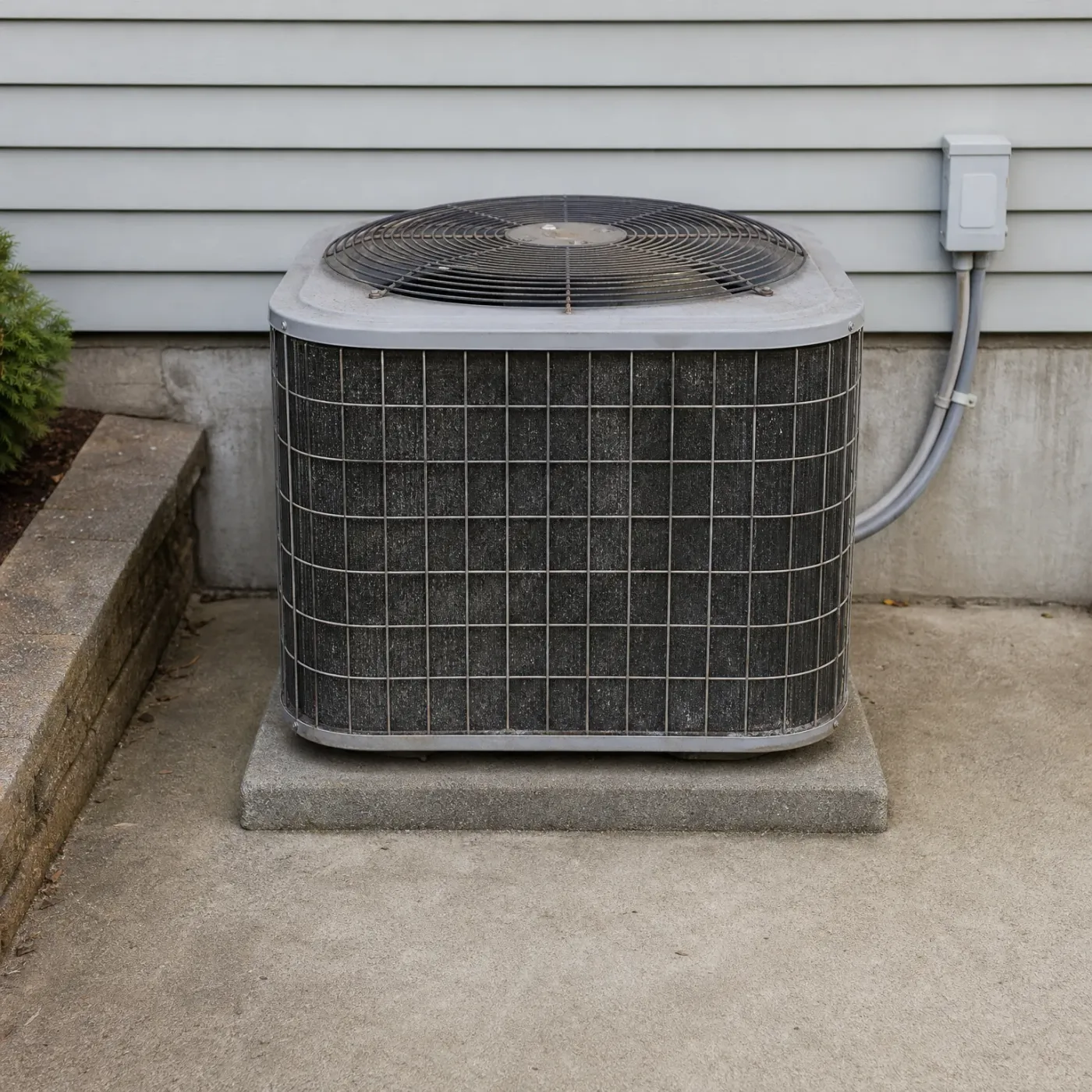
Running in trouble
Nothing looks wrong from the siding. The conduit still runs down to the disconnect, the pad still holds the unit steady. But a coil caked with dust or a filter gone gray cuts the airflow the compressor needs, and it runs longer to do the same job.
Why does your house feel warm even with the AC running
You set the thermostat to 72 and the house settles at 75 instead, no matter how long the unit runs. The air coming out of the vents feels less cold than it used to. You hear the outdoor unit running during stretches when it used to shut off, sometimes straight through the hottest part of the afternoon. Upstairs stays warmer than downstairs no matter what you do with the thermostat. None of this means the system is broken. It usually means airflow is restricted somewhere between the filter and the coil, and the compressor is working longer to make up for it. Left alone through a full Minnesota summer, that extra strain is what shows up as a bigger jump on the August bill than the weather alone would explain.
A Minnesota summer runs with a dew point averaging 59°F across June, July and August. That's dry enough that your AC spends most of its effort moving heat, not wringing water out of the air. A coil working against heavy, humid air has to pull moisture out before the house feels any cooler, which keeps the compressor running longer for the same drop in temperature. Here, the coil mostly just has to do the one job. That's part of why a clean coil and a clear filter go further in this state than in a muggier one. The compressor still has to run, but it isn't fighting the air itself to get the house comfortable.
NASA POWER T2MDEW county cells weighted by homes
Keeping Your AC Honest
A clean filter and a clear coil let your compressor cycle off instead of running long stretches through July and August.
Minnesota's dry summer air means your system spends its effort moving heat, not wringing moisture out of it, so a clean coil goes further here than in muggy climates.
A unit that cycles normally keeps your thermostat number honest, instead of running all afternoon and still leaving the house at 75.
A local contractor who services this equipment every summer knows which part usually fails first on a neglected system before it costs you in July.
Matching you with one contractor means one visit, one assessment of your unit, and no juggling calls from companies that don't know your house.
Lowering your AC bill in Minnesota comes down to one thing: letting the compressor cycle off instead of running long stretches all afternoon. A clean filter and a clear coil are what make that happen. Your summers here are dry enough that the system isn't fighting humidity the way it would further south, so the airflow problem is usually the whole problem. Clear it up and the unit does less work to hit the same number on the thermostat.
That's the state a neglected system drifts away from. Instead of shutting off at 72, it runs through the afternoon and the house still settles at 75. The compressor is drawing power the whole time it runs long like that, and a dirty coil or a clogged filter is usually why.
Maintenance catches this before July does. A contractor who works on this equipment every summer in Minnesota has seen which part usually goes first on a system that's been sitting with a dirty coil or a weak filter, and checks that before it turns into a breakdown in the middle of a heat wave. When you ask for that service, you get matched with one contractor local to you, not a handful of companies competing for the job. One visit, one person who looks at your unit and knows what they're looking at, and no juggling calls from companies that have never seen your house.