Profile view of a bearded man wearing a dark green baseball cap and a dark gray T-shirt against a plain light background.

Is a variable-speed AC worth it in Minnesota

Step 1 of 3: Equipment

Is a variable-speed AC worth it in Minnesota?

Minnesota summers don't bring the heavy, sticky air some other regions deal with, so you might wonder if a variable-speed air conditioner is overkill for your home. You've heard they cost more up front, and you want to know if that extra money actually does something here, or if a standard single-speed unit handles a Minnesota summer just fine.

Yes, mainly for comfort and humidity control, not for fighting extreme heat

A variable-speed AC adjusts its output instead of just switching on and off at full power. In Minnesota, where summer heat is moderate, that matters less for cooling capacity and more for how the system handles moisture. Running longer at a lower speed pulls more humidity out of the air than a single-speed unit cycling on and off. Since most homes here heat with gas, the AC is doing its own job without a heat pump's winter demands layered on, so the upgrade is really about how the house feels on humid days, not keeping up with heat the way it might in a hotter state. If steady comfort and fewer drafts matter more to you than the lowest possible install price, it's worth it.

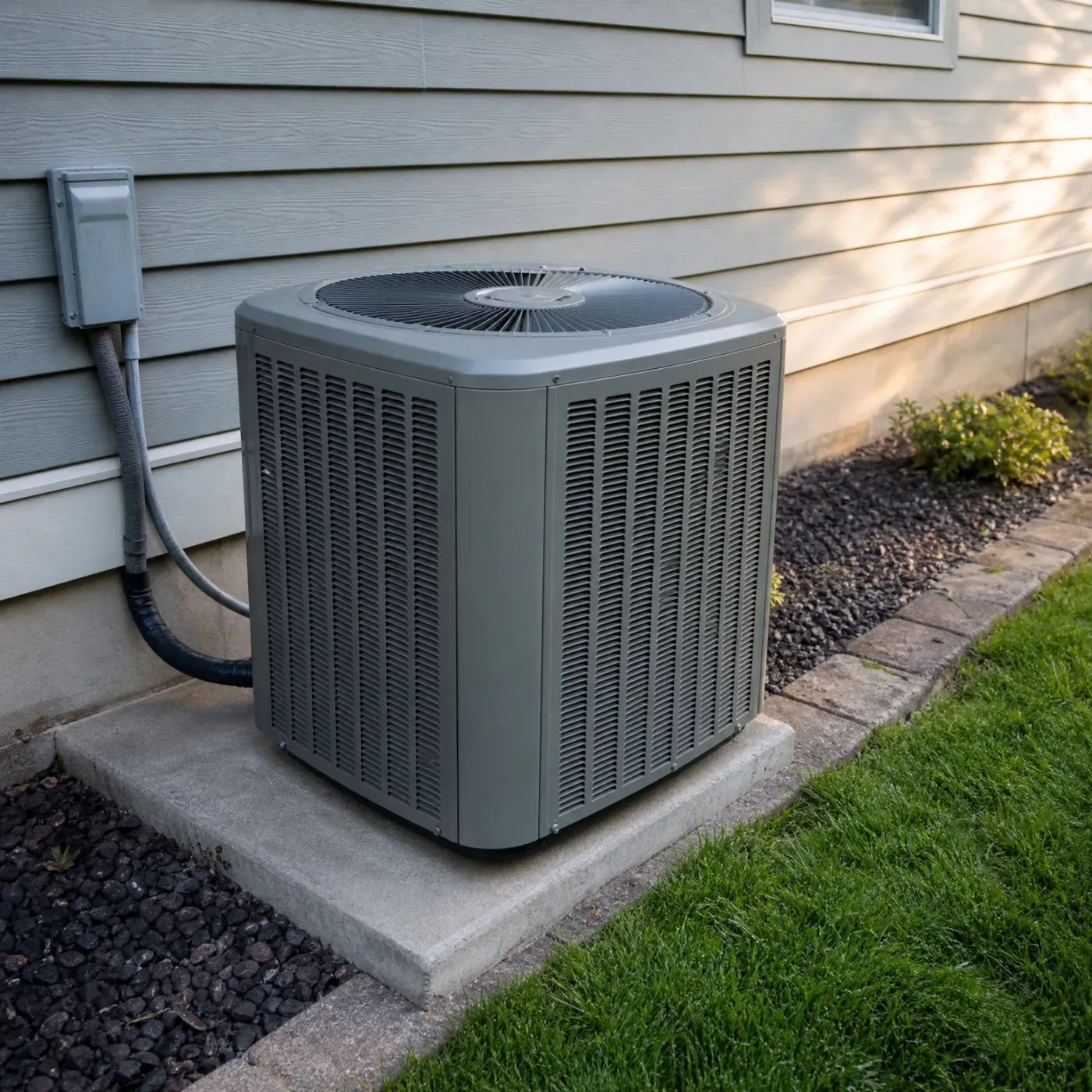
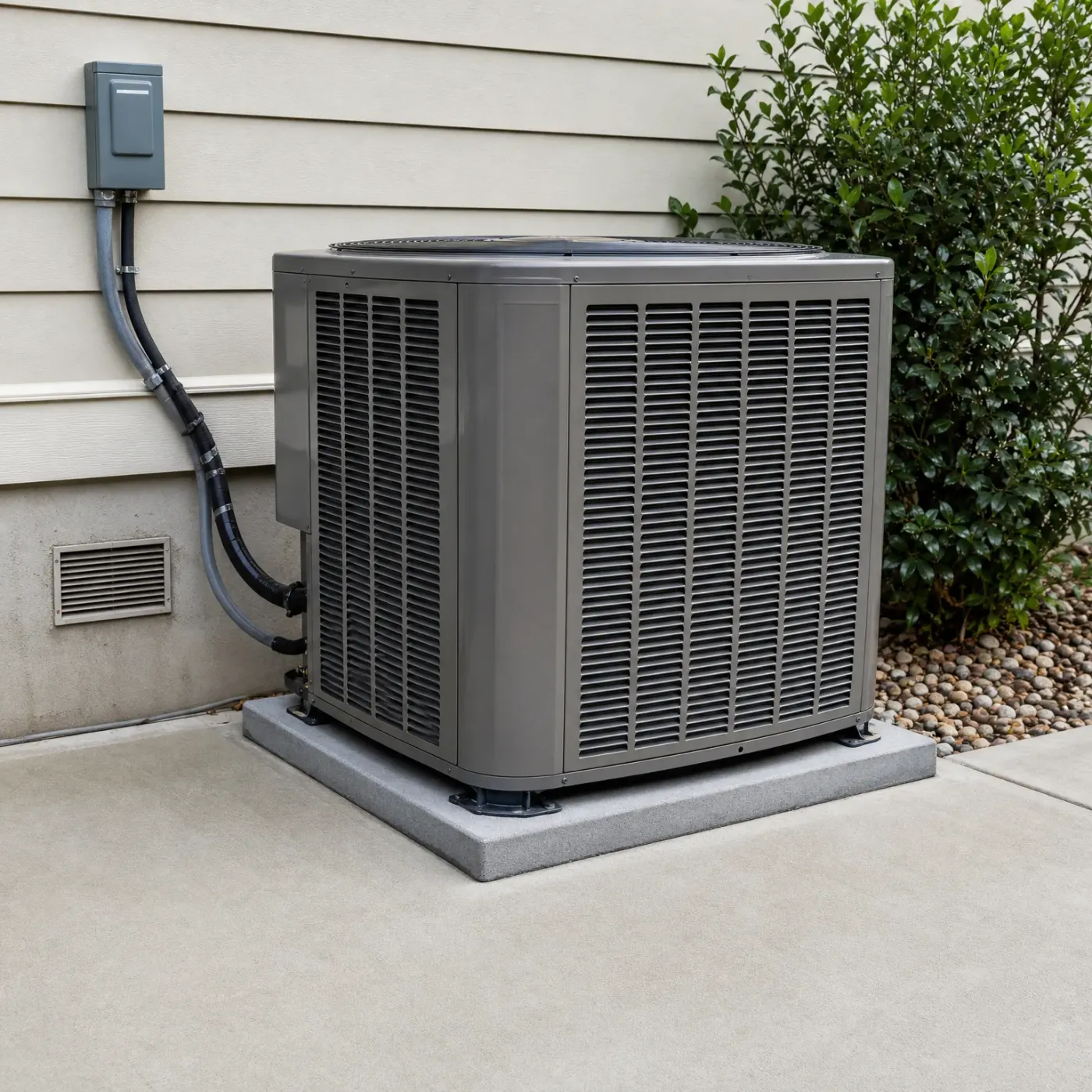
A gray outdoor air conditioning condenser unit sits on a concrete pad beside a house with horizontal siding, connected by insulated lines to a wall-mounted disconnect box, with a shrub and gravel bed to the right.

Single-Stage AC

A single-stage unit runs at full blast or not at all. It cools your house fast on a warm afternoon, then shuts off completely. That on-off cycling is normal and the compressor isn't straining, but you'll notice bigger swings in temperature and humidity between cycles, even in a mild Minnesota summer.
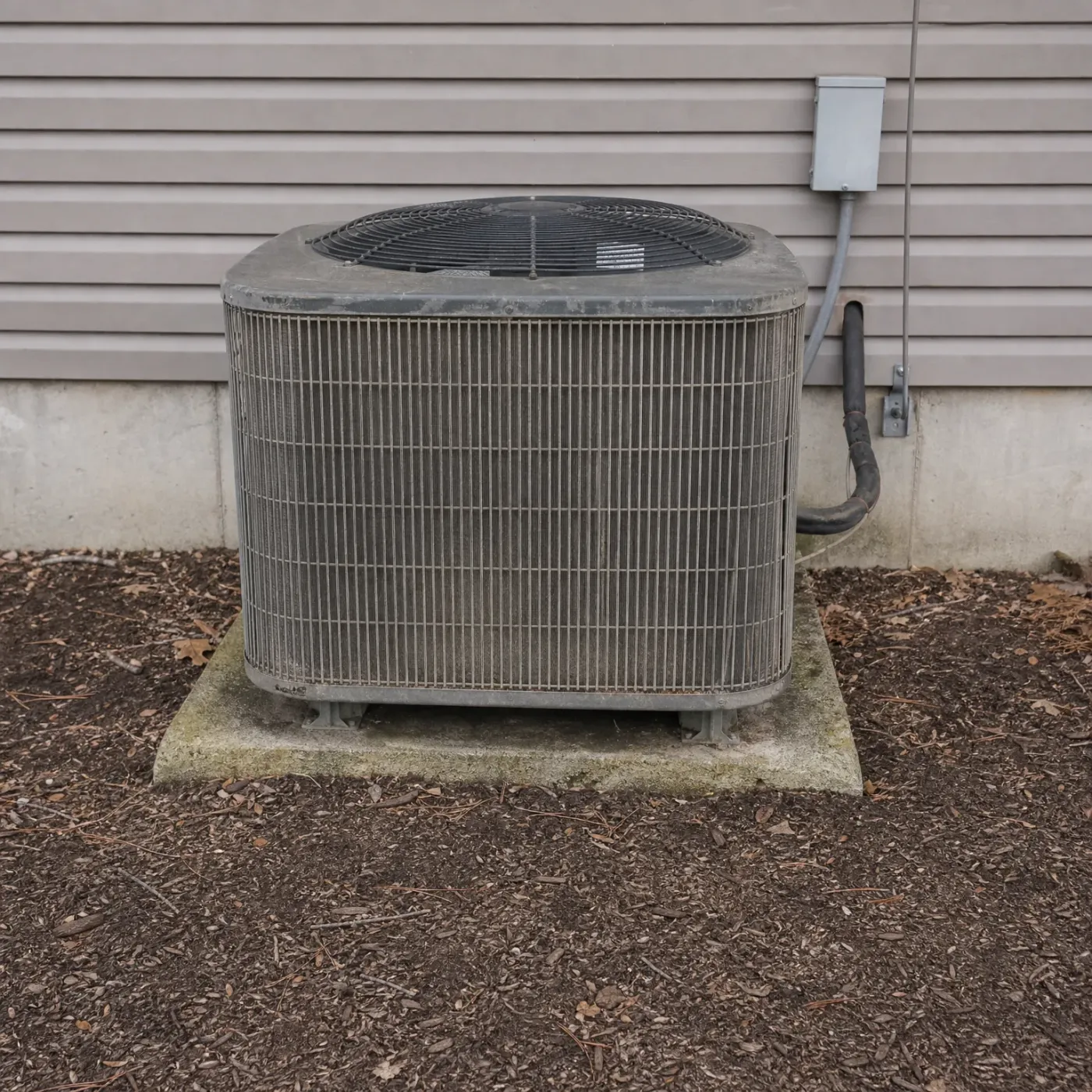

An outdoor air conditioning condenser unit sits on a concrete pad beside a house with horizontal vinyl siding, with a gray electrical disconnect box and insulated refrigerant line on the wall above, surrounded by bare mulched ground.

Variable-Speed AC

A variable-speed unit ramps up and down to match what your house needs, often running at a lower speed for long stretches instead of shutting off. That steadier airflow holds the temperature more evenly room to room. It also tends to run quieter than a unit that's cycling on and off.

Single-Stage vs. Variable-Speed AC

Single-Stage AC

  • Costs less to install than a variable-speed system, since the equipment and the labor are both simpler.
  • Fewer electronic parts means fewer things that can fail, which keeps repairs more straightforward when something does go wrong.
  • Runs on and off through the day, so a thermostat sensor that can't tell you can hear doing its job.
  • Humidity control is weaker, since the unit only runs at full power and shuts off once the house hits temperature.
  • Works fine for a Minnesota summer where the air isn't heavy to begin with, so the extra dehumidifying power of a variable-speed unit matters less here than it would somewhere humid.
  • Most contractors who service AC in Minnesota can work on single-stage systems without any special training.

Variable-Speed AC

  • Adjusts its output to match the load, so it runs longer at lower speeds instead of cycling on and off at full power.
  • Keeps indoor temperature steadier room to room, since it isn't swinging between full blast and off.
  • Pulls more moisture out of the air over a long, low-speed run than a single-stage unit does in short bursts.
  • Costs more to install, and that higher upfront cost is the main trade-off against a single-stage system.
  • Runs quieter most of the time, since it spends more of its runtime at partial speed instead of full power.
  • Has more electronics and a more complex compressor, so a repair technician needs the training to diagnose those parts correctly.
A smiling woman with dark shoulder-length hair in a cream V-neck sweater sits at a marble counter with a glass of red wine, with a kitchen and softly lit living room behind her.
A woman in a dark green sweater laughs while seated at a marble kitchen island with a glass of red wine, with open shelving, cabinets and a living room visible behind her.
A woman with long dark hair in a cream knit sweater laughs while looking off to the side, seated at a counter with a glass of red wine, in a dimly lit living room with a sofa, lamp, framed pictures and houseplant behind her.
A smiling woman with long dark hair in a beige sweater sits at a marble kitchen counter with a glass of red wine, with a dimly lit living room behind her.
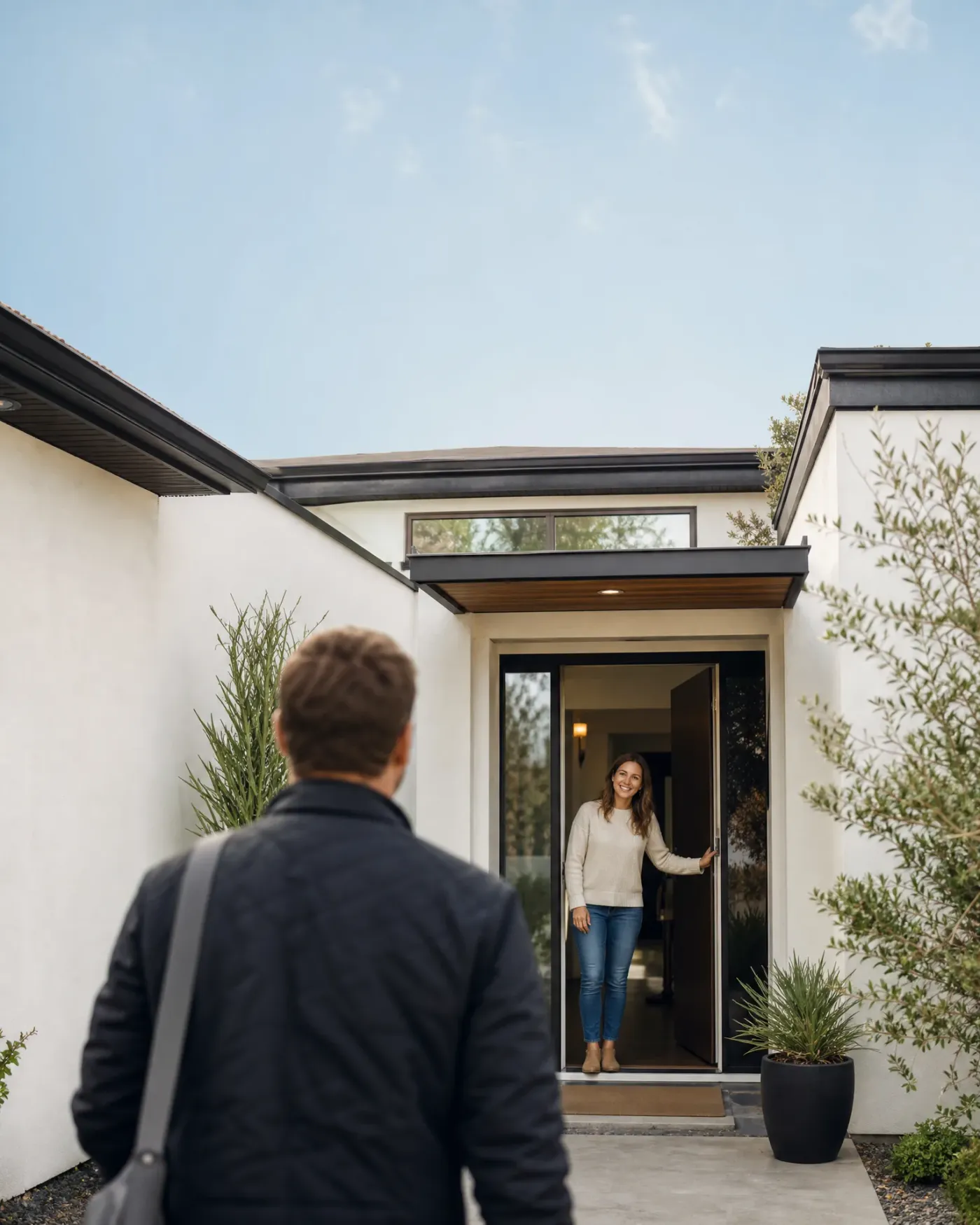
A woman in a cream sweater and jeans stands in the open doorway of a white stucco house, holding the dark door, while a man in a dark quilted jacket seen from behind walks toward the entry past potted plants.

What a variable-speed system means for your house

In a Minnesota summer, your single-stage AC probably doesn't run flat out for hours the way it might in a muggier climate. It kicks on, cools the house down fast, and shuts off, and it does that over and over on a warm afternoon. A variable-speed system instead runs long stretches at low output, so the air coming out of your vents stays more even and your thermostat doesn't see the same swings. If your bedrooms run warmer than the living room, or you've got a room over the garage that never quite matches the rest of the house, that's where the difference shows up most.

Since gas heats most homes here, this is really a one-season decision, not a year-round one, and that changes the math on what you're paying for. Before you decide if that's worth it for your house, it helps to talk through what your rooms actually do in July and August with someone who can look at your ductwork and your layout. Getting matched with a contractor who installs these systems means you're not calling around and explaining your house to three different companies to find out.

A living room corner with a beige sofa and cushion, a round wooden coffee table holding a pale ceramic vase of eucalyptus stems and a wooden bowl, and a curtained window with a potted plant above a latticed radiator cover in the background.
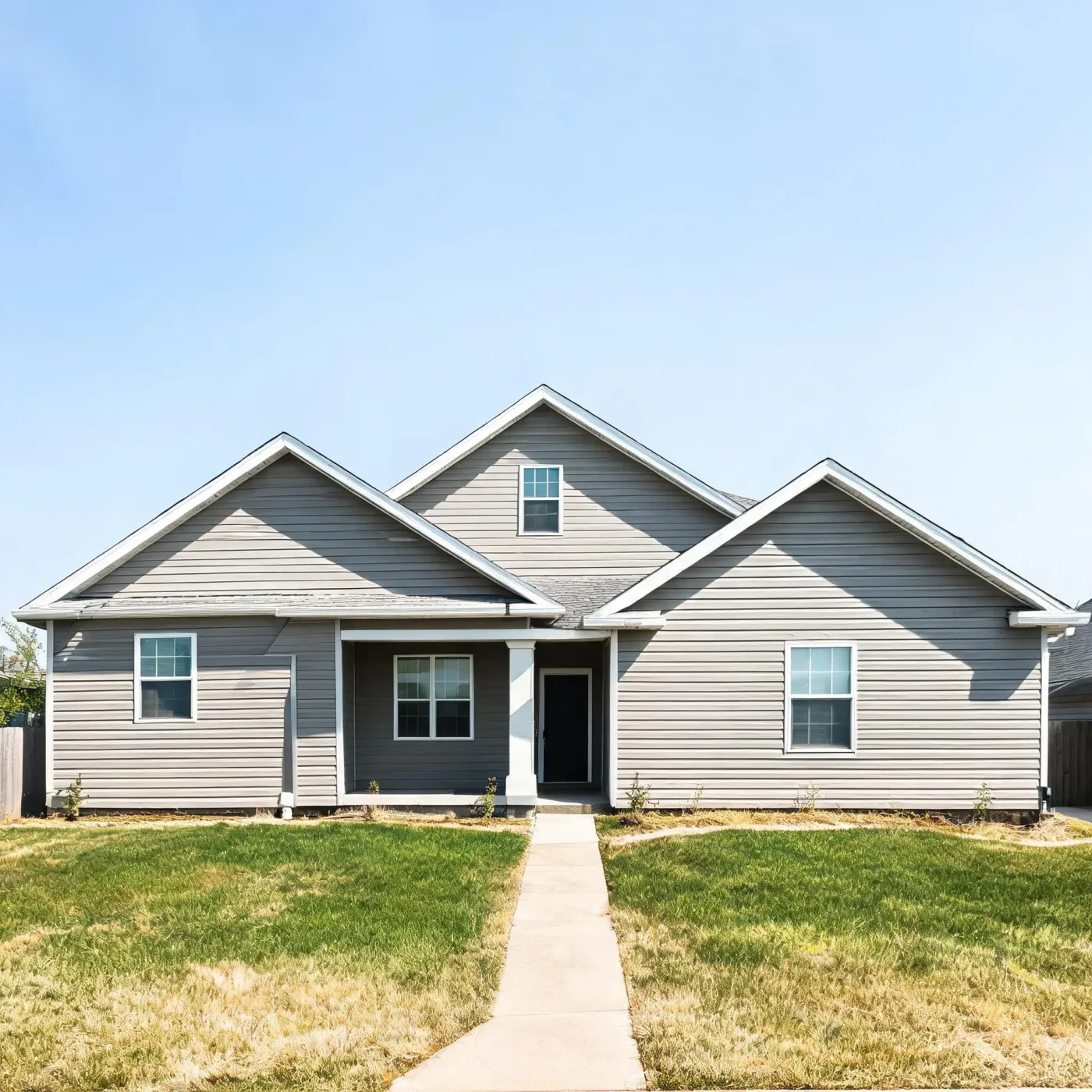
A single-story gray horizontal-siding house with multiple front-facing gables, white-trimmed windows, a dark front door, and a concrete walkway crossing a partly dry lawn under a clear blue sky.

A summer dew point averaging 59°F across June, July and August, as recorded at Minnesota weather stations, is on the dry side as these things go. Your air conditioner isn't fighting moisture the way one would in a swampier state. It cools the air and shuts off without having to run long stretches just to wring the damp out of your house. A single-stage unit can keep up fine with that kind of load. Where a variable-speed system earns its keep is in the small stuff, running low and steady instead of blasting on and off, holding a room temperature instead of letting it drift a few degrees between cycles. Whether that's worth the cost for your house is a judgment call, and it helps to have someone look at your ductwork and your home's layout before you decide. A contractor who knows Minnesota installs can walk through that with you, so you're not the one calling around and explaining your situation over and over to get a straight answer.

NASA POWER T2MDEW county cells weighted by homes

Get your air conditioner to the right pro

Describe your air conditioner job once, to one pro.

You only hire the pro if you want to.

Why humidity changes the math

A variable-speed system earns its keep by running long, slow cycles that pull moisture out of the air as a side effect of cooling it. In a humid state, that matters as much as the temperature does. Minnesota's summer air doesn't carry that load. A dew point in the high 50s means the house dries out on its own most days, so the long-cycle advantage that justifies the extra cost elsewhere isn't doing the same work here. The equipment still cools fine. It just isn't solving a problem your air had in the first place.

Where the gas furnace fits in

Most homes in Minnesota heat with a gas furnace, and that matters for how an AC gets paired with it. A single-stage furnace moves air at one speed no matter what's attached to it, so a variable-speed outdoor unit can't vary its airflow the way it would with a matching variable-speed air handler. You'd get a variable-speed compressor working through fixed-speed ductwork. The modulation that's supposed to even out temperatures and run quieter has less to work with when the furnace blower only knows one gear.

A smiling bearded man in a navy crewneck sweater sits at a dinner table with a glass of red wine, plates and glasses in the foreground, in a dimly lit room with a lamp and framed picture behind him.
A woman in a dark gray sweater reclines on a light sofa with eyes closed and a slight smile, under a textured gray blanket with an open book resting on her lap, with a lit table lamp and plant in the background.

When a single-stage unit still makes sense

If your ductwork is in good shape and your house holds a steady temperature room to room, a single-stage AC will keep you comfortable most afternoons. Minnesota's dry air means you're not relying on long, slow cycles to wring moisture out of the house the way you would somewhere muggier. A straightforward on-off system does its job, costs less to put in, and gives you fewer parts that can eventually need a repair. For a lot of homes here, especially smaller ones or ones without a lot of temperature swing between rooms, that's a reasonable place to stop.

When the upgrade pays off in comfort

If you've got hot and cold rooms, a system that runs loud enough to notice, or you just want the house to feel even all day instead of cold-then-warm-then-cold again, a variable-speed unit solves that. It's a bigger decision than picking between two boxes with different price tags. The right call depends on your ductwork, your home's layout and what you're already dealing with. A contractor who looks at your specific setup can tell you whether variable-speed is worth the difference for your house, instead of you guessing from a spec sheet or comparing notes with a neighbor whose house isn't built like yours.

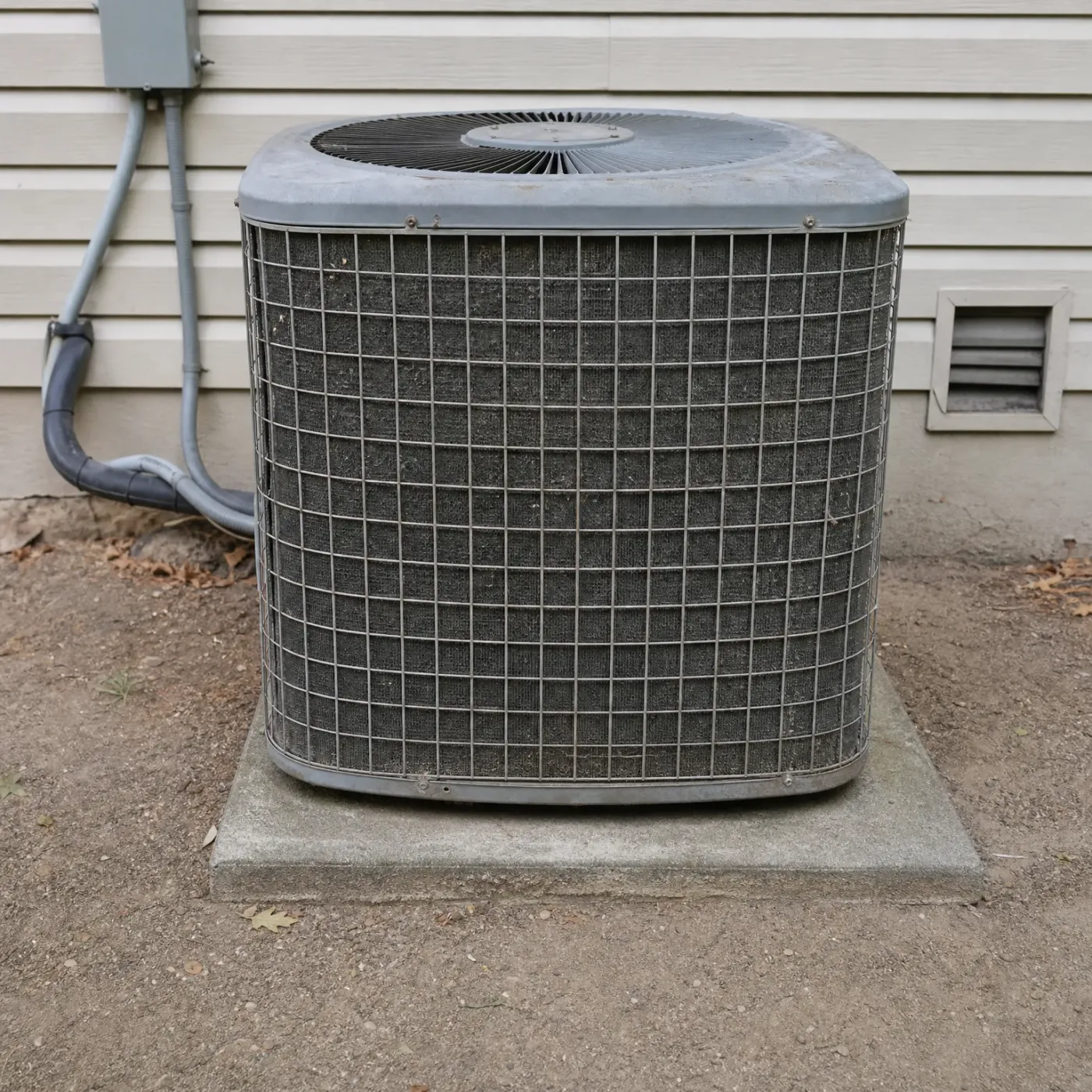
An outdoor air conditioning condenser unit with a dirty mesh coil guard sits on a concrete pad beside a house with horizontal lap siding, a wall vent, and conduit running to an electrical disconnect box.
Before you get your air conditioner installation
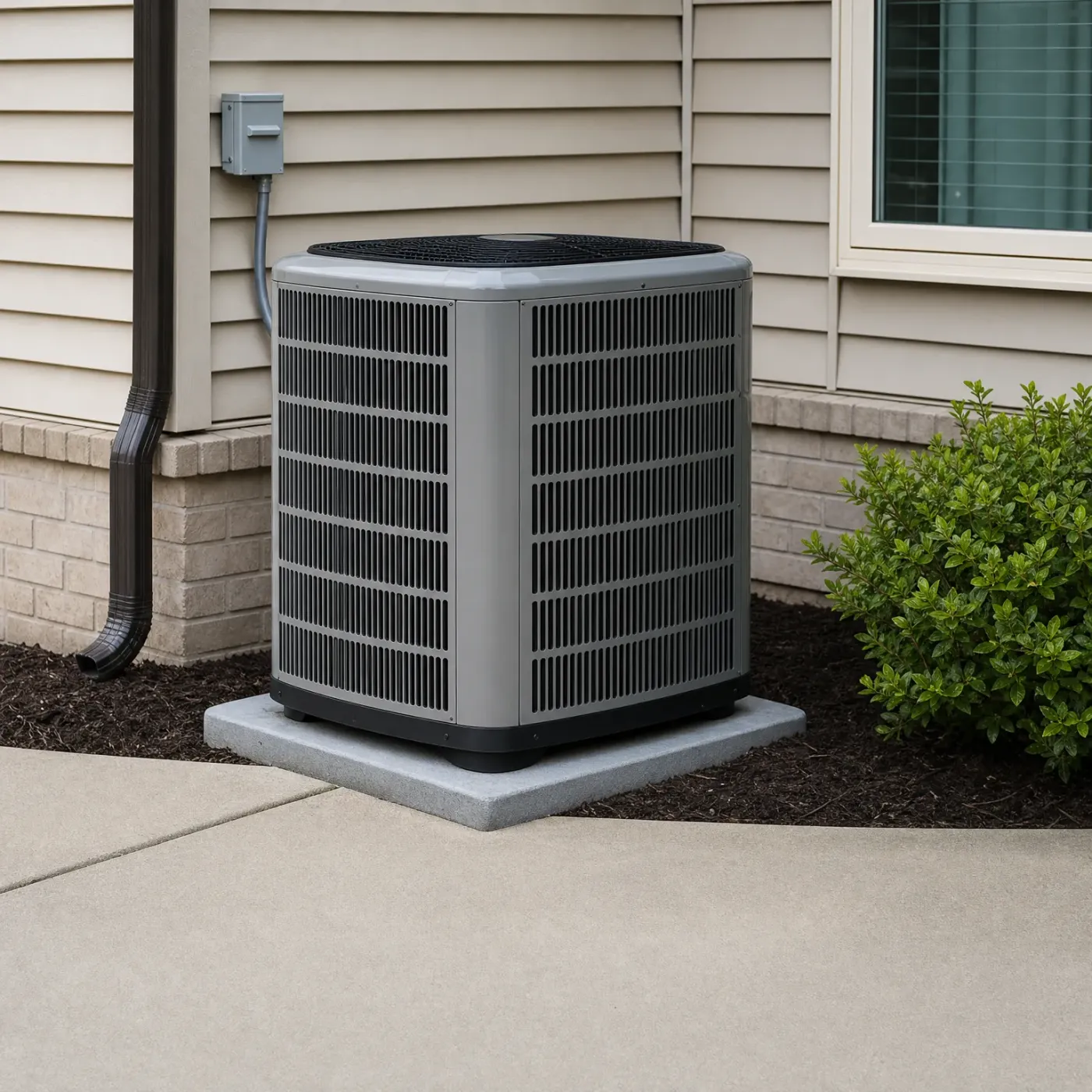
A gray outdoor air conditioning condenser unit on a concrete pad beside a house with horizontal vinyl siding, a brick foundation, downspout, electrical disconnect box, mulch bed and a green shrub.
After you get your air conditioner installation
  1. Your thermostat calls for cooling and signals the outdoor unit.

  2. The compressor ramps up only as fast as the load needs.

  3. A variable-speed blower moves air to match that output.

  4. The system holds low speed for long stretches instead of cycling off.

What's your single-stage AC actually doing in your house right now

Walk through your house on a warm afternoon and you'll probably notice the rooms upstairs feel a few degrees warmer than the ones downstairs. You'll hear the unit kick on hard, cool things down fast, then go quiet for a while before it starts again. That's normal for a single-stage system and it isn't a sign anything's wrong. What you're paying for is all that stopping and starting, since the compressor draws the most power in the moment it switches on. If the system is getting older, you might also notice it running a little longer than it used to just to catch up on the hottest days.

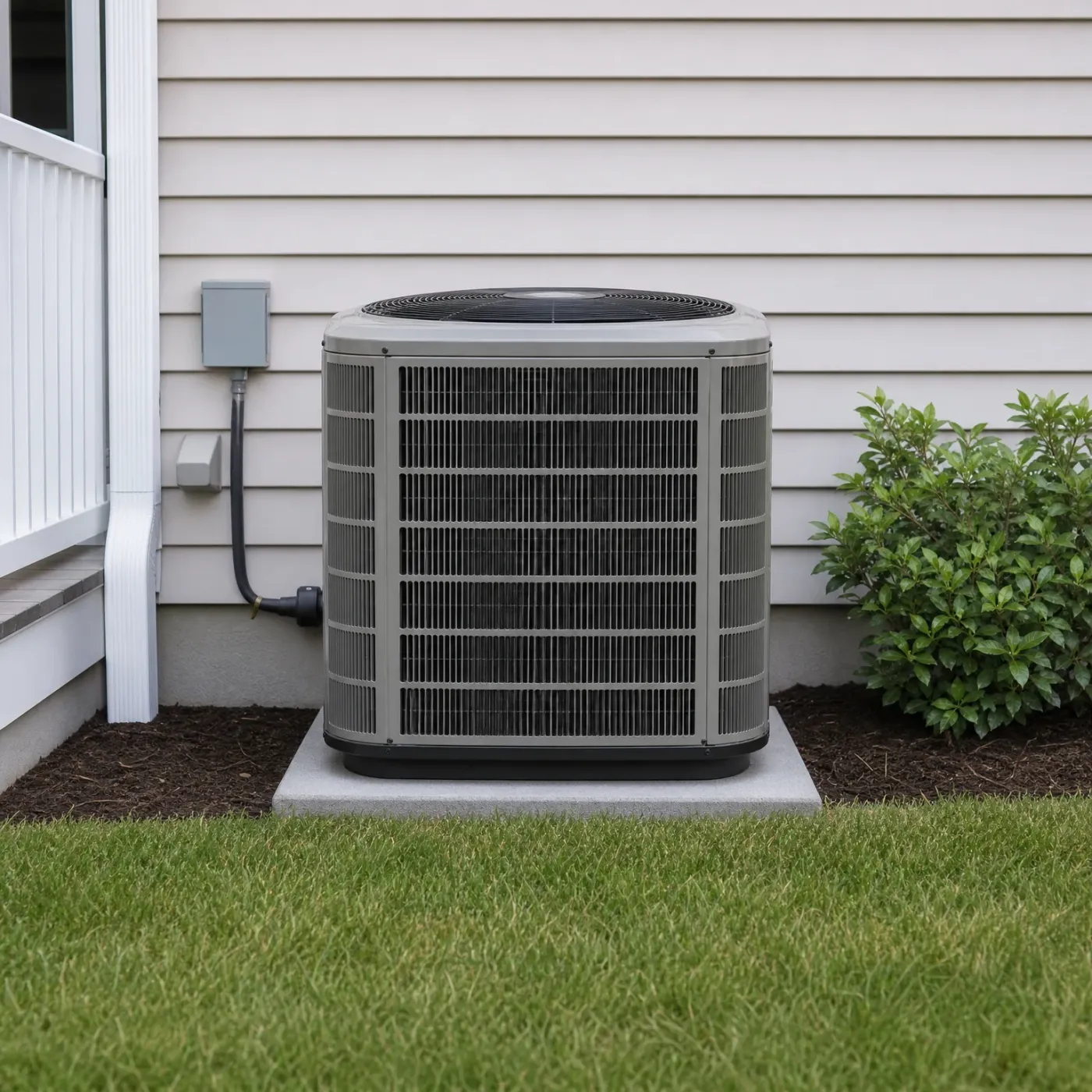
An outdoor air conditioning condenser unit on a concrete pad beside a house with horizontal lap siding, with a gray electrical disconnect box and conduit on the wall, mulch bed and shrub to the right, and mown grass in the foreground.
The condenser sits clean beside the house, coil guards clear, running the way it was installed to run.
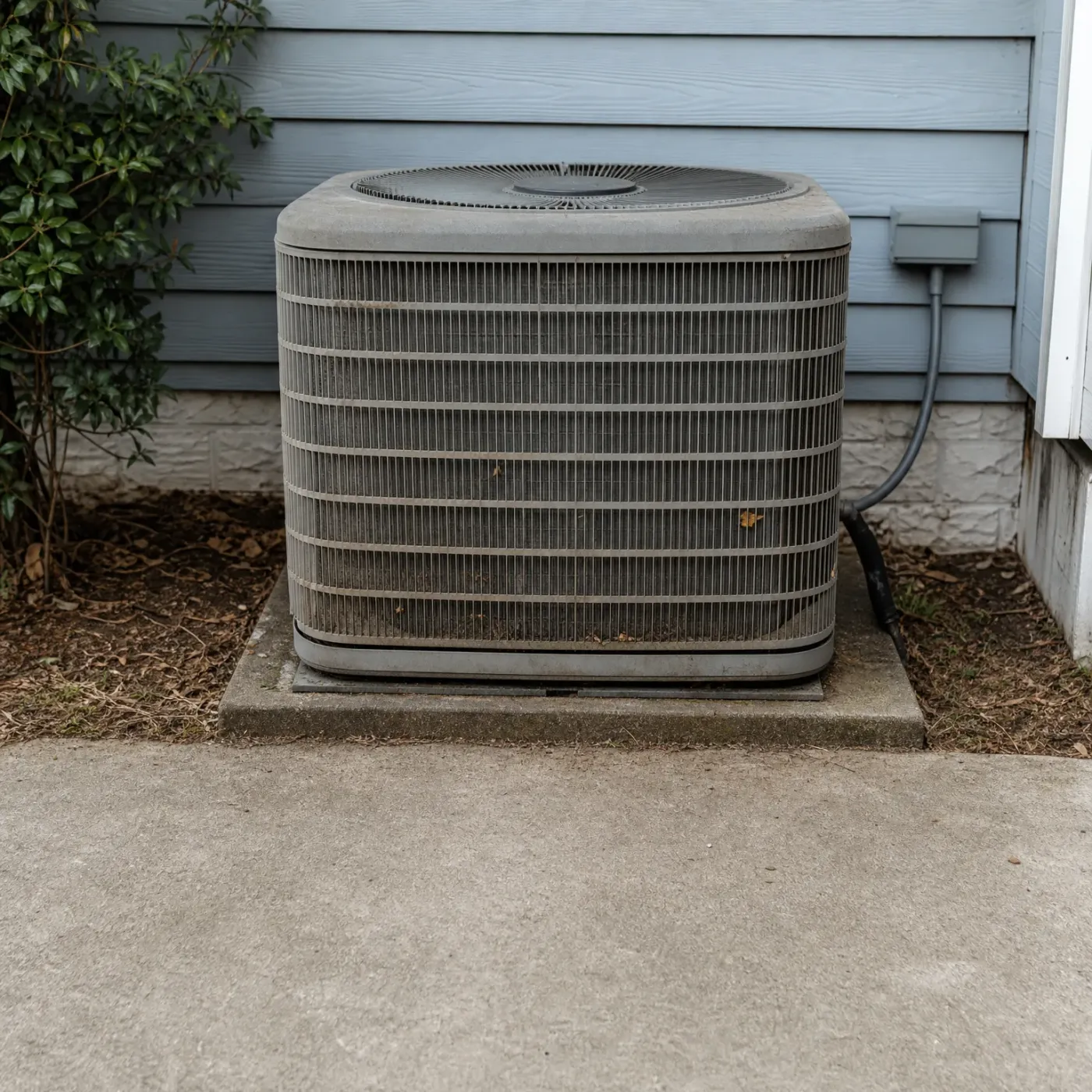
An outdoor air conditioning condenser unit on a concrete pad beside a house with light blue horizontal siding, with a shrub to the left and a conduit and disconnect box on the wall to the right.
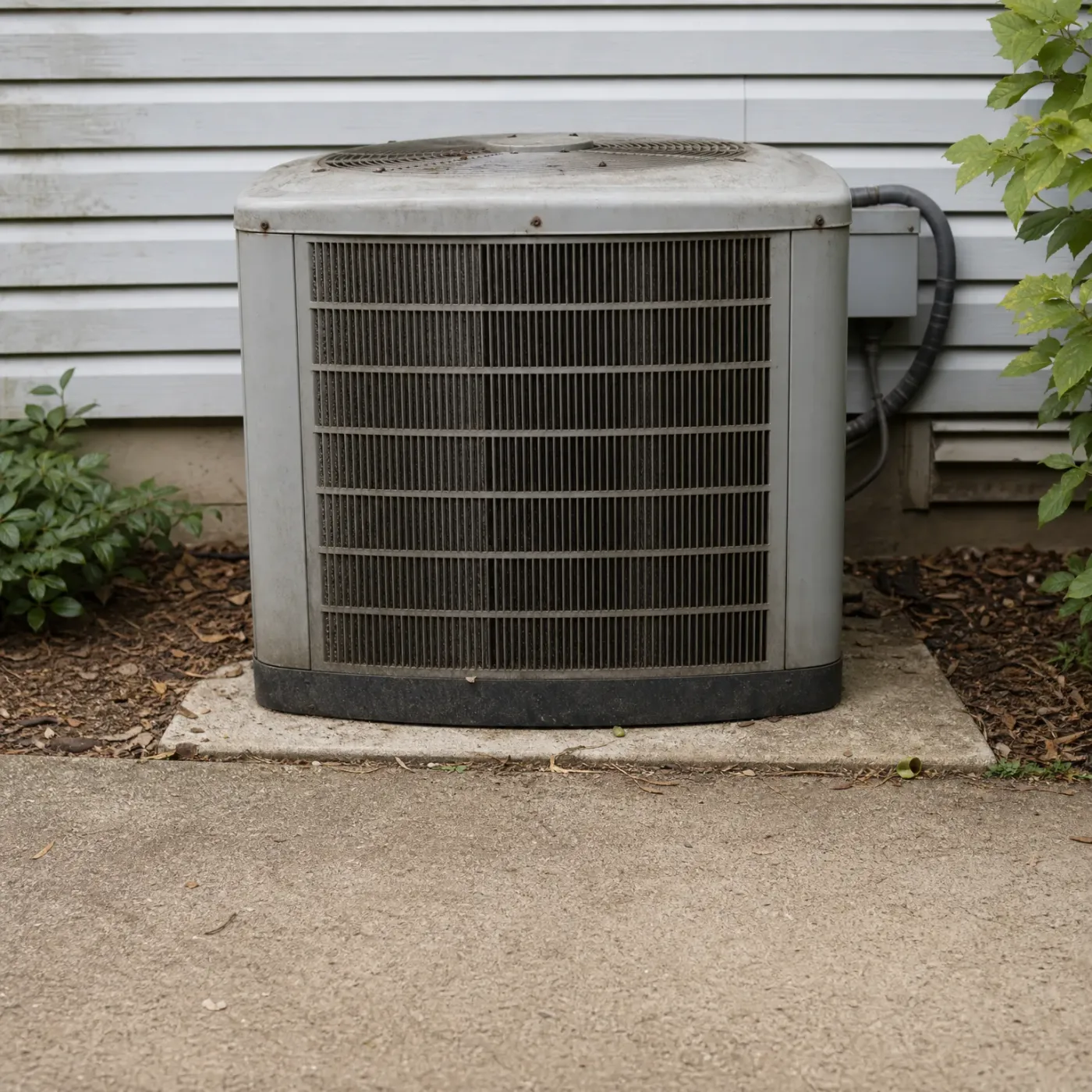
Dust packed into the coil guards like this makes the unit work harder to pull the same heat out of your house.
A dim bedroom with a bed in the foreground, a radiator against the wall, and a box fan set in a sunlit window with sheer curtains and green trees outside.

The box fan in the window is just pushing the same warm air around. It's past nine and still light out, that late June dusk that hangs on forever. You're sitting on the edge of the bed with the upstairs air thick against your skin, listening to the unit outside cycle off again, the house already creeping back up a degree or two. Downstairs was fine an hour ago. Up here it never quite gets there. You can hear the fan rattling on its stand and your own breathing, and you're doing the math on whether to just sleep on the couch where the air actually moves.

Power costs 15.83 cents per kilowatt-hour statewide

At 15.83 cents per kilowatt-hour, every hour your compressor runs at full draw instead of easing back costs you more than it has to. A variable-speed system spends most of its time at low speed, so less of that rate applies to your bill each month.

EIA-861 2025 statewide residential average

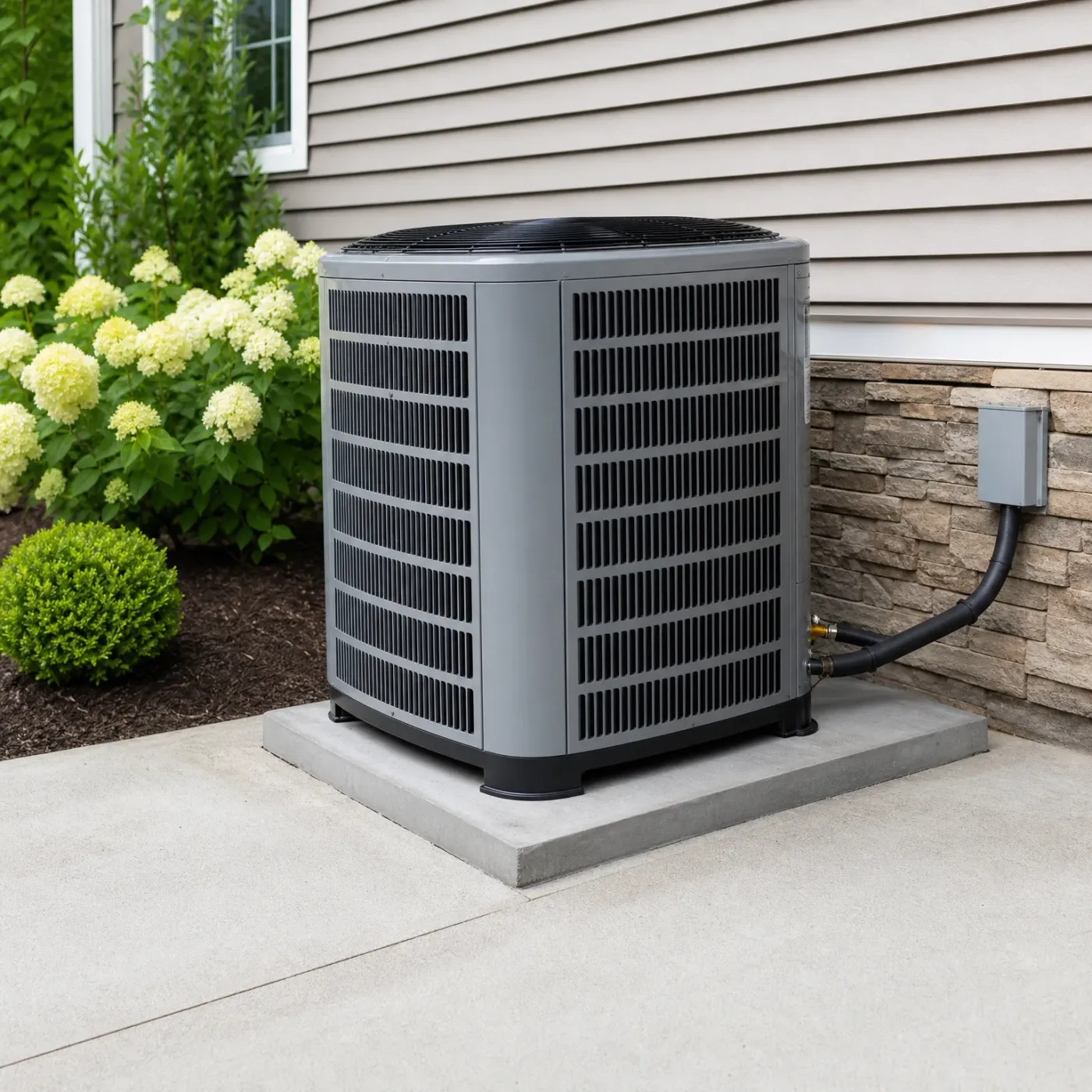
A gray outdoor air conditioning condenser unit on a concrete pad beside a house with horizontal siding and a stone veneer base, with refrigerant line and electrical disconnect box on the wall and flowering shrubs to the left.

Running clean

This condenser sits on its pad doing what it was installed to do. The coil guards are clear, the fins are open, and the refrigerant lines run straight into the wall without any strain on the system. Air moves through it the way it's supposed to.

An outdoor air conditioner condenser unit on a concrete pad beside a house with light gray horizontal siding, with mulch and green shrubs on either side and a concrete walkway in the foreground.

Running dirty

Years of dirt packed into the fins and casing make this unit work harder to pull the same heat out of the house. A single-stage compressor already swings between full blast and off. Add a coil caked like this and those swings get rougher on the equipment, no matter how dry Minnesota's air is.

A variable-speed AC is worth it in Minnesota if your house has the problems a slower, longer cooling cycle actually fixes: rooms that run warmer upstairs, humidity that lingers after the temperature drops, or a single-stage unit that's cycling on and off all afternoon without settling the house down. If your home cools evenly now and you're not chasing a comfort problem, a single-stage system will keep doing the job for less money up front. Either way, the right call depends on your ductwork, your house, and what you're actually trying to fix, not a blanket rule for the state. Figuring that out usually means calling a few contractors, explaining the same symptoms to each one, and sitting with a stack of quotes trying to tell them apart. You don't have to do that part yourself. Answer a few questions about your house and a contractor who knows this kind of work will reach out and walk through what your home actually needs.

A gray outdoor air conditioning condenser unit on a concrete pad beside a house with horizontal lap siding, with a wall-mounted disconnect box and conduit, lava rock mulch, a shrub, and grass nearby.

The right pro for this job

Get a local pro

Skip collecting and comparing quotes for the new air conditioner.

Asking costs nothing, and the choice to hire stays yours.