Signs of a bad AC capacitor in Minnesota

Step 1 of 3: Equipment

A bad AC capacitor usually shows up as the outdoor unit humming but not starting, or the fan running while the air stays warm. Sometimes the whole system just clicks and quits. The capacitor stores the charge that kicks the compressor and fan motor into motion, and once it weakens, the motor doesn't get enough of a push to turn over, especially on a warm Minnesota afternoon when the system is working hardest. You might also notice the unit cycling on and off more than it used to, or the air coming through weaker than it should. None of this means the whole system is failing. A capacitor is a small, specific part, and catching it early usually keeps the problem from spreading to the compressor itself, which costs a lot more to replace. If your AC is struggling to start or stay running, it's worth getting looked at before the next hot stretch.

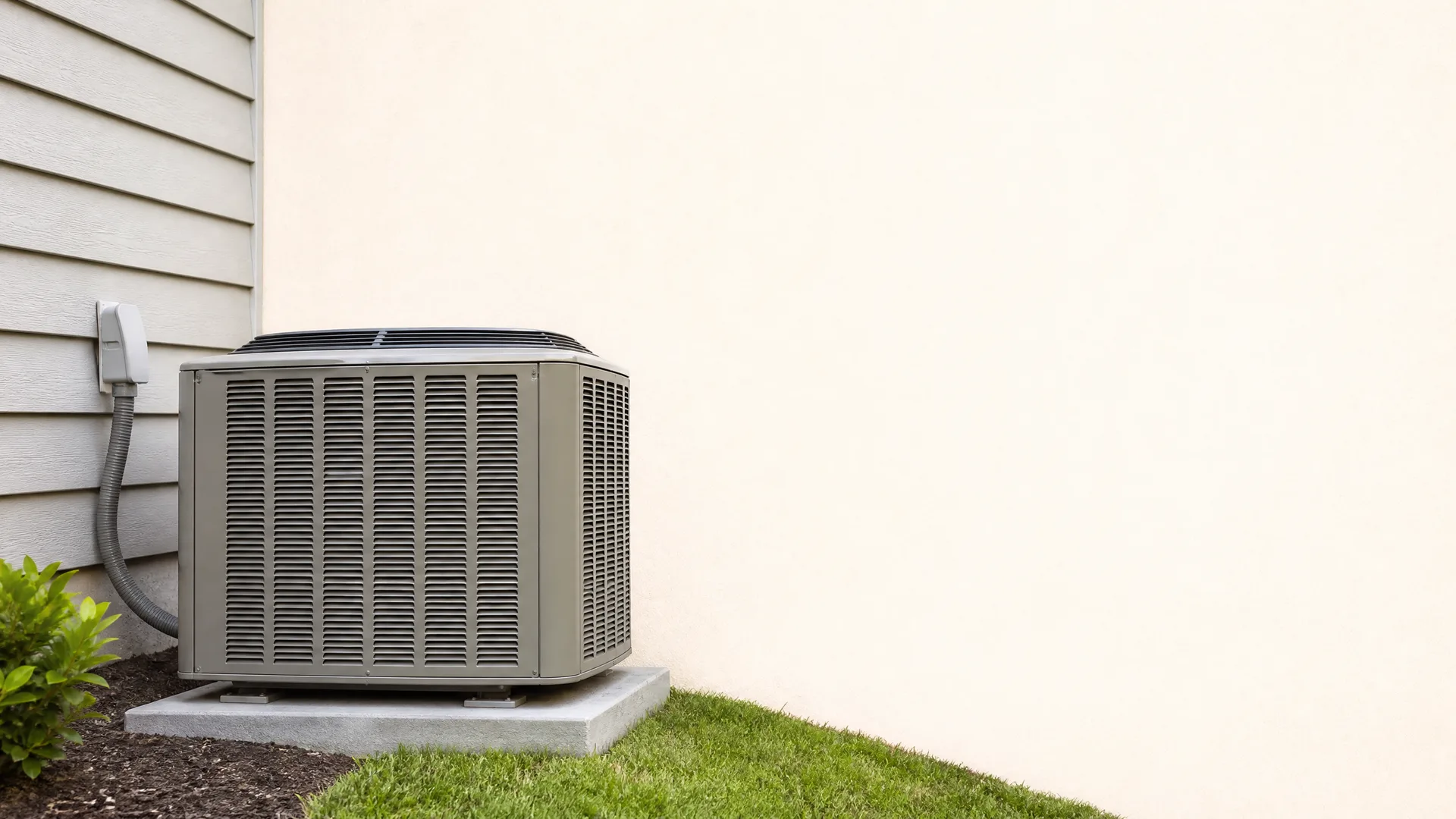
An outdoor air conditioning condenser unit on a concrete pad at the corner of a house, next to vinyl siding and a plain light-colored wall, with grass and a mulch bed in the foreground.

Why the heat makes it worse

A capacitor weakens over time, and heat speeds that along. The outdoor unit sits in direct sun all afternoon, and on a hot day it works harder and runs longer to keep up. A capacitor that's been marginal since spring can give out on the first real stretch of 80-degree days. That's why these failures cluster in July and August here rather than in June.

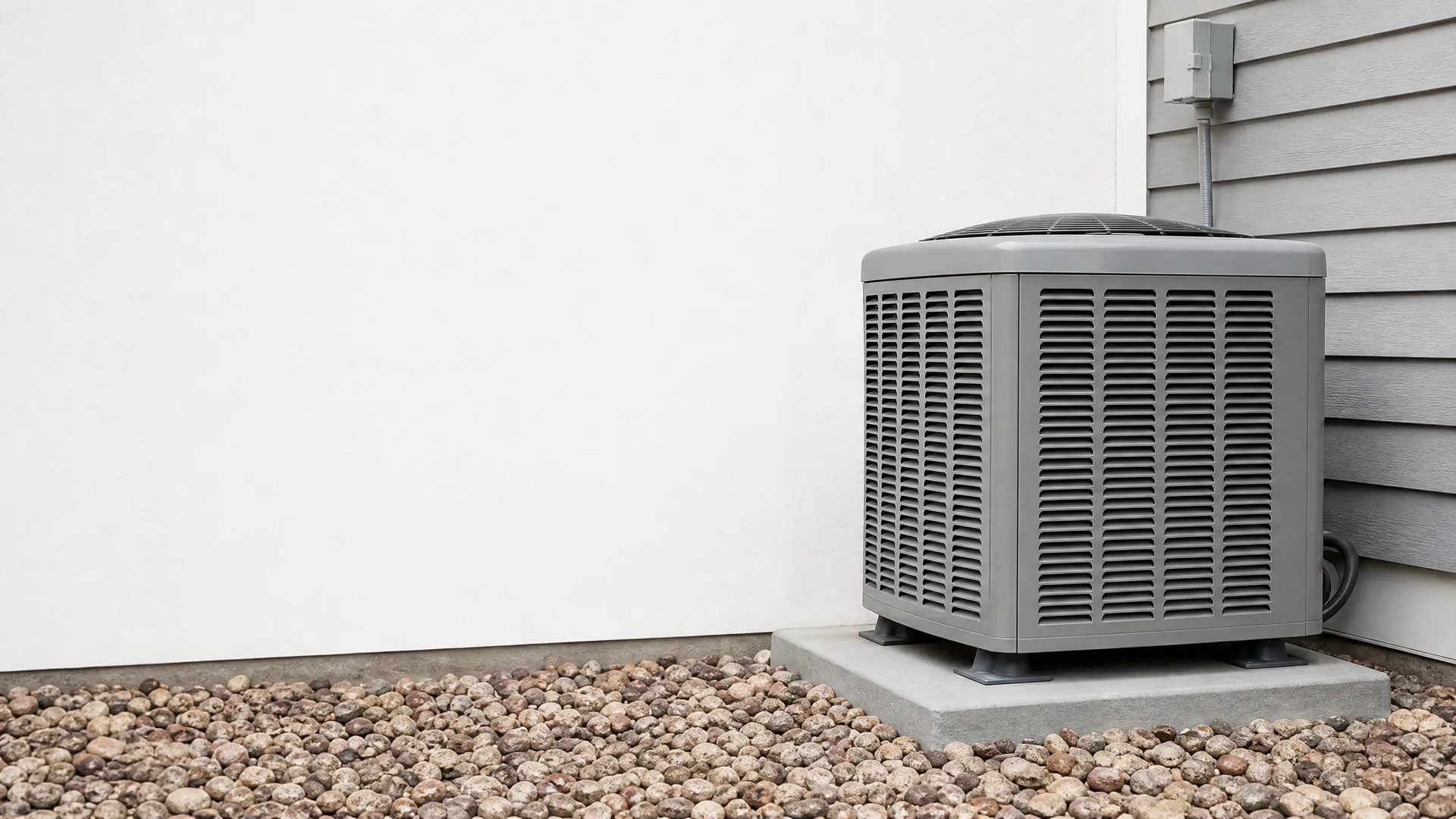
A gray outdoor air conditioning condenser unit sits on a concrete pad beside a white stucco wall and gray horizontal siding, surrounded by rounded landscaping gravel, with an electrical disconnect box mounted on the siding above.

What a tech checks first

A capacitor has a rated microfarad value printed on its case, and a tech tests it with a meter against that number. A healthy one reads close to the rating. One that's drifted more than a few percent off is failing even if the unit still starts most of the time. That reading tells a tech more than listening to the hum ever could, and it's usually the first thing checked on a service call.

What does a capacitor actually do in my AC?

You keep hearing that the capacitor is the part to blame, but nobody's explained what it's actually doing in there. Before you call someone out, it helps to know what you're paying them to fix.

It gives the compressor and fan motor the jolt they need to start

The motors in your outdoor unit can't start spinning on their own power draw alone. The capacitor builds up a charge and releases it in one push, which is what gets the compressor and the fan motor turning. Once they're spinning, a run capacitor keeps feeding them small boosts to keep them steady under load. That's why a failing one shows up the way it does: the motor gets partway there and stalls, or hums because it's getting power but not the push to overcome its own resistance. A good capacitor does this job thousands of times over a summer without you ever knowing it's there. A weak one still tries, and that's the humming you hear.

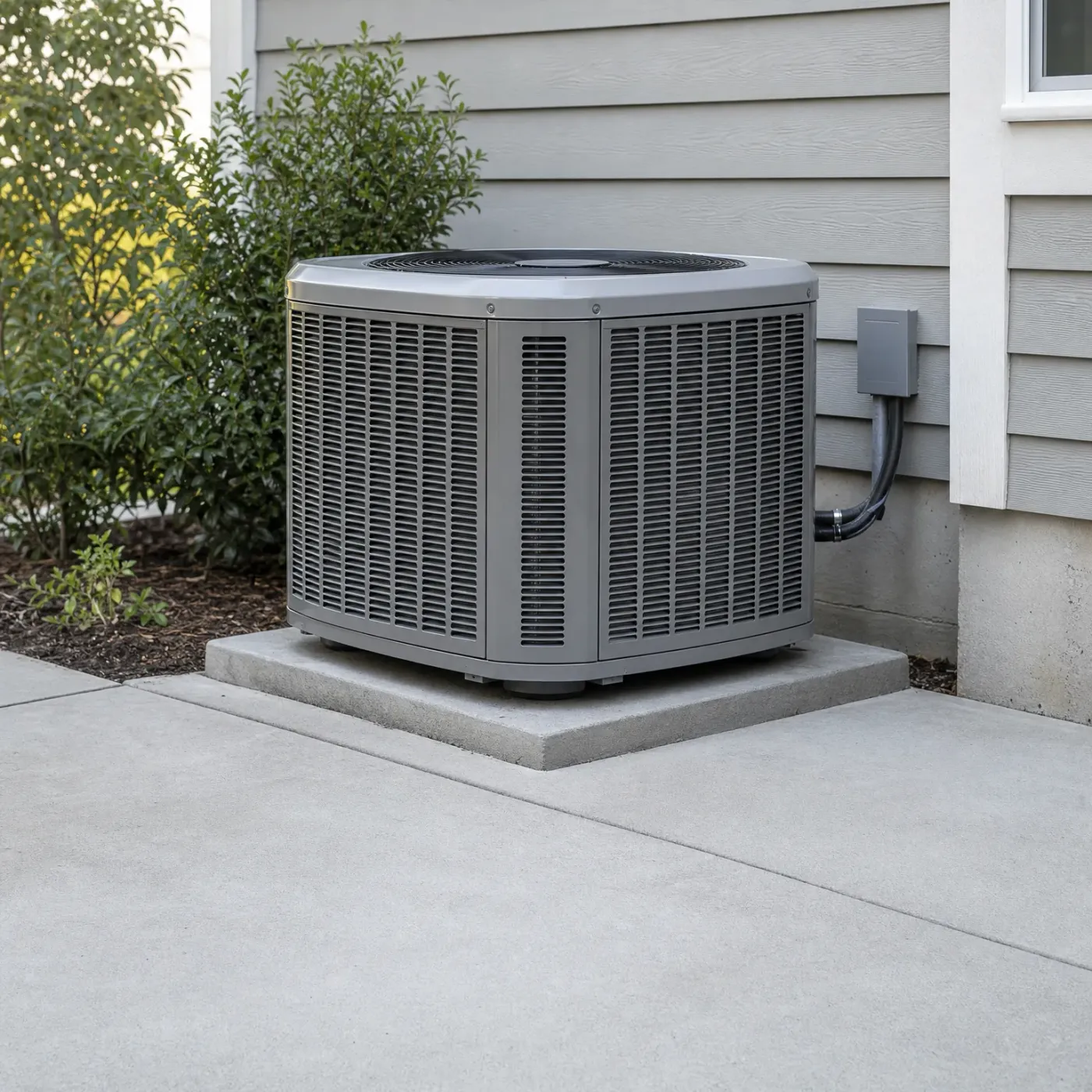
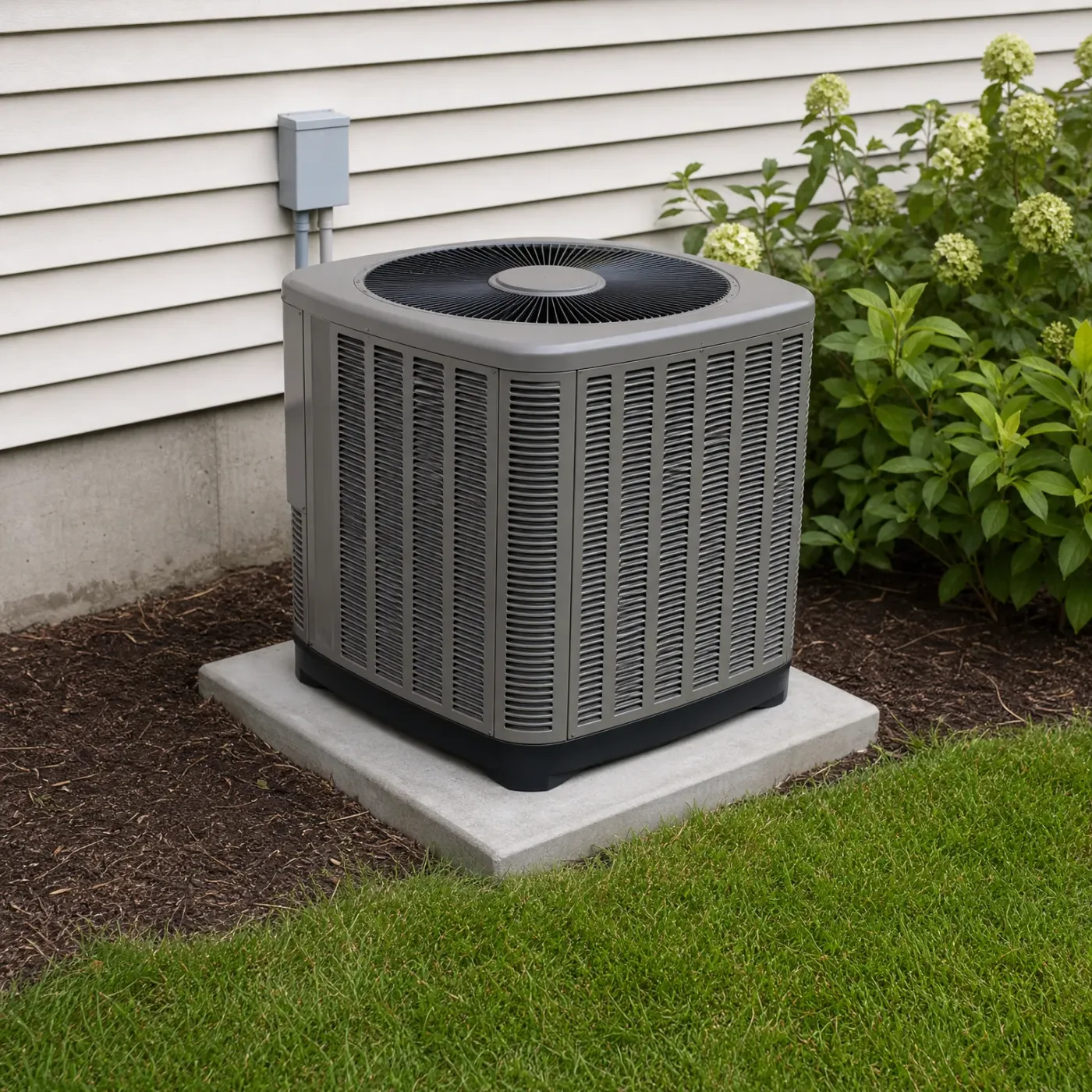
A gray outdoor air conditioner condenser unit on a concrete pad beside a house with horizontal vinyl siding, surrounded by mulch, flowering shrubs, and lawn.

Running the way it should

A healthy unit starts right up when the thermostat calls for cooling, and you'd barely notice it out there under the shrub. No hum before the fan kicks on, no delay. The coil fins stay clear enough that air moves through them the way they were built to.
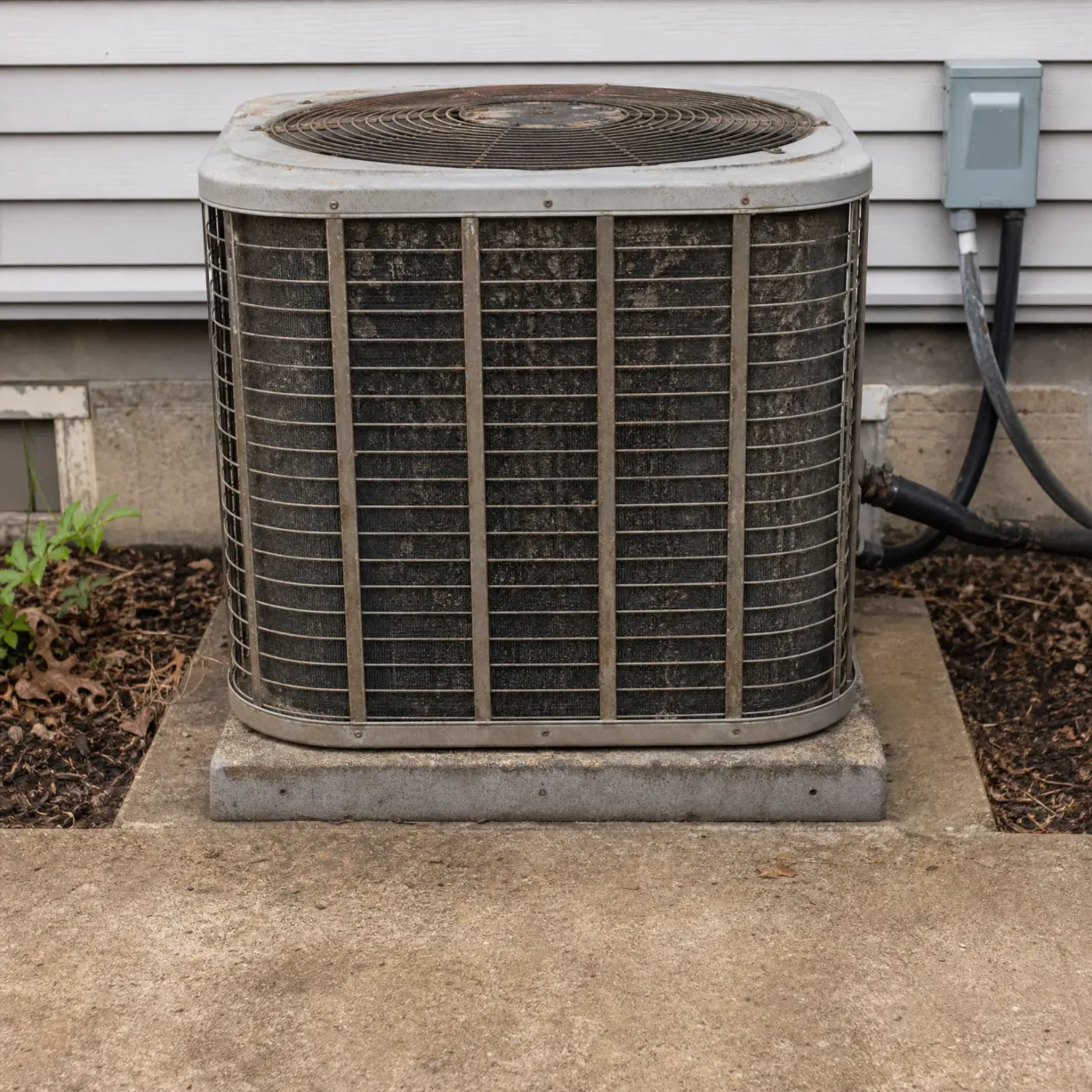

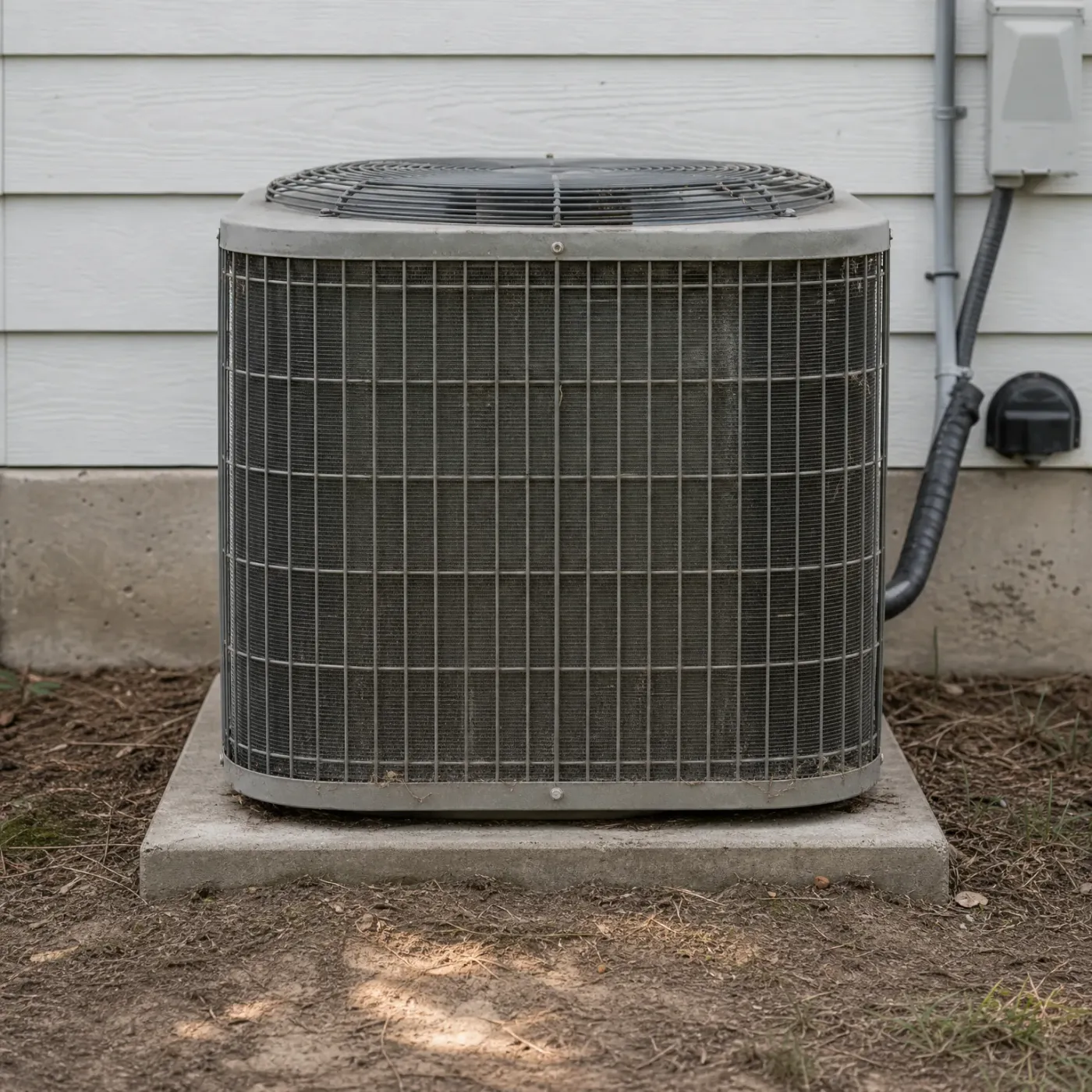
A weathered outdoor air conditioning condenser unit on a concrete pad beside a house with light horizontal siding, an electrical disconnect box and conduit on the wall, and mulched soil on either side.

A unit under strain

Dirt and grime packed into the coil fins make the unit work harder to move air across them, and a capacitor already weakening from a summer of long runs has less room to cover for it. That combination is what pushes a marginal capacitor the rest of the way.

A smiling man in a navy long-sleeve shirt sits at a wooden table in a kitchen and dining area, with a ceramic mug, a potted plant, and a sliding glass door behind him.
A smiling bearded man in a green henley shirt stands at a kitchen island with a gray mug, looking off to the side, with a dining area and shelves blurred behind him.
A smiling bearded man in a navy sweater sits at a white kitchen island with a ceramic mug, with open shelves, potted plants and a range hood behind him.
A smiling man in a dark olive long-sleeve shirt sits in a kitchen beside a counter with a dark mug, with a dining table, sideboard and hallway visible in the blurred background.

Hand off the search today

A capacitor doesn't give you much warning once it starts going. You might hear that outdoor hum one afternoon and nothing happens, or you come home to a house that's stayed at 78 since morning. In most of Minnesota that's not a crisis the way it would be further south, but it still means no relief while the air sits heavy on a warm week, and the longer a weak capacitor runs the compressor on strain, the more likely that compressor fails too. That's a different repair, a bigger one. Diagnosing a capacitor takes a meter and a few minutes for someone who checks these every summer and already knows what a tired one looks like on the gauge. That's the kind of work a local contractor who services this equipment all season handles without guesswork, and it's a single one getting your request, not your phone ringing with five different numbers while your house sits warm. Send it in and let someone qualified take it from here.

What a failing capacitor costs you

A struggling capacitor makes the compressor pull harder to start, and that strain doesn't stay contained to one part. Over weeks it can wear on the fan motor too, turning a small repair into a bigger one. Meanwhile your house holds heat it shouldn't. Rooms upstairs stay warm into the evening, and the thermostat setting stops matching what you actually feel. Humidity creeps up some, even with Minnesota's drier air, because a unit that's cycling poorly isn't pulling moisture out the way it should. None of this is dramatic on day one. It shows up as a slightly higher bill and a house that doesn't quite cool the way it used to.

What happens if you wait

A capacitor doesn't usually fail all at once without warning signs first, which is why catching it early matters. Left alone, a weak one forces the compressor to draw more current trying to start, and that's what burns out a compressor months before its time. Replacing a capacitor is a small job. Replacing a compressor means replacing most of what makes the unit work. If your AC is humming without starting, or the fan runs while the air stays warm, that's the system telling you now, not later. A contractor who sees this in Minnesota homes every summer can usually tell from that description alone what's likely failing.

A smiling man with dark curly hair in a navy t-shirt sits on a gray couch indoors, with a large-leafed plant and a window in the background.
A bearded man in a plaid flannel shirt stands in a kitchen looking out a window toward snow-covered shrubs, with a steaming mug on the windowsill and potted plants on a shelf behind him.
  1. Thermostat calls for cooling and sends power to the contactor

  2. Contactor closes and routes power to the compressor and fan motor

  3. Capacitor releases its stored charge into the compressor to start it

  4. Capacitor holds a steady charge to keep both motors running

Power costs 15.83 cents per kilowatt-hour statewide

At 15.83 cents per kilowatt-hour, a struggling capacitor costs you more than a repair bill. When it can't hold its charge, the compressor draws extra current just trying to start, and that extra pull shows up on your bill before the unit ever quits for good.

EIA-861 2025 statewide residential average

An outdoor air conditioning condenser unit on a concrete pad beside a house with horizontal lap siding, with a conduit and electrical disconnect box on the wall at right.
Before you get your air conditioner repair
A gray outdoor air conditioner condenser unit on a concrete pad beside a house with horizontal lap siding, with a wall-mounted disconnect box and conduit to its right and shrubs to the left.
After you get your air conditioner repair

Where this leaves you

  • A hum with no start, a fan running on warm air, or a system that quits outright all point to the same part.
  • Minnesota summers are warm enough to push a weak capacitor past the point it can still hold a charge.
  • Left alone, the strain moves from the capacitor to the compressor and fan motor, turning a small fix into a bigger one.
  • A licensed local contractor who works on this equipment every summer knows which brands and models tend to fail first.
  • Once you send the request, one contractor gets the call, not five, so your phone doesn't turn into the problem.
  • Catching it now, while the unit still runs, is the difference between a quick repair and a system that stops on the hottest day.

A bad capacitor tells on itself. The hum with no start, the fan spinning while the house stays warm, the system that just quits. Minnesota summers don't run as hot as some places, but they run hot enough and long enough to push a weak capacitor the rest of the way. Once that strain shifts to the compressor and fan motor, you're no longer looking at the same small repair.

Acting on it now, while the unit still turns over, is what keeps this a quick fix instead of a system down on the one day you need it most. That's the part worth sitting with. The rest is finding someone who can actually look at it.

That's where a local contractor matters more than it might seem. Someone who works on these units every summer has seen which capacitors in which brands tend to go first, and what else to check while they're already out there. You're not explaining your situation from scratch. You're handing it to someone who's seen this exact failure before, probably that week.

Send the request and it goes to one contractor, licensed and local, not a handful of companies competing for the callback. No sorting through quotes, no repeating yourself on five separate calls. Just one person who knows this equipment, heading your way.

A dark wood cabinet with a paneled door and a ceramic pot of green foliage on top stands in a beige-walled room with white baseboard, a window at left, hardwood floor, and a patterned area rug.
A dark wood glass-front cabinet holding folded towels, woven baskets and a ceramic vase stands in a bathroom corner beside a window, with a potted fern and stacked towels on top and a freestanding tub partly visible at left.
A woven basket holding a green cushion and a cream fringed knit throw sits on a wood floor in a room corner beside a window and a dark wooden cabinet.
Corner of a room with a dark wood cabinet topped by a round vase, a linen curtain at a window, white baseboard, oak plank flooring with sunlight patches, and a woven jute rug in the foreground.
A dark wood sideboard against a pale wall holds a shallow stone bowl and a round ceramic vase with leafy branches, with sunlight from a curtained window falling across the wall, wood floor and woven rug.

Stop chasing an air conditioner pro

Your request goes to one pro, not a list of companies.

Hand off the search

Sending the form costs nothing.