Why your AC compressor won't kick on in Minnesota

Describe what your air conditioner is doing once, in one form.

Skip the calls

Why won't my AC compressor turn on in Minnesota?

You go to the thermostat, the air feels the same as it did an hour ago, and outside you can hear the fan running but not the low hum of the compressor itself. In a Minnesota summer that's warm but not brutal, it's tempting to wait it out. But a compressor that won't start usually isn't going to start on its own, and the longer it sits, the more you risk making a small problem worse.

Usually a bad capacitor, a tripped breaker, or a safety switch keeping it off

The capacitor gives the compressor the jolt it needs to start, and when it weakens, the compressor hums or does nothing at all. A tripped breaker or a blown fuse cuts power before the compressor ever gets a chance. Some systems also have a safety switch that shuts the compressor down on purpose, often because the condenser coil outside is dirty or airflow is blocked. Minnesota summers don't put the same long, grinding load on a system that you'd see further south, but the unit still sits outside through hard winters, and that stress on electrical parts adds up over the years whether or not the compressor runs every day.

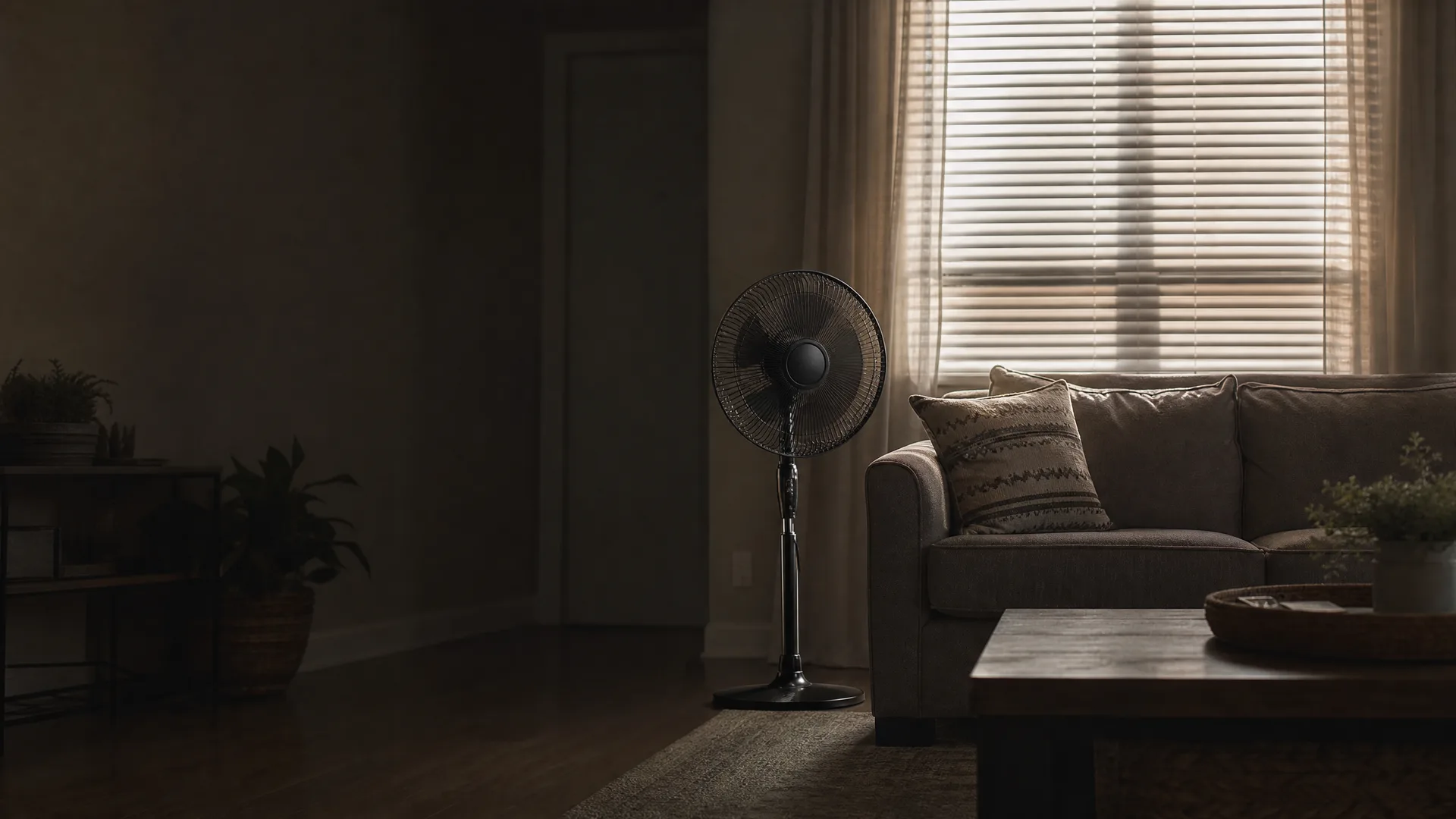
A dimly lit living room with a black pedestal fan on a wood floor beside a gray sofa with a patterned pillow, a wooden coffee table in the foreground, potted plants at left, and a curtained window with blinds behind.

It's past two in the afternoon and the blinds are drawn against the sun, but the living room still feels close. The floor fan next to the couch is doing most of the work, pushing the same warm air around instead of cooling it. You've checked the thermostat twice now. The number isn't moving. Outside, the condenser fan spins, but the house doesn't cool, and you know by now what that means. The kids are camped out with popsicles, the dog's stretched flat on the tile by the kitchen, and you're doing the math on how long you can stand a Minnesota July afternoon like this before someone starts asking when it'll feel normal again.


A closed silver laptop and a glazed ceramic mug on a wooden table, with a blurred kitchen counter, potted plant, cutting board and window in the background.

What's actually keeping the compressor from starting

The compressor sits outside in the condenser unit, and it only starts after the thermostat calls for cooling and a few things line up in order. A relay has to send it power, a capacitor has to give it the jolt to get the motor spinning, and if the unit has one, a hard start kit helps push it through that first second. If the capacitor is weak, the compressor hums and trips off instead of starting, which can sound a lot like nothing happening at all. A tripped high or low pressure switch will stop it too, even with the fan running fine above it. None of that is visible from the thermostat or the fan sound you can hear through a window.

Sorting out which one it is means someone testing the capacitor, the contactor, and the pressures with gauges, not guessing from the outside. That's a different call than finding someone to just come look at it. A contractor who works on this equipment around St. Paul and Minneapolis every summer has usually seen the same failure more than once and knows where to check first, instead of working through the unit part by part while you wait on a warm afternoon.

Interior corner of a dining room with a round wooden table, a ceramic vase holding olive branches, a dark spindle-back chair near a curtained window, and a sideboard with a lamp against beige walls.
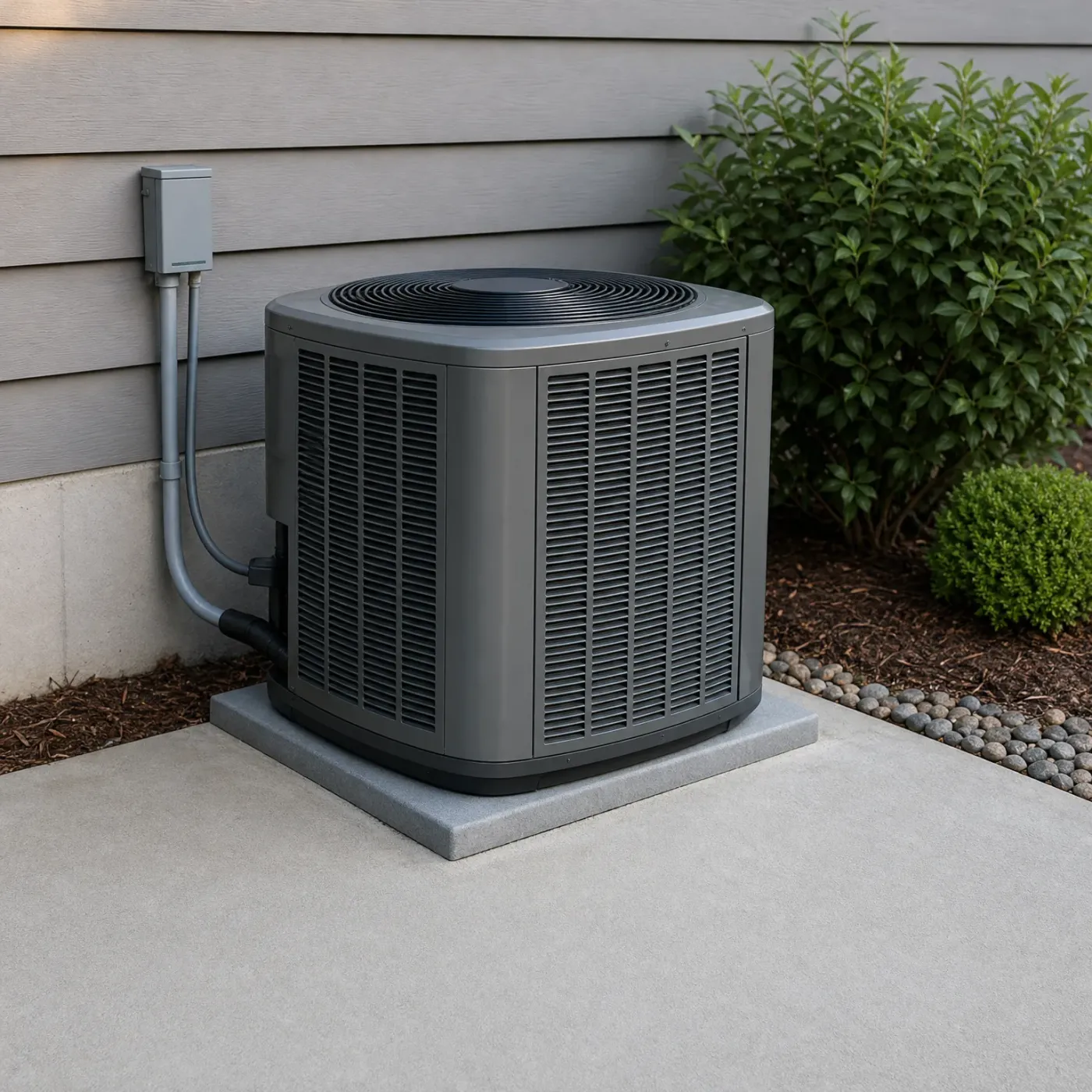
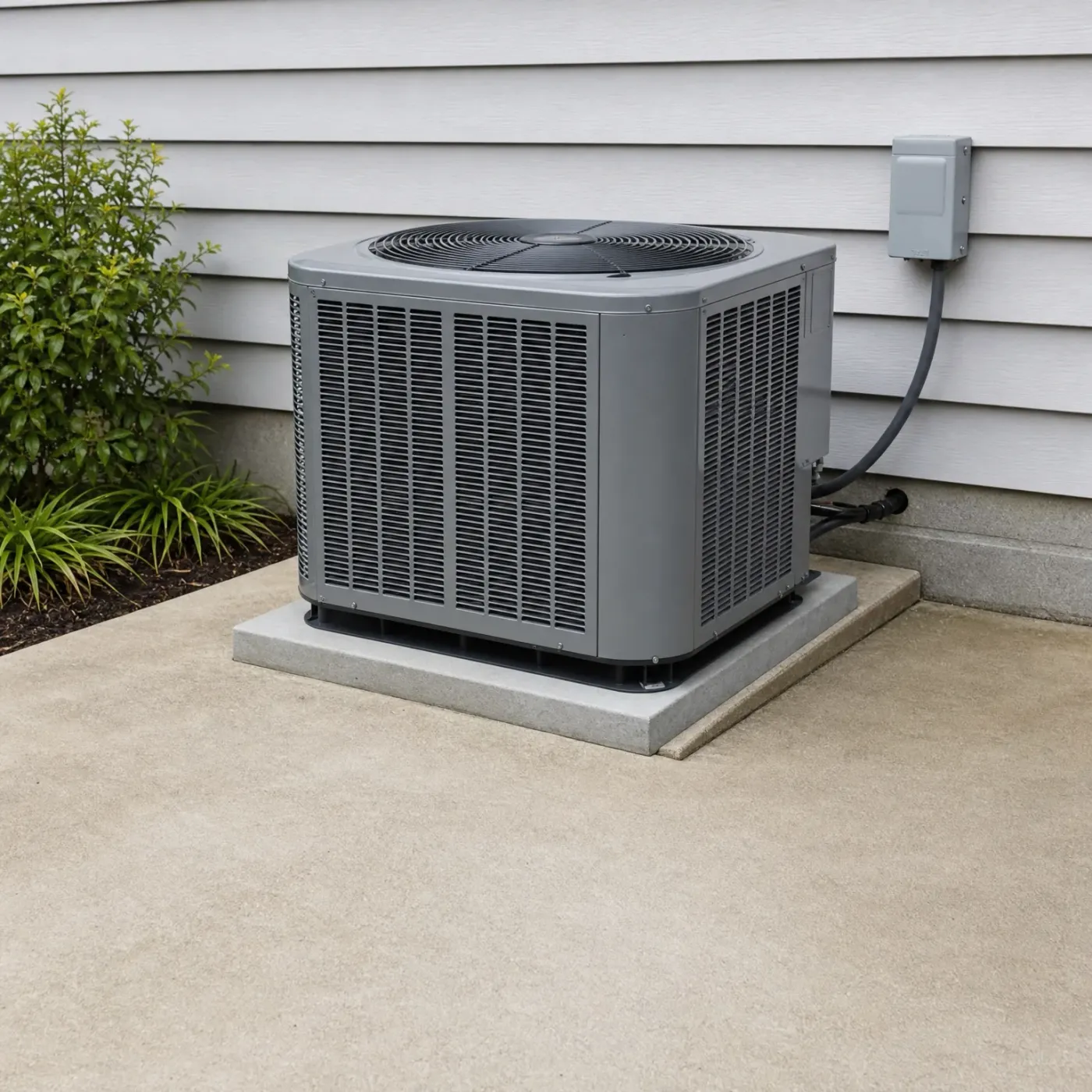
A gray outdoor air conditioner condenser unit on a concrete pad beside a house with horizontal lap siding, with a wall-mounted disconnect box and conduit at left and a green shrub and mulch bed at right.

The fan runs, the compressor answers

Outside, the fan spins and a few seconds later you hear the compressor join in, a steady hum under it. The line running from the disconnect box down to the unit is carrying full power, and the unit is cycling the way it was built to.

An outdoor air conditioner condenser unit on a concrete pad beside a house with horizontal lap siding, with a conduit running to a gray electrical disconnect box on the wall.

The fan runs, nothing else does

Same unit, same siding, same conduit down to the disconnect. The fan turns but the hum underneath it never starts. Somewhere between that disconnect box and the compressor itself, power isn't getting through or the compressor isn't responding to it.

Call for repair, or check it yourself first

Call now

  • A dead compressor in July means the house heats up fast, and every hour without cooling adds to that.
  • A licensed Minnesota contractor who works on these units all summer can usually tell within minutes if it's the capacitor, the relay, or something tied to the outdoor disconnect.
  • You explain the problem once, to one contractor, instead of repeating it to three or four companies while you compare quotes.
  • If the fan runs but the compressor stays silent, that's a specific enough symptom that a tech can often arrive with the likely part already in hand.
  • Waiting to see if it starts on its own doesn't fix a bad capacitor or a tripped relay, and the house stays warm while you wait.

Wait and watch

  • If the compressor only failed to start once and then ran fine on the next cycle, it may have been a momentary trip rather than a failed part.
  • Checking the outdoor disconnect yourself to make sure it's fully seated costs nothing and takes a minute.
  • A breaker that tripped once from a power blip can sometimes reset and hold, especially if nothing else in the house drew extra power at the same time.
  • Watching the outdoor unit for a cycle or two tells you whether the problem is constant or only happened once, which matters for what gets fixed.
  • If the fan isn't running either, that points away from the compressor alone and toward something upstream, worth noting before anyone comes out.
A woman with long light-brown hair in a gray knit sweater sits in a living room looking off to the side, with a sectional sofa, houseplant, lamp, wooden table and large windows behind her.
A woman in a chunky gray turtleneck sweater sits indoors looking off to the side, with a blurred dining table, chairs, pendant lamp and window behind her.
A woman in a cream knit sweater with her hair in a bun stands near a window, looking off to the side, with a gray sofa, houseplant and open kitchen with pendant lights blurred behind her.
A woman with long brown hair in a cream knit sweater stands near a window, looking to the side, with a white sofa, shelving, and a hallway visible behind her.

Skip the calls to every shop

Only one pro gets your request, so you hear from one company.

No charge to send it. You decide if you hire them.

A capacitor is built to hold a charge for years, but heat shortens that life, and a condenser unit baking in direct sun through a Minnesota summer runs hotter than the air around it.

That's why the capacitor is one of the first things checked when the compressor stays quiet. It's a small part, it fails on its own schedule, and replacing it is usually quick once it's found.

A woman with dark hair in a bun sits wrapped in a chunky knit blanket on a couch with a child resting his head on her shoulder, eyes closed, beside a lit lamp and bookshelf indoors.
An older woman with short gray hair in a cream cable-knit turtleneck sweater smiles while looking to the side in a wooden kitchen, with a round loaf of bread on a board in the foreground and a lit candle by a dark window.
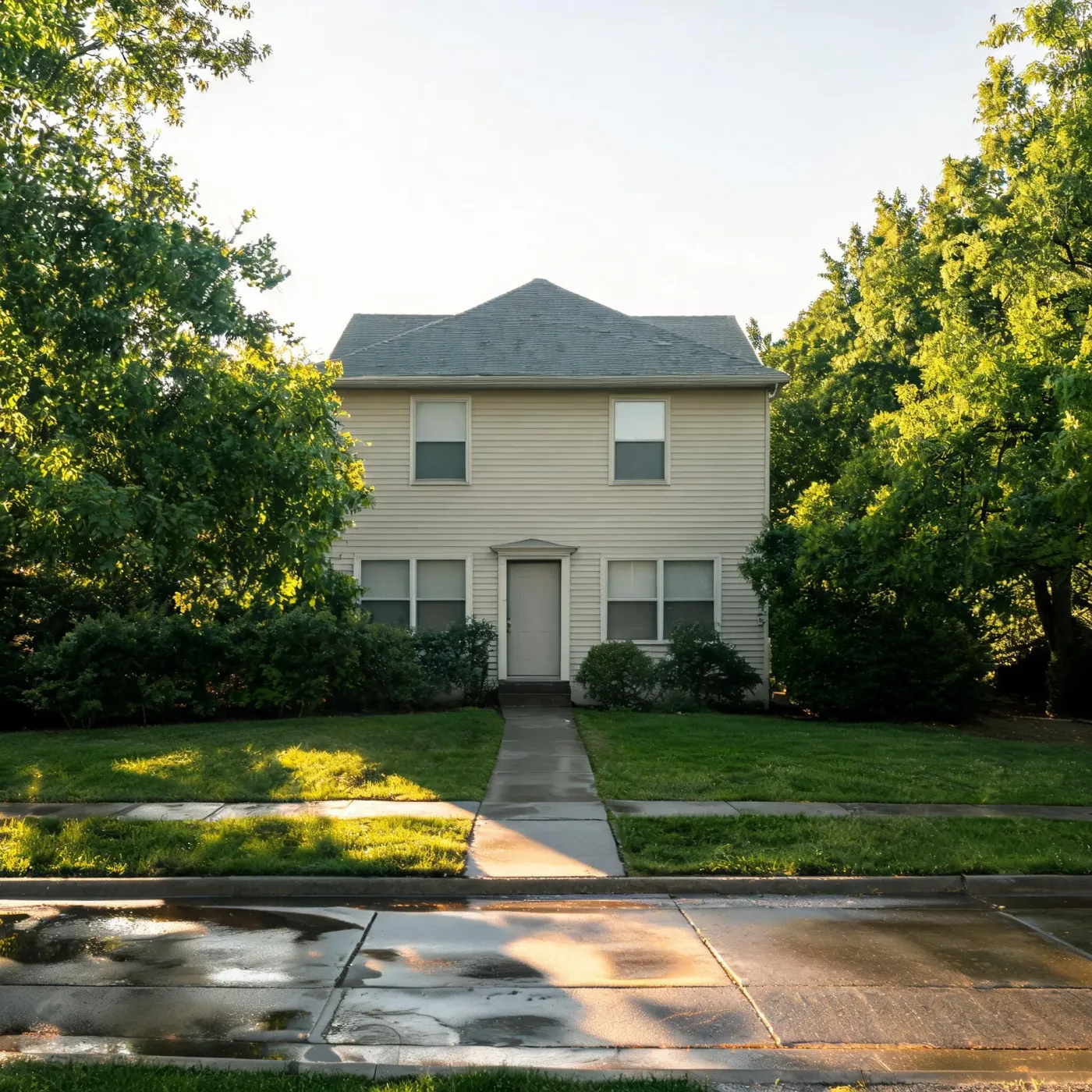
A two-story cream-colored house with horizontal siding and a gray hipped roof, flanked by large green trees and shrubs, with a concrete walkway crossing a lawn to a wet street in the foreground.

A Minnesota summer doesn't feel heavy the way it does further south. The dew point averages 59°F across June, July and August, according to NOAA climate data, which is on the comfortable side as these things go. That matters for your compressor because it's working against less moisture in the air, so when it does run, it doesn't have to fight as hard to pull humidity out along with the heat. If yours isn't kicking on at all, the problem isn't the air outside asking too much of it. Something in the unit itself is stopping it before it starts.

NASA POWER T2MDEW county cells weighted by homes

What happens to your house if it stays this way

A house that can't cool itself in July doesn't level off, it climbs. Upstairs bedrooms get hard to sleep in by evening. Anyone in the house who doesn't handle heat well, an older parent, a baby, someone recovering from something, feels it first and feels it worst. The fan running without the compressor isn't a sign it's fixing itself. It's moving warm air and nothing else, and it'll keep doing that until something changes. Meanwhile the thermostat still thinks it's calling for cooling, which means the system keeps trying and failing the same way every cycle, and that strain doesn't go away on its own while you wait it out.

A gray outdoor air conditioner condenser unit on a concrete pad beside a house with horizontal siding, with an electrical disconnect box and conduit on the wall behind it.

Waiting it out yourself

You can shut the system off, open windows in the evening when the air cools down, and run fans to keep air moving through the rooms people spend time in. That buys a little comfort for a day or two. It doesn't fix a compressor that won't start, and a Minnesota summer can string together enough warm afternoons in a row that waiting stops being a reasonable plan, especially with someone in the house who doesn't do well in the heat.

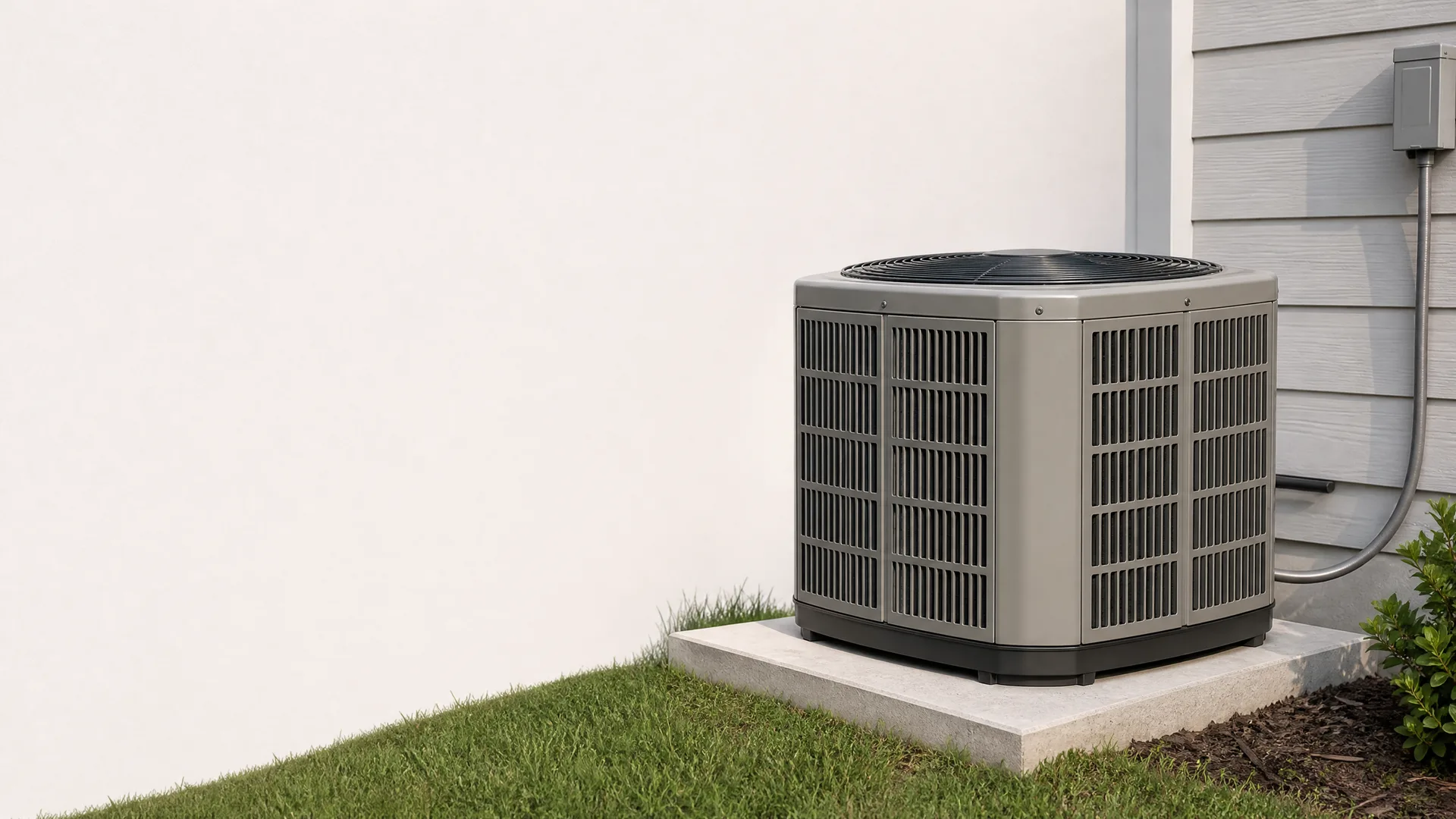
An outdoor air conditioner condenser unit on a concrete pad beside a house with horizontal lap siding, with a gray electrical disconnect box and conduit on the wall, grass in the foreground and a plain light wall at left.

Getting one call made

Instead of searching for contractors, calling a few, and explaining the same thing about the fan running without the compressor to each one, you make one call to a licensed Minnesota contractor who works on these units all season. You tell the story once. They know from experience what tends to fail first in this climate, so they come with a reasonable idea of what they're looking for before they ever open the unit.

Power costs 15.83 cents per kilowatt-hour statewide

At 15.83 cents a kilowatt-hour, running fans and a struggling AC instead of a working compressor adds up fast without actually cooling the house. Once the compressor is fixed, the unit does the job it's built for and you're not paying to move warm air around.

EIA-861 2025 statewide residential average

Fixing it yourself

You can check the breaker and the disconnect box outside, make sure nothing's tripped, and reset the thermostat. If the fan runs but the compressor stays quiet after that, there isn't much further a homeowner can safely go. Opening the condenser unit means working near a capacitor that holds a charge even with the power off, and testing a relay means knowing which wire does what. Guessing at parts means buying one that might not be the problem, then still needing someone out to install the right one.

Having someone else look

A licensed Minnesota contractor who works on these units every summer can open the condenser unit, test the capacitor and relay, and tell you within minutes which one failed. You explain the problem once, to one person, instead of calling around and repeating it to three companies while your house keeps heating up. You get one local contractor who knows this equipment, not a stack of quotes to sort through while you wait. The part gets replaced with the right one the first time.

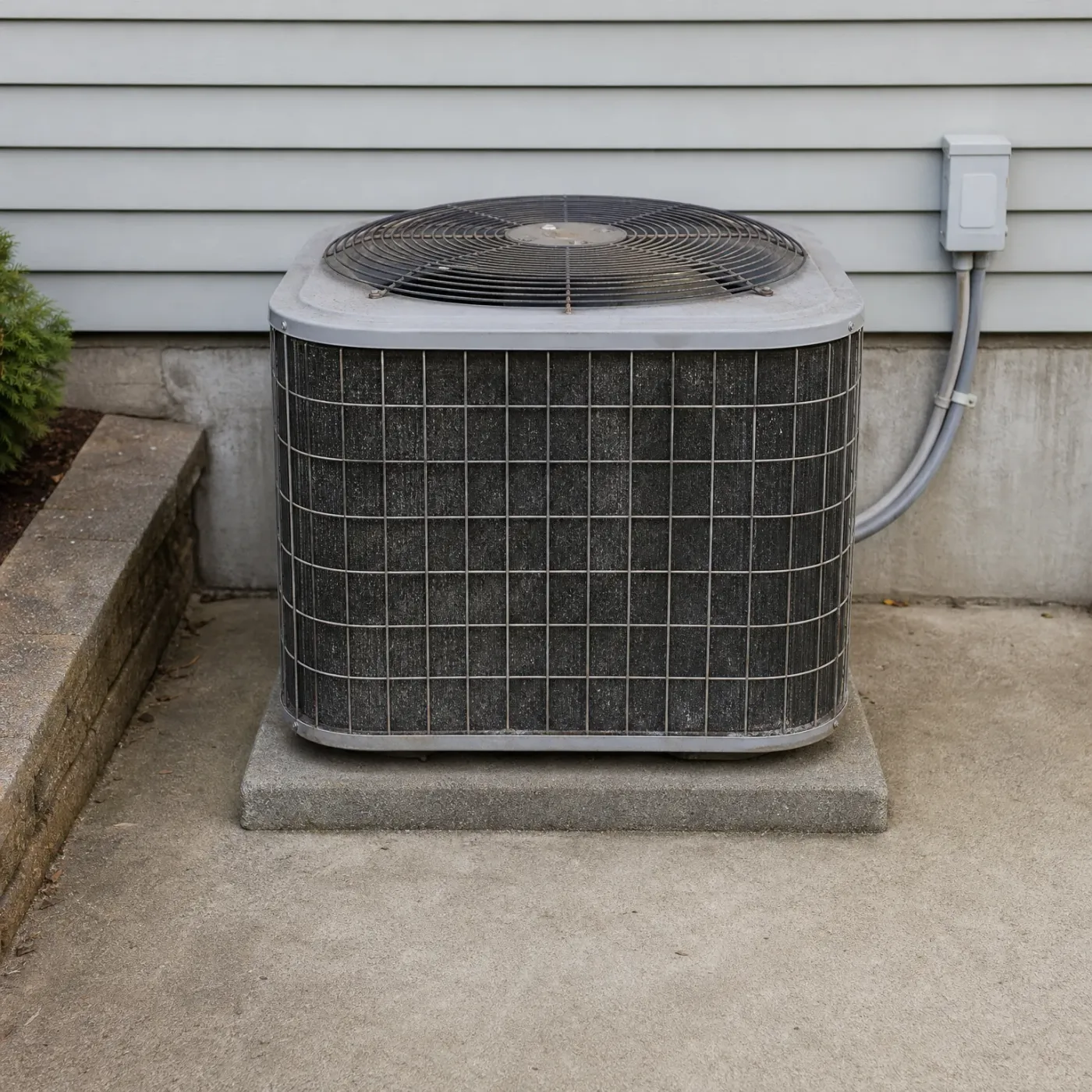
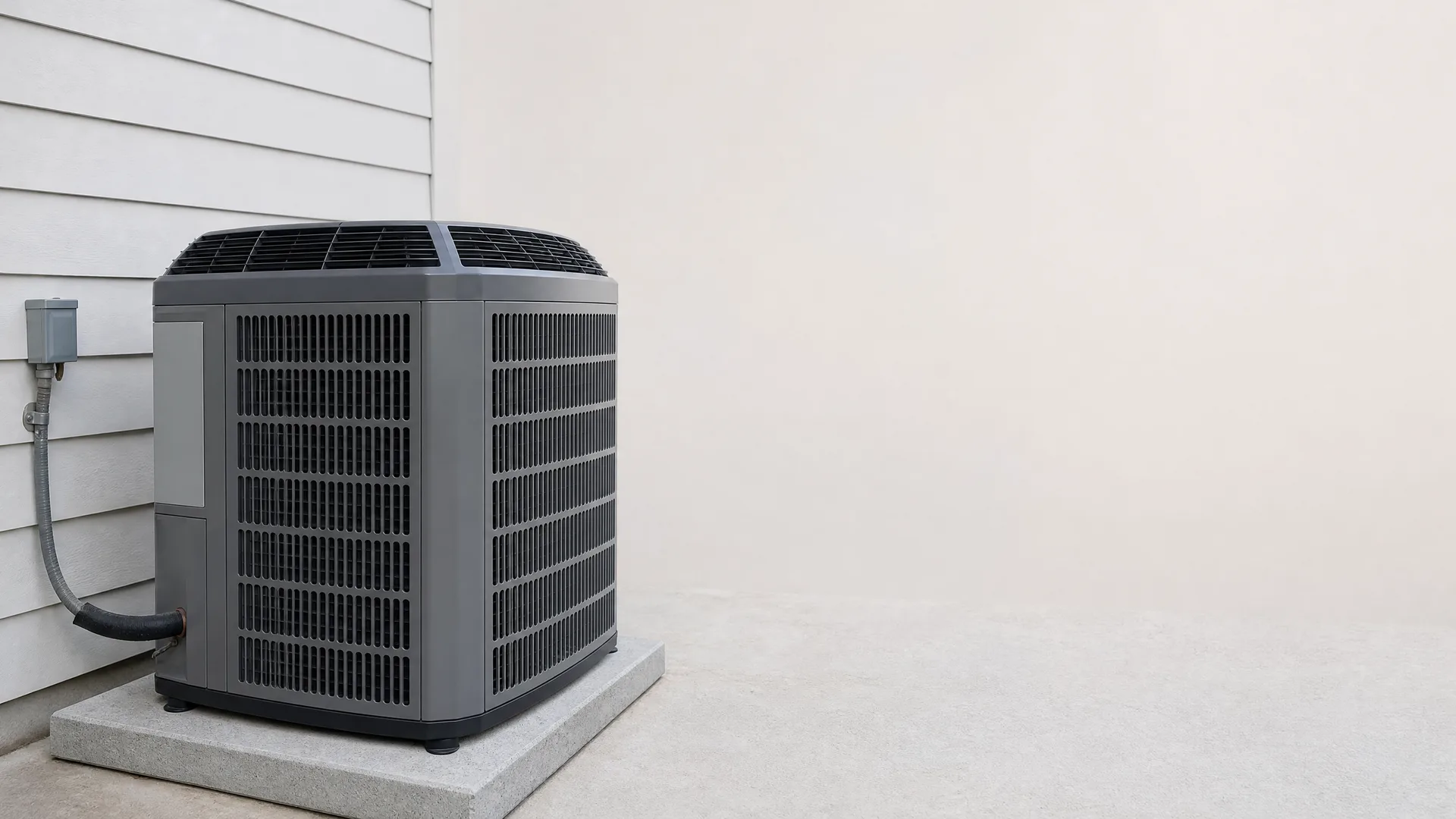
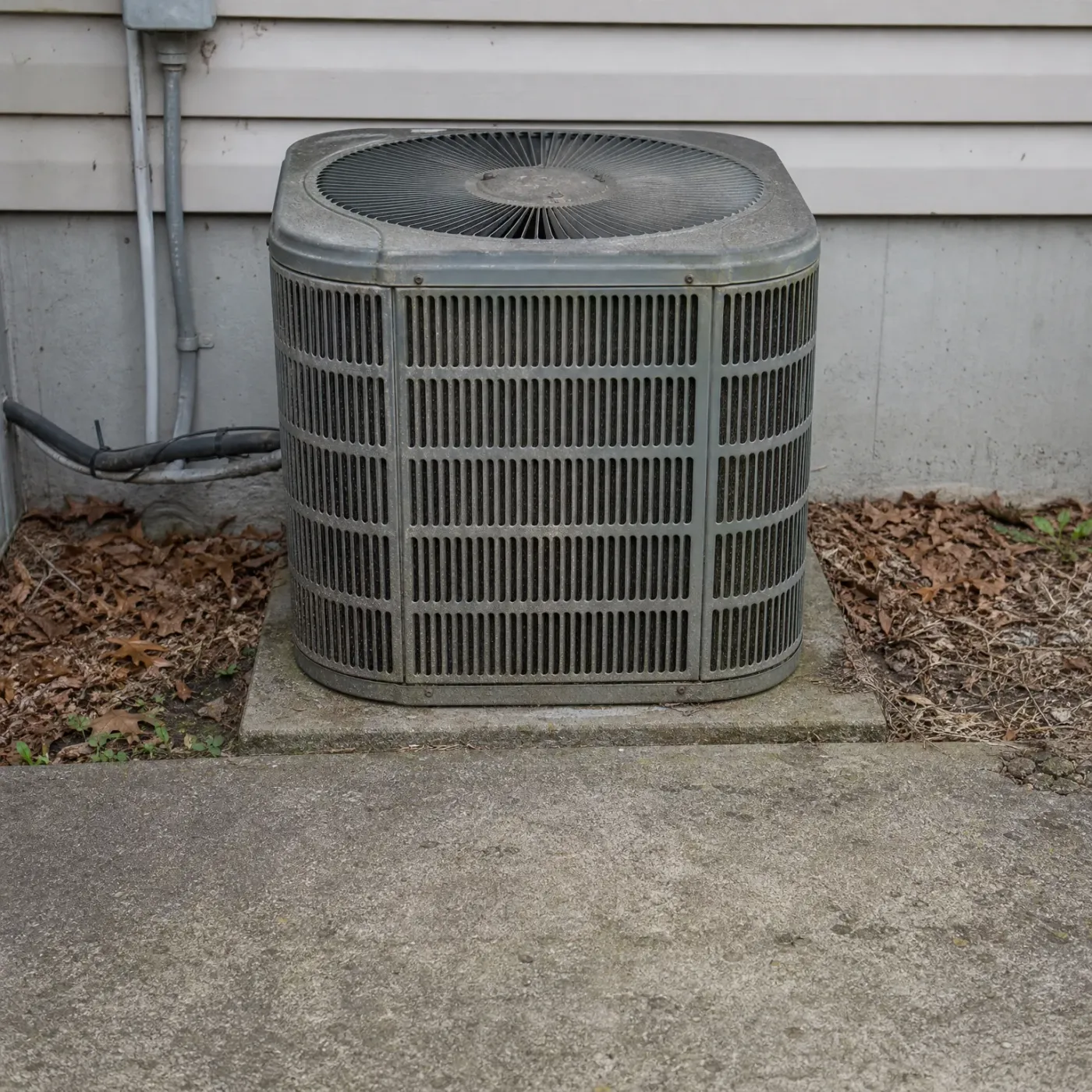
An outdoor air conditioning condenser unit on a concrete pad beside a house with horizontal siding and a concrete foundation, with dry brown leaves on the ground to either side.
Before you get your air conditioner repair
A gray outdoor air conditioning condenser unit on a concrete pad beside a house with horizontal lap siding, with a wall-mounted disconnect box and conduit, and shrubs to the left.
After you get your air conditioner repair
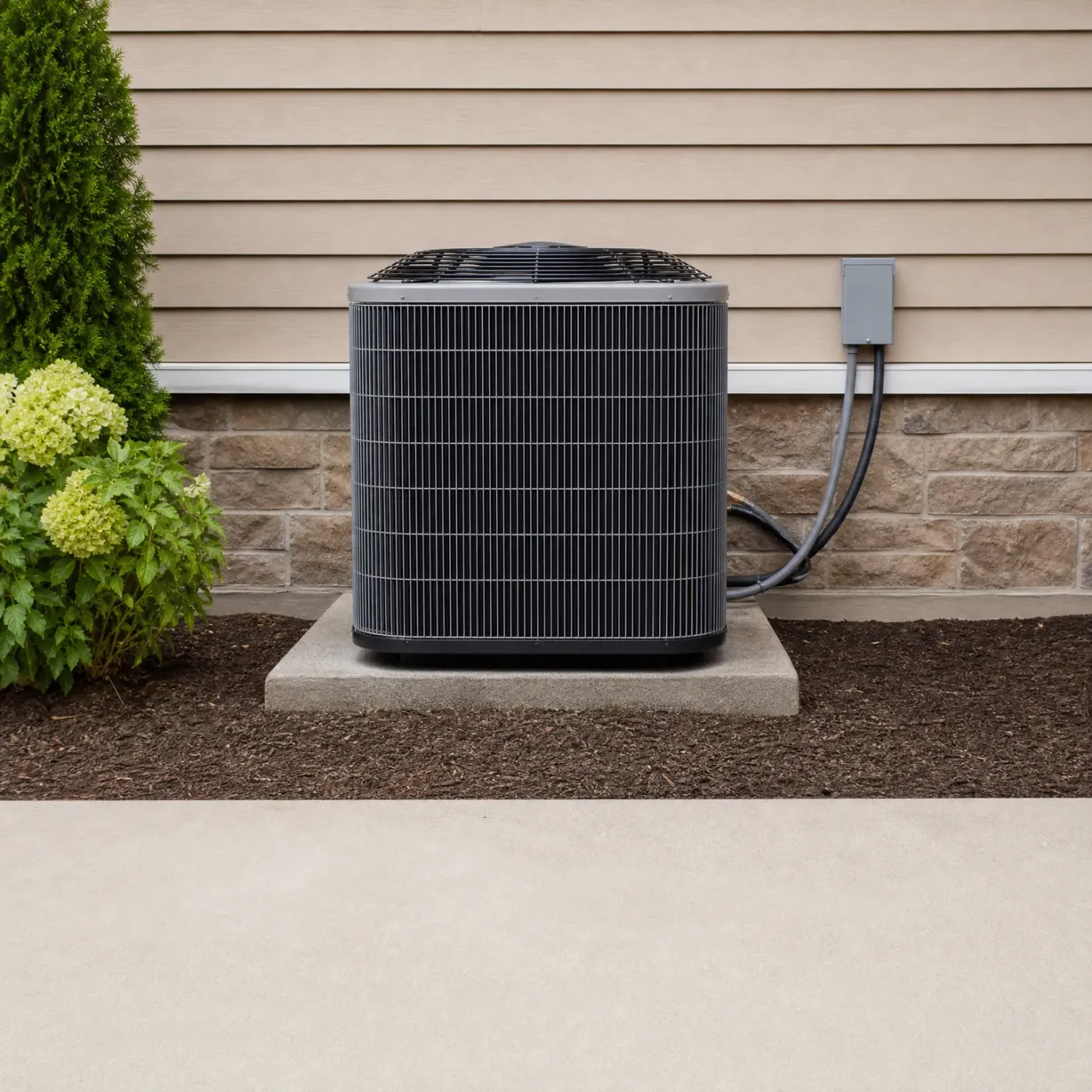
An outdoor air conditioner condenser unit on a concrete pad beside a house with beige horizontal siding and a stone-veneer base, with refrigerant lines running to a gray wall-mounted electrical box, surrounded by dark mulch, a flowering shrub and an evergreen on the left.

Running the way it should

This is what the unit looks like when it's doing its job. The fan spins, the compressor hums along under it, and the condenser pushes heat out from the coils so the refrigerant can do its work back inside. Nothing to notice, because nothing's wrong.

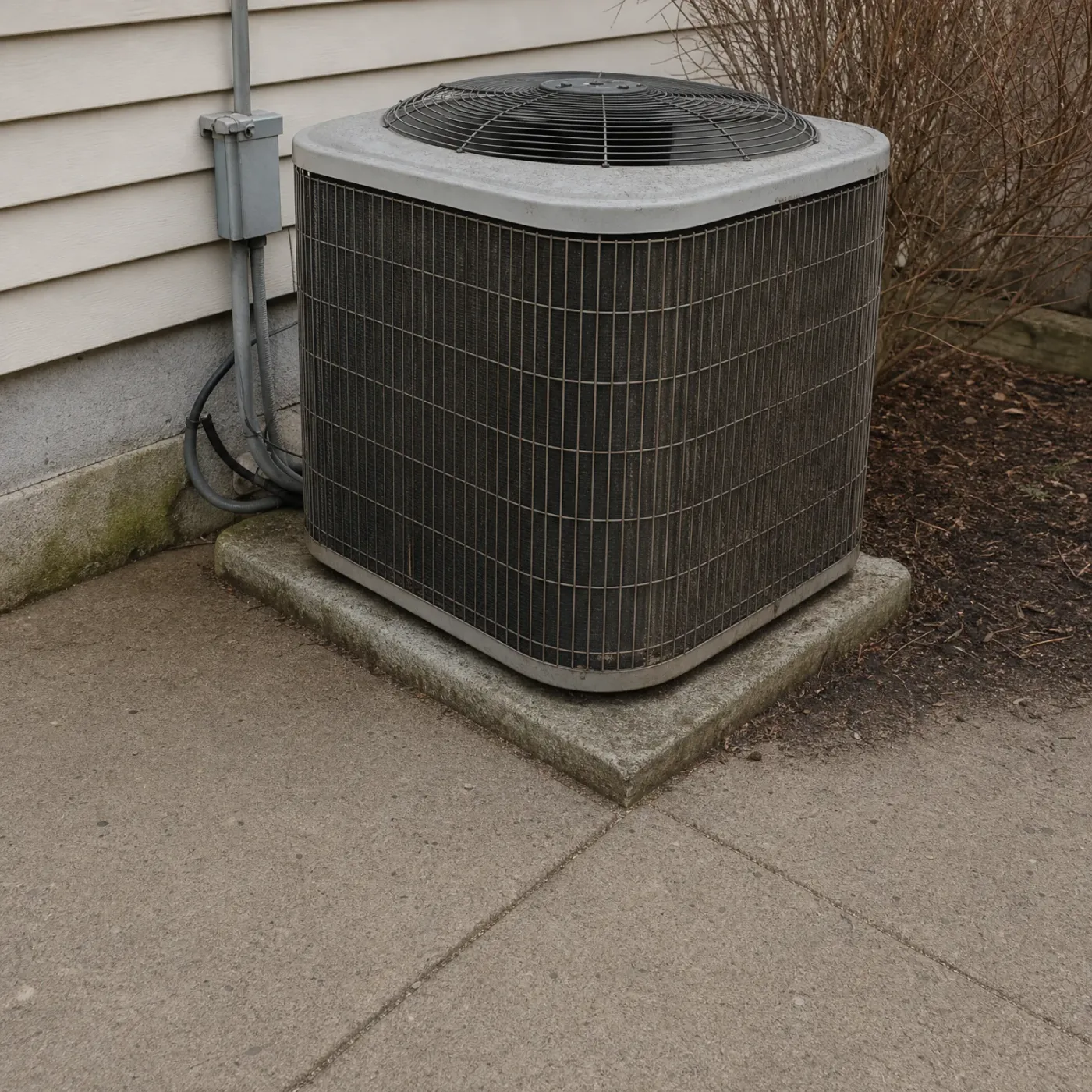
An outdoor air conditioning condenser unit on a concrete pad beside a house with light vinyl siding, an electrical disconnect box and conduit on the wall, bare shrubs and mulch to the right, and a concrete walkway in the foreground.

Fan on, compressor silent

Same unit, same pad, same spot by the wall. The fan still turns, but the compressor behind it stays quiet, and the house keeps the heat it's been collecting all afternoon. A licensed Minnesota contractor can open the panel and find out which part stopped doing its job.

A compressor that won't start is usually one part failing to do its job, a capacitor, a relay, a wire loose at the disconnect, and it takes someone who knows the unit to find which one. A contractor who services these systems all summer in Minnesota has likely seen the same failure on a dozen other units already this season, and knows where to look first instead of working through every possibility by hand. You'll get matched with one licensed local contractor for this, not a handful of companies competing for the job, so you're not stuck fielding calls and repeating the same description of what's wrong with your unit to each one. That part is handled. What's left is the actual repair, and getting the compressor humming again so the house stops climbing and starts cooling the way it's supposed to.

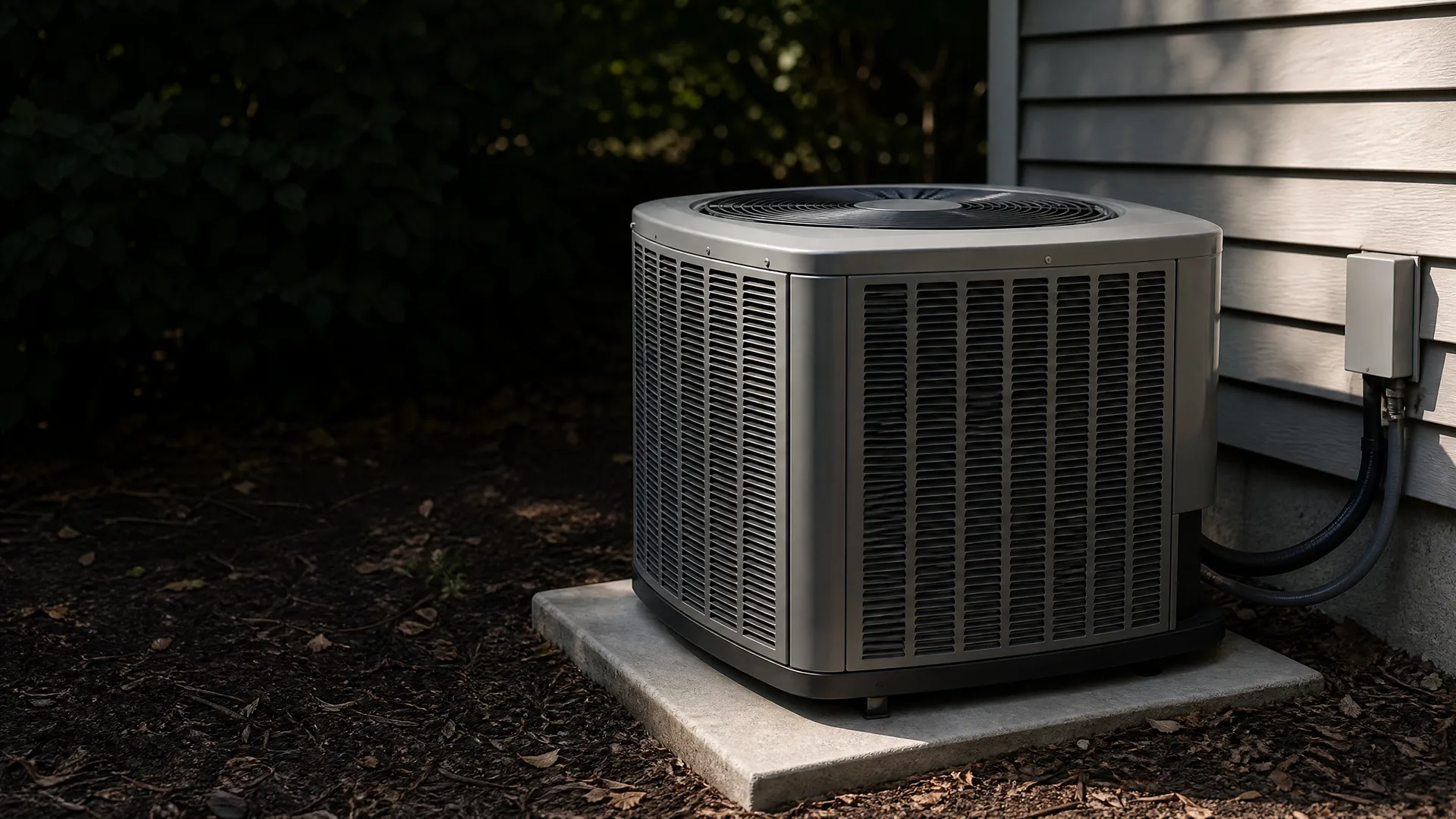
An outdoor air conditioner condenser unit on a concrete pad beside a house with horizontal lap siding, with an electrical disconnect box and conduit on the wall and dark mulch and shrubs around it.

Skip calling around

Step 1 of 3: Equipment