




An outdoor air conditioning condenser unit on a concrete pad beside a house with horizontal siding, with an electrical disconnect box on the wall and shrubs to the right in low evening light.

A local pro for your air conditioner repair

Why your AC outdoor fan isn't spinning in Minnesota

Your outdoor unit sits there doing nothing while the house warms up. Could be the capacitor, the fan motor itself, or a breaker that tripped and didn't trip back. This page walks through why the fan outside won't turn even when the system inside is calling for cooling. Once you know what's going on, you can get matched with a contractor who'll follow up with you directly.

Get matched

A capacitor that's gone weak is the most common reason an outdoor fan won't turn. It gives the fan motor the jolt it needs to start spinning, and once it wears out the motor just hums or sits still. The motor itself can fail too, especially after years of running through Minnesota summers, and a breaker that tripped without you noticing will cut power to the whole unit. Less often, a stuck relay or a bad capacitor on the compressor side keeps the fan from getting a signal at all. None of this is something to leave alone. If the fan isn't moving air, the system can't dump heat outside, and that backs up pressure inside the unit in a way that can damage the compressor if it runs long enough. Shut the system off at the thermostat until someone can look at it.

  1. The thermostat calls for cooling and the compressor switches on.

  2. The capacitor should send a jolt to start the fan motor.

  3. A weak capacitor leaves the motor humming without turning.

  4. A failed motor or tripped breaker can stop it the same way.

A smiling man in a dark navy sweater sits on a light sofa in a living room, with a glass bowl of popcorn on a wooden coffee table and bookshelves behind him.
A smiling man in a dark green sweater sits on a tan leather sofa in a dimly lit living room, with a bowl of popcorn in the foreground and a kitchen area blurred behind him.
A smiling middle-aged man in a dark shirt sits on a gray sofa in a living room, with a bowl of popcorn on a side table and shelves, a window and kitchen area behind him.
A smiling bearded man in a dark gray t-shirt sits on a gray couch in a living room, with a large glass bowl of popcorn on a wooden table in the foreground.
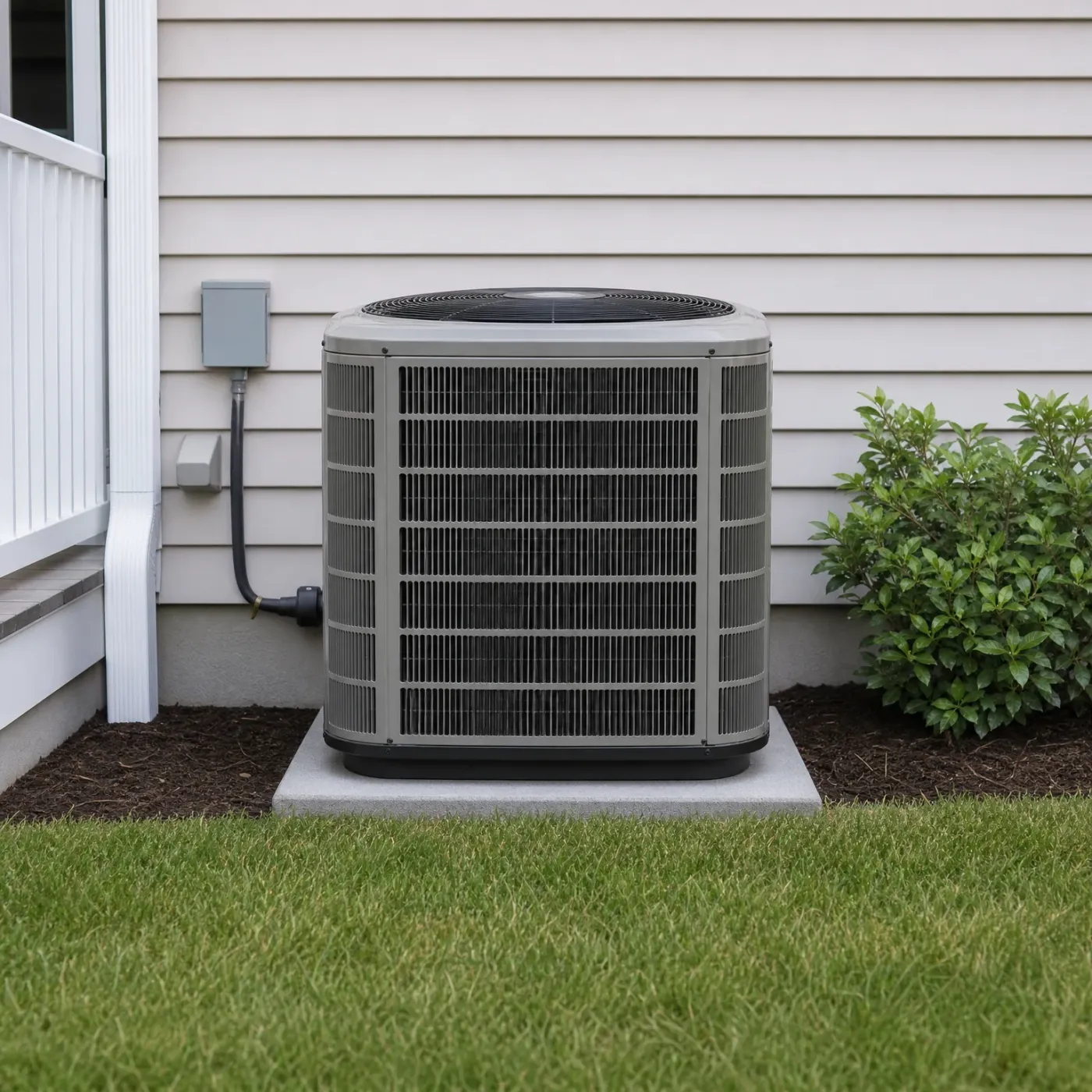
An outdoor air conditioning condenser unit on a concrete pad beside a house with horizontal lap siding, with a gray electrical disconnect box and conduit on the wall, mulch bed and shrub to the right, and mown grass in the foreground.

Running the way it should

The fan spins, the coil stays clear, and air moves through it. A unit like this on its pad next to the house is doing its job quietly, pulling heat out of the air and sending cool air back inside without any strain you'd notice from the yard.
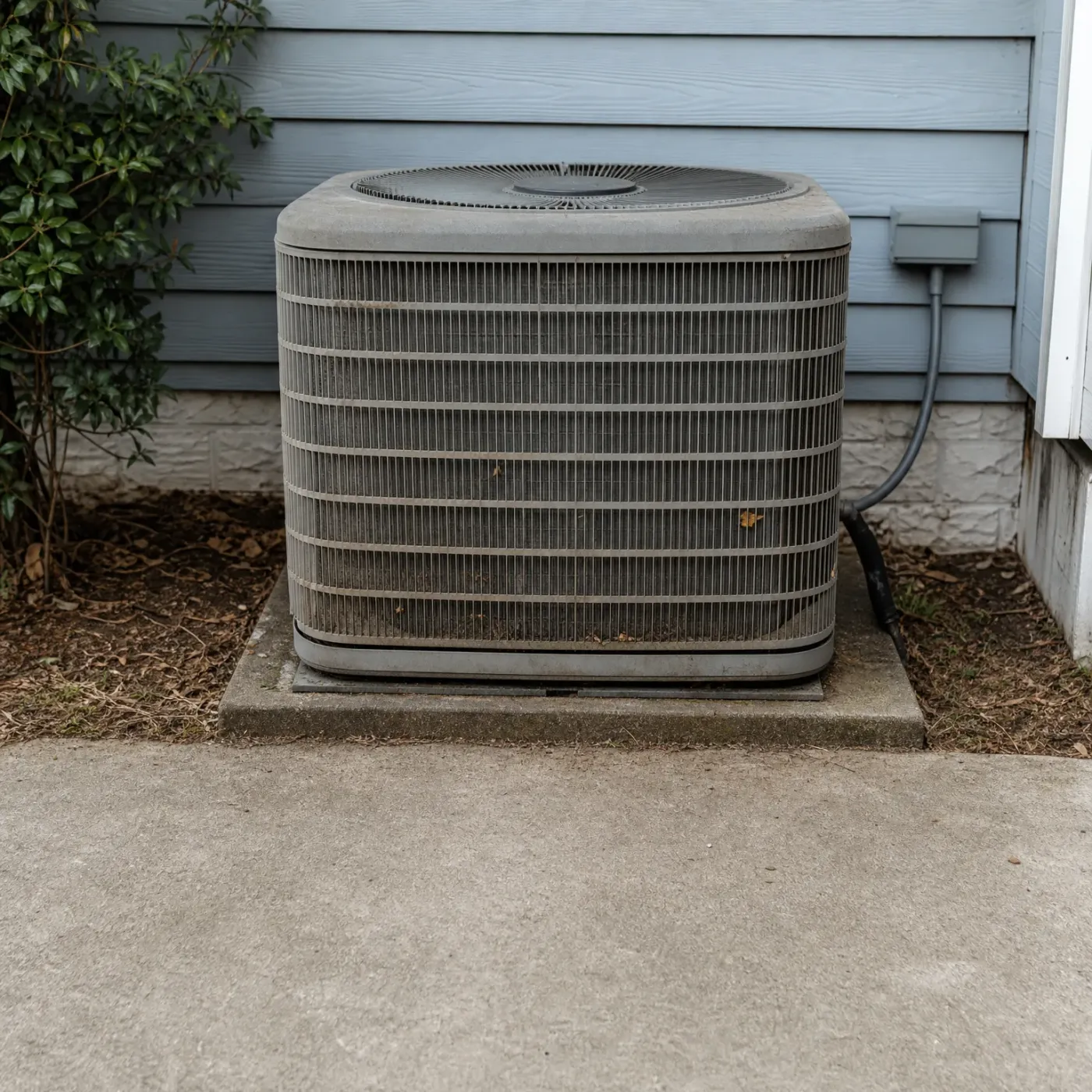

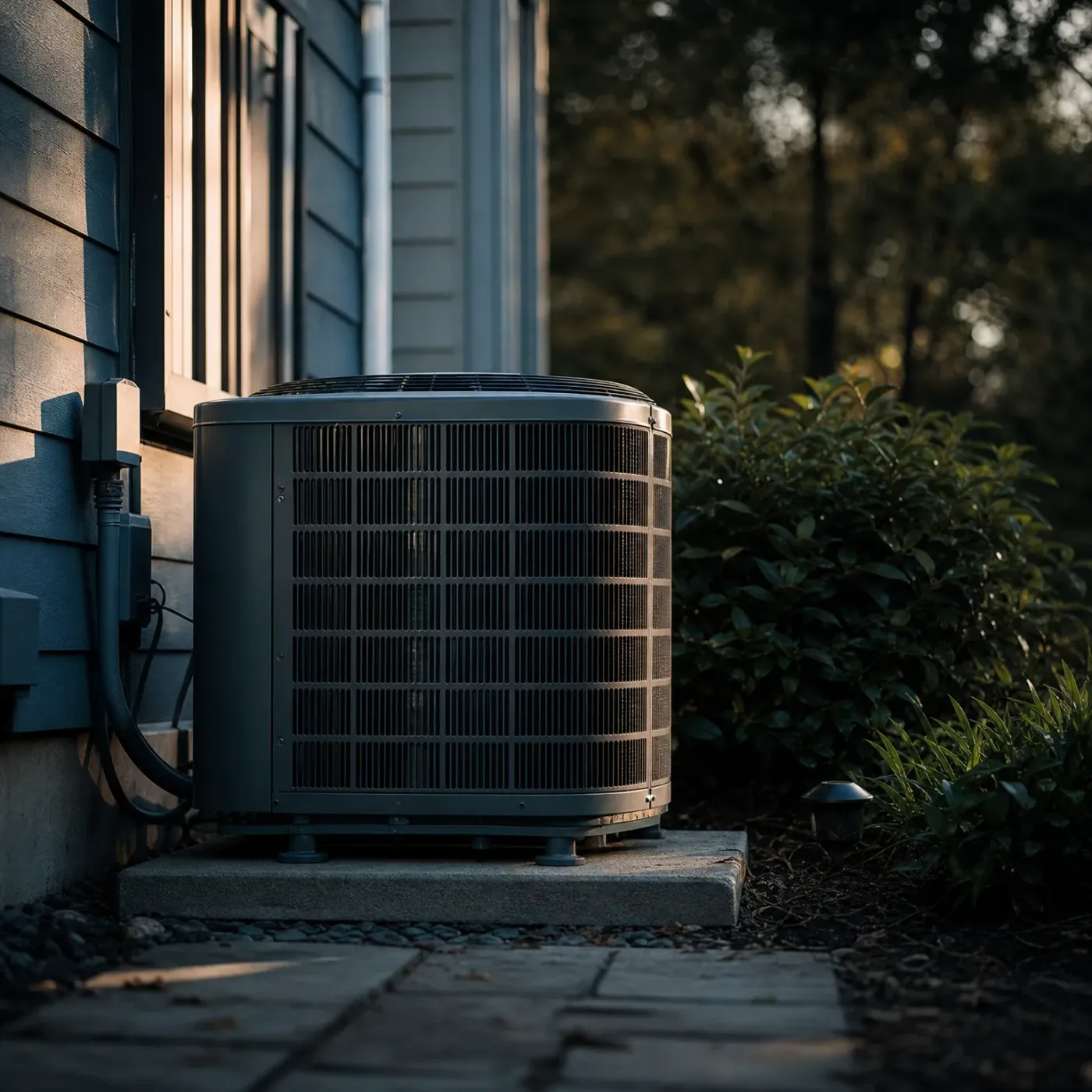
An outdoor air conditioning condenser unit on a concrete pad beside a house with light blue horizontal siding, with a shrub to the left and a conduit and disconnect box on the wall to the right.

Choked with dust and debris

The coil guards on this one are caked over. When dust builds up like that, air can't move through the coil the way it needs to, and the motor behind it works harder for less cooling. A fan that won't turn at all often has a electrical problem on top of it, not just dirt.

A man seen from behind raises his hand to wave at a woman standing in the open front doorway of a single-story house with gray shingle siding, white columns and a gabled porch entry.

What a stalled fan costs your house in July

With the fan not turning, the coil outside stops shedding heat and the compressor keeps running against it anyway. That compressor isn't built to work that way for long. Left alone, a bad capacitor or a seized motor turns into a bad compressor, and that's a different repair entirely. Meanwhile the house just doesn't cool. You'll feel it first in whichever room gets the most afternoon sun.

This isn't a fix to leave for the weekend, especially once a Minnesota summer evening stays warm into the night. Once you send in what's going on with your unit, finding the right person for it stops being on you. A contractor who handles this kind of call gets your information and follows up, and you can get back to the parts of your evening that matter more than standing over an outdoor unit wondering if it's the capacitor or the motor.

A gray upholstered sofa with a textured cushion sits beside a dark round side table holding a vase of green foliage, with a table lamp and sheer-curtained window behind.
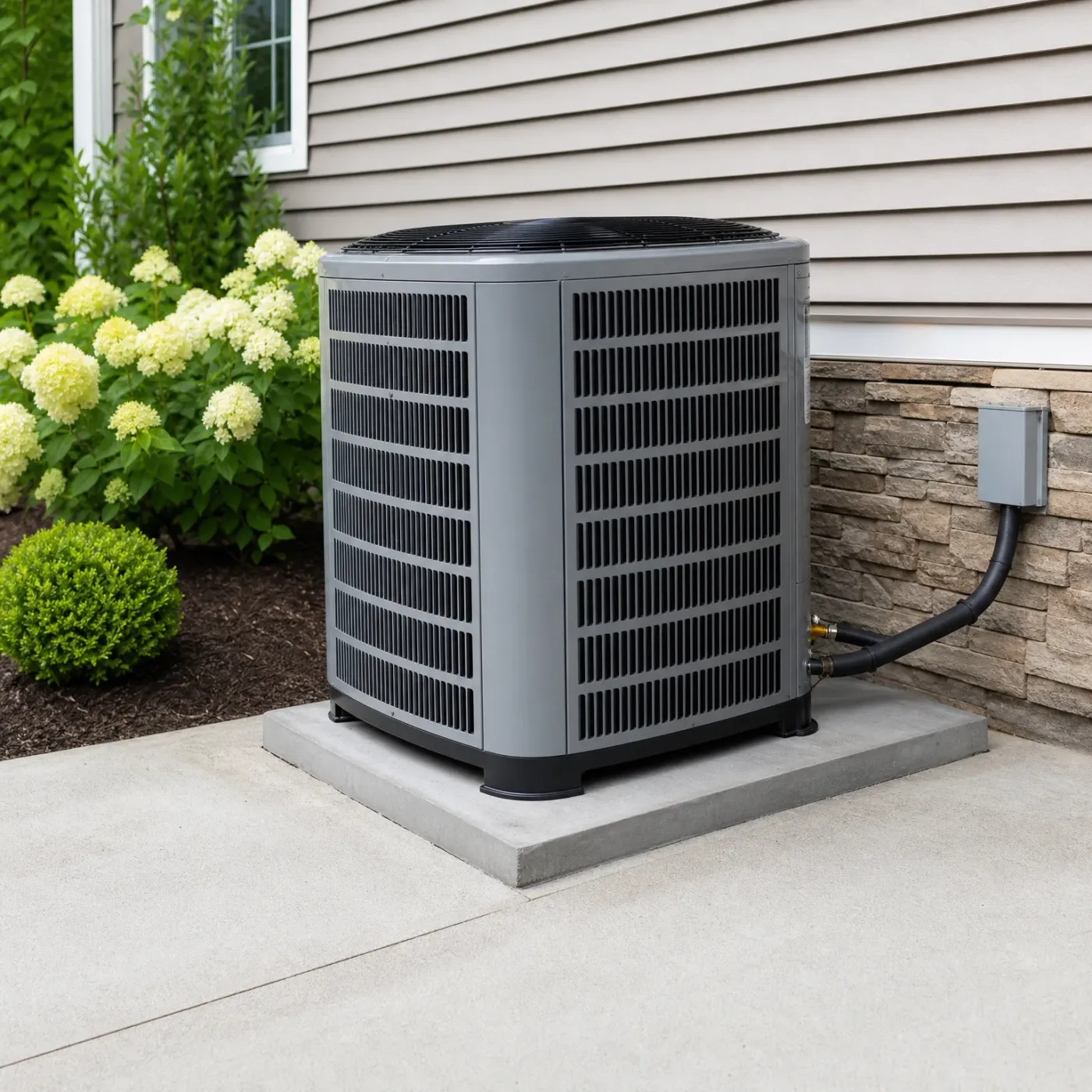
A gray outdoor air conditioning condenser unit on a concrete pad beside a house with horizontal siding and a stone veneer base, with refrigerant line and electrical disconnect box on the wall and flowering shrubs to the left.

Clean and clear

The fins are open and the unit sits clear of mulch and shrubs on both sides. Air pulls through the coil without fighting anything, so the fan motor and capacitor inside aren't working harder than they have to. A unit kept like this still fails eventually, just not for this reason.

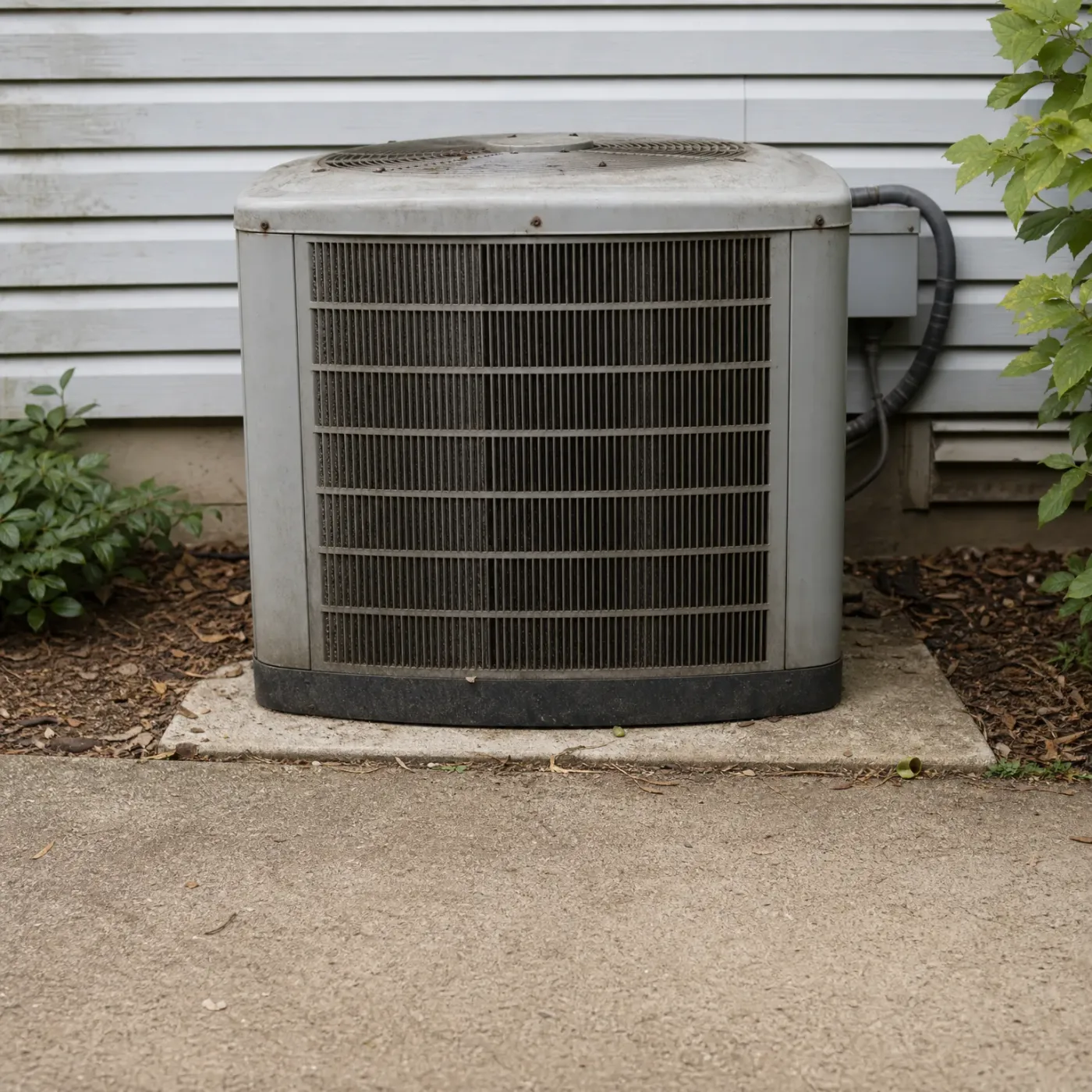
An outdoor air conditioner condenser unit on a concrete pad beside a house with light gray horizontal siding, with mulch and green shrubs on either side and a concrete walkway in the foreground.

Caked and crowded

Years of dirt have packed into the fins, and the casing shows it. A coil caked like this makes the fan and compressor strain to move the same air, which wears out a capacitor faster. If the fan outside has stopped, a unit in this shape was already running on borrowed time.

A woman with dark hair in a bun reclines on a sofa with her eyes closed, wrapped in a cream fleece blanket, a closed blue hardcover book resting in front of her, with a lit lamp and a vase of dried flowers in the background.
A smiling bearded man in a navy sweater sits at a candlelit dinner table with a glass of red wine, a bowl of salad, and plates of food in the foreground.

Get the right pro for your air conditioner

Once you send the form, finding a pro is off your list.

Sending the form costs nothing.

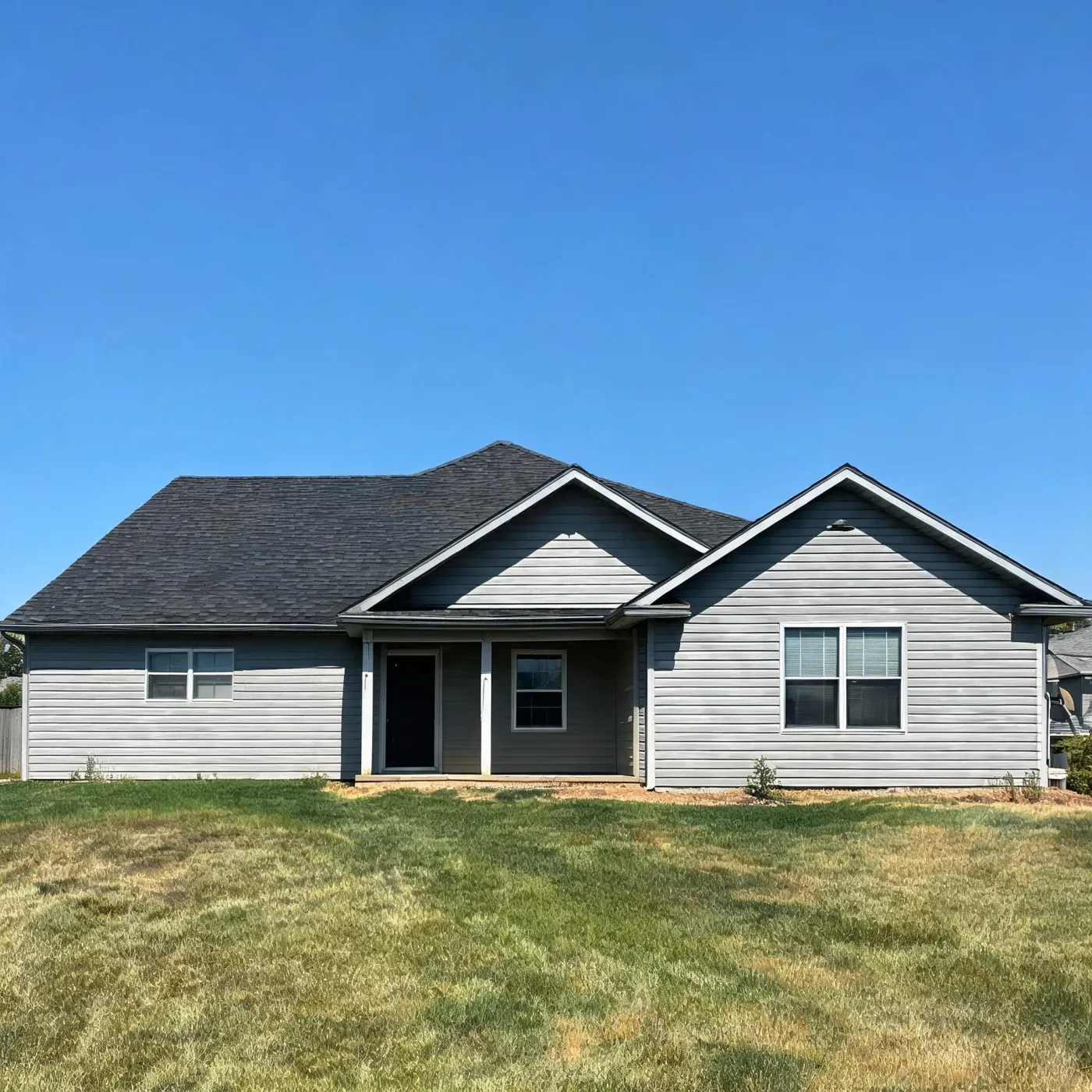
Single-story house with gray horizontal lap siding, dark shingled gable roof, a small covered front porch with a dark door, and windows, set behind a patchy green and brown lawn under a clear blue sky.

Minnesota summers don't carry much weight in the air. The dew point averages 59°F across June, July and August, state climate data shows, which is dry as these things go. That matters for the fan sitting still outside. In heavier air, a stalled fan lets heat build fast and a struggling compressor overheat sooner. Here, the lighter air buys a little time, but not much. The coil outside still has no way to shed heat with the fan dead, and the compressor inside keeps running against it regardless of how dry the day feels. You'll notice the house creeping up a few degrees before anything sounds wrong.

NASA POWER T2MDEW county cells weighted by homes

Is your house slowly losing the battle against the heat?

You probably noticed the house holding at a temperature a few degrees above where the thermostat is set, then slipping further behind as the afternoon goes on. Walk outside and the unit is quiet, no hum, no blade turning, maybe just a faint buzz from inside the cabinet. Upstairs rooms feel it first. The air coming out of the vents is running but it isn't cold, because the system is pulling in heat without any way to get rid of it outside. Left running like that, the compressor is working against heat it can't shed, and that's hard on a part that's expensive to replace compared to a fan motor or a capacitor.

A gray outdoor air conditioner condenser unit on a concrete pad beside a house with horizontal siding and a light stucco wall, with a disconnect box and refrigerant lines on the wall and a shrub and mulch bed at left.

What the capacitor actually does

A run capacitor holds a charge and releases it to the fan motor the instant the thermostat calls for cooling. That push is what gets the blades moving. Without it, the motor has nothing to start it turning, even though power is reaching it. That's why you can sometimes hear a faint hum from the unit outside while the blades stay dead still. The hum is the motor trying to start with no push behind it.

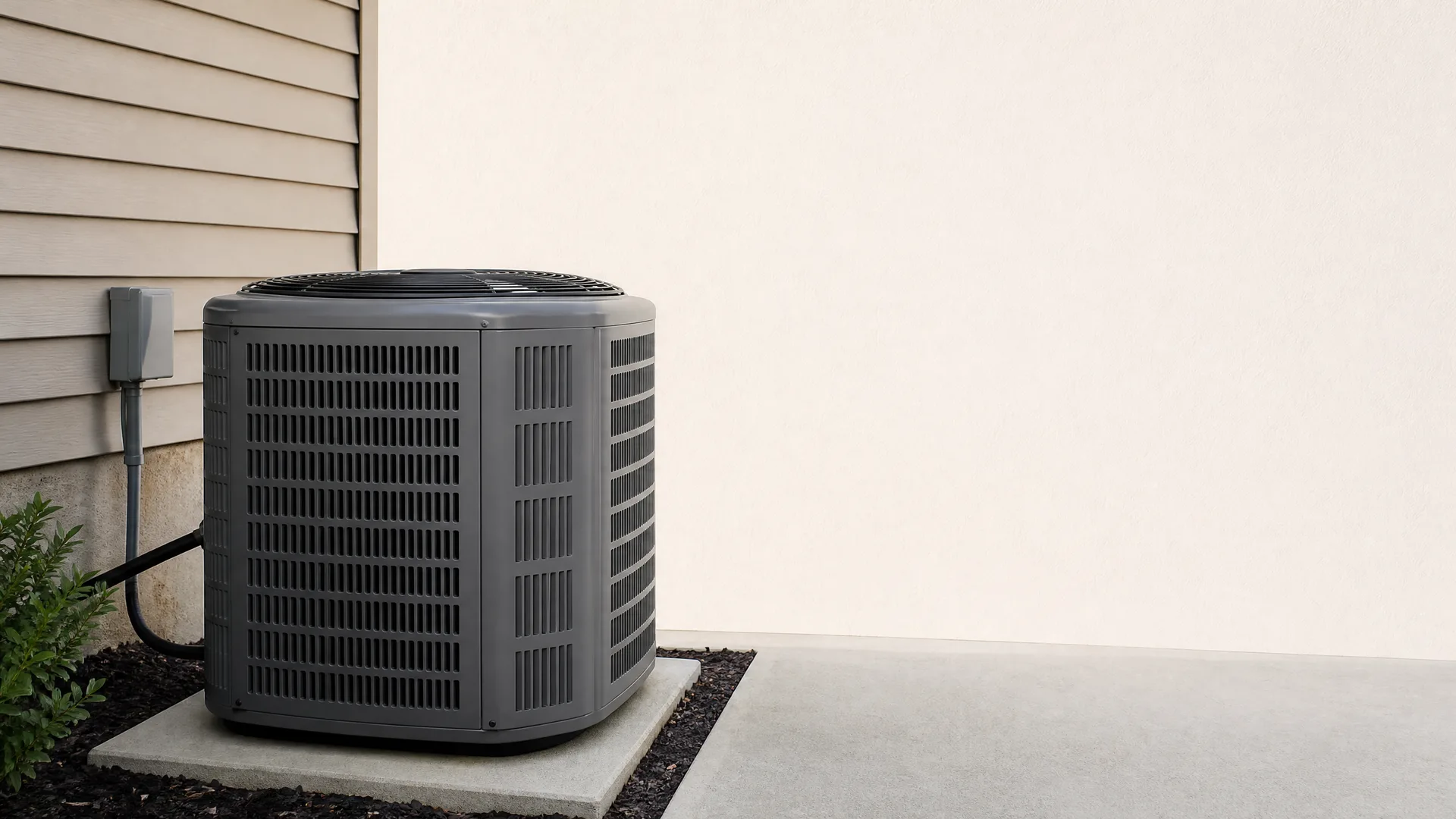
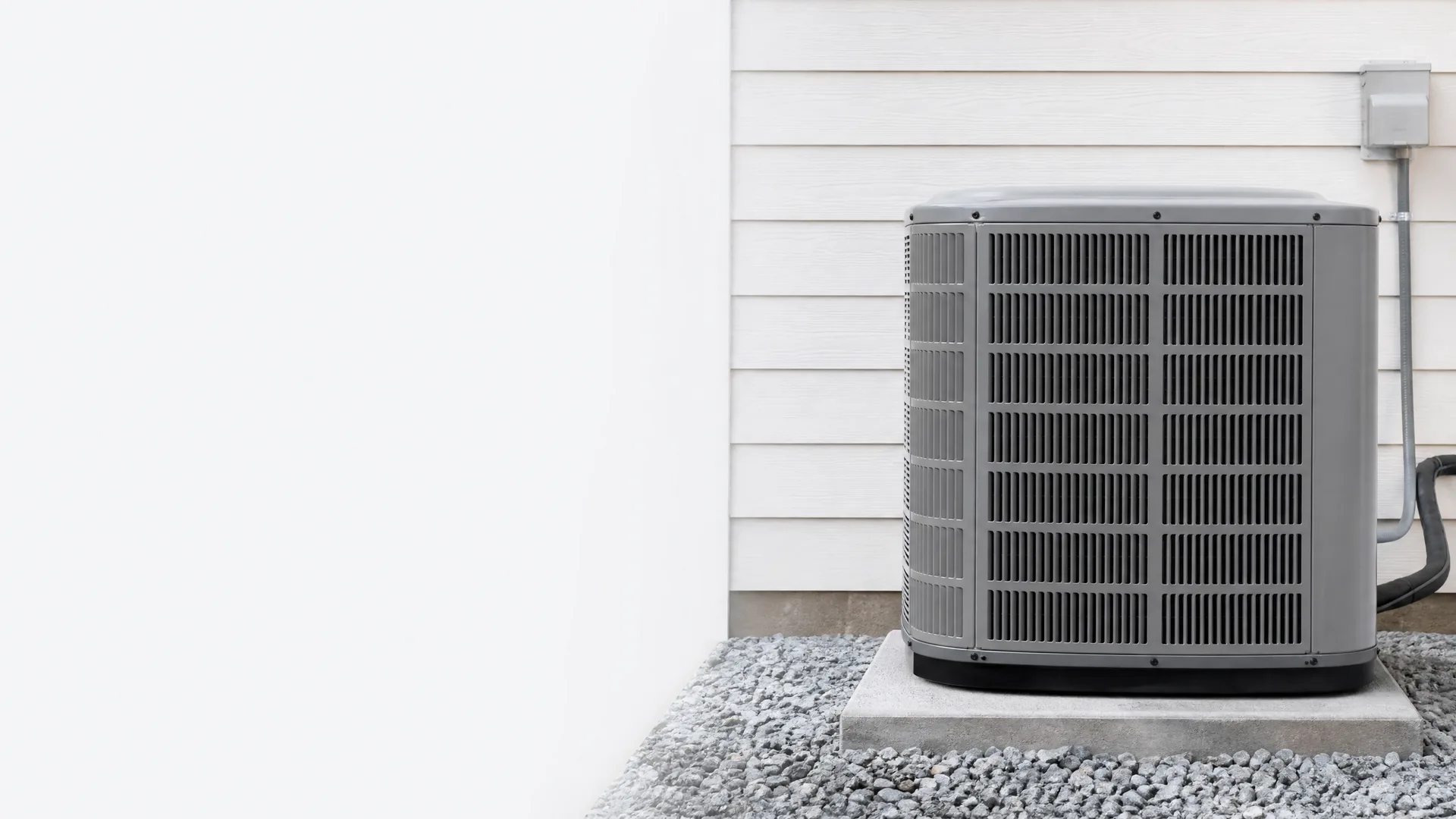
A gray outdoor air conditioning condenser unit on a concrete pad surrounded by gravel, next to a white horizontal-lap-sided house wall with an electrical box and conduit, against a blank white background on the left.

Why the motor fails on its own

Fan motors wear out from the inside, usually the bearings. Years of spinning in heat and weather wear down the bearings until they bind up or seize. A motor like this can draw power and still not turn, same as a bad capacitor, so the symptom outside looks identical either way. The difference shows up on a meter, not to the eye, which is why this one calls for someone who can test it rather than guess.

Power costs 15.83 cents per kilowatt-hour statewide

Power here runs 15.83 cents a kilowatt-hour. That's what a stalled fan costs you directly: the compressor keeps drawing current trying to cool against a hot coil, and you're paying that rate for a unit that isn't actually lowering the temperature in your house.

EIA-861 2025 statewide residential average

Why the fan stopped, and what's next

  • A stalled outdoor fan usually traces back to a weak capacitor, a failed motor, or a tripped breaker that didn't reset.
  • The compressor keeps running even when the fan doesn't, and it isn't built to work against a hot coil for long.
  • Minnesota's dry summer air gives you a little more room than a humid climate would, but a stalled fan still lets the house fall behind.
  • Checking the capacitor or motor yourself means opening an electrical enclosure that carries a charge even with the power off.
  • Once a contractor takes this on, you're not the one tracking down parts or figuring out which component failed.
  • The fix is usually a single part: the capacitor, the motor, or the breaker, not the whole unit.

A fan that won't turn almost always comes down to one of three things: a capacitor that's lost its charge, a motor that's seized or burned out, or a breaker that tripped without you noticing. None of those mean the unit is finished. They mean one part failed, and that part gets replaced. The compressor doesn't know the difference between a stalled fan and a working one, so it keeps running regardless, pushing against a coil that has no way to shed heat. That's the part that can turn a cheap fix into an expensive one if it sits too long. Minnesota's dry summer air buys you a little time compared to a muggy climate, since the house won't fall behind as fast, but it still falls behind. The thermostat keeps calling for cooling that isn't coming. Opening up the unit to check the capacitor yourself isn't worth the risk. Even with the power off, a capacitor can hold a charge, and the enclosure around it isn't something to go into without knowing what you're looking at. A contractor who does this work knows within a few minutes which part failed and has the replacement on hand or knows where to get it fast. Once you've sent the request, that search is off your plate. You're not calling around or reading reviews at ten at night trying to figure out who answers the phone. Someone else is now doing that part.

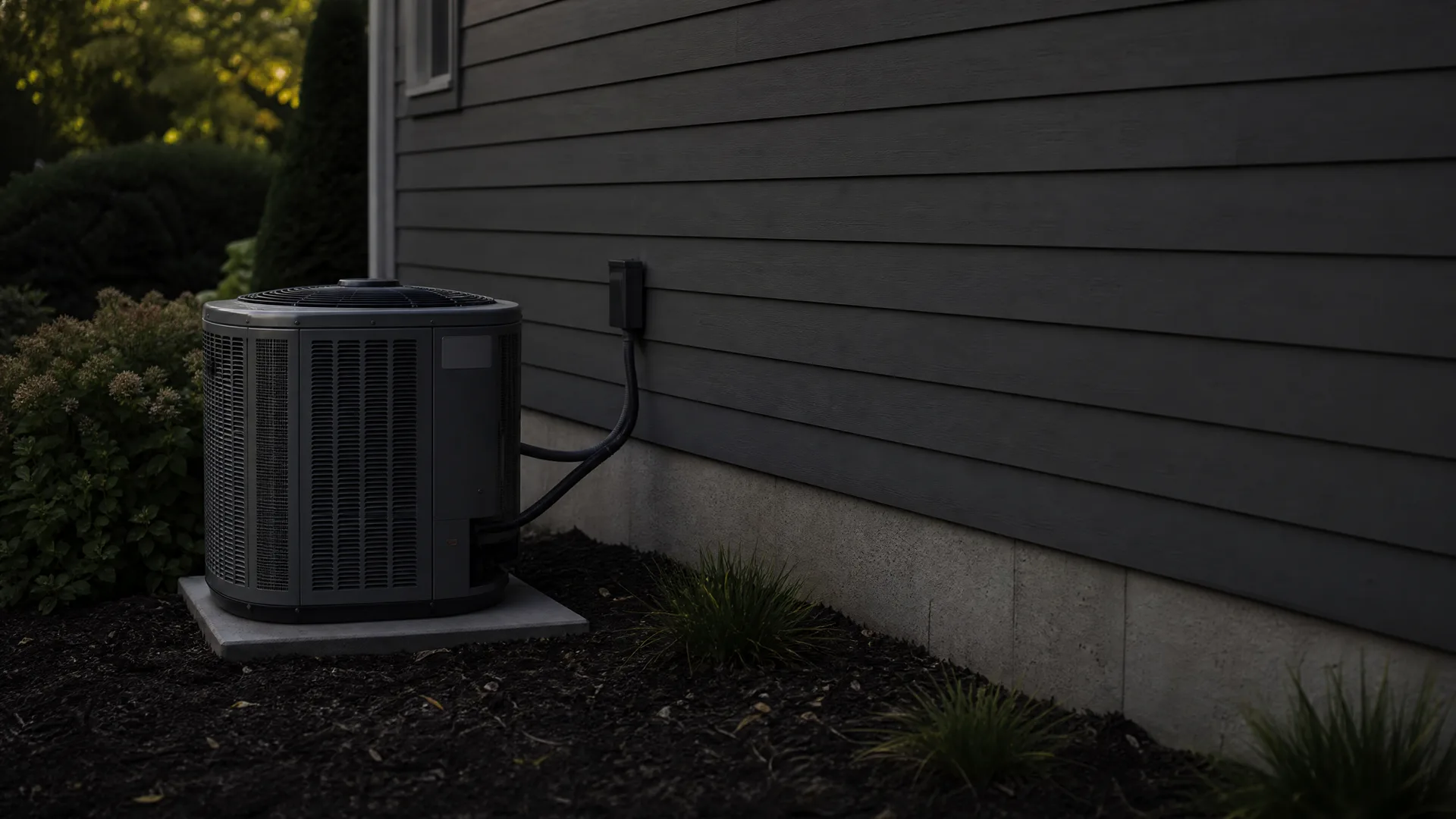
An outdoor air conditioner condenser unit on a concrete pad beside a dark horizontal-lap sided house, with mulch beds, shrubs and ornamental grasses nearby.

A pro who works on air conditioners

After you send the request, you're done searching.

Step 1 of 3: Equipment