Tell us about the job
Takes about a minute. No obligation.

A contractor coming out to diagnose a central AC repair in Wright County has to do more than find the broken part. They have to decide what broke it. 173 severe weather events were recorded in Wright County, Minnesota between 2015 and 2024. At that rate, severe weather is a standing feature of the operating environment here, which means compressor wear, capacitor failure, and contactor damage all carry two possible explanations. A contractor who skips establishing which one produces a repair that fixes the symptom and misses the cause.
Stock built by the mid-nineties has cycled through enough equipment by now that the house itself rarely explains why a system fails. Half the homes in Wright County, Minnesota were built in 1995 or earlier (2020-2024 ACS 5-year). What that means for a repair call is specific: once a contractor opens the unit, the question is whether the components it takes are still in production. Capacitors, contactors, control boards for systems that old can be discontinued, hard to source, or available only through specialty suppliers. The ductwork is not new, but it is not what decides how a repair goes. The opened equipment is.
The Parts of a Central AC a Contractor Checks First
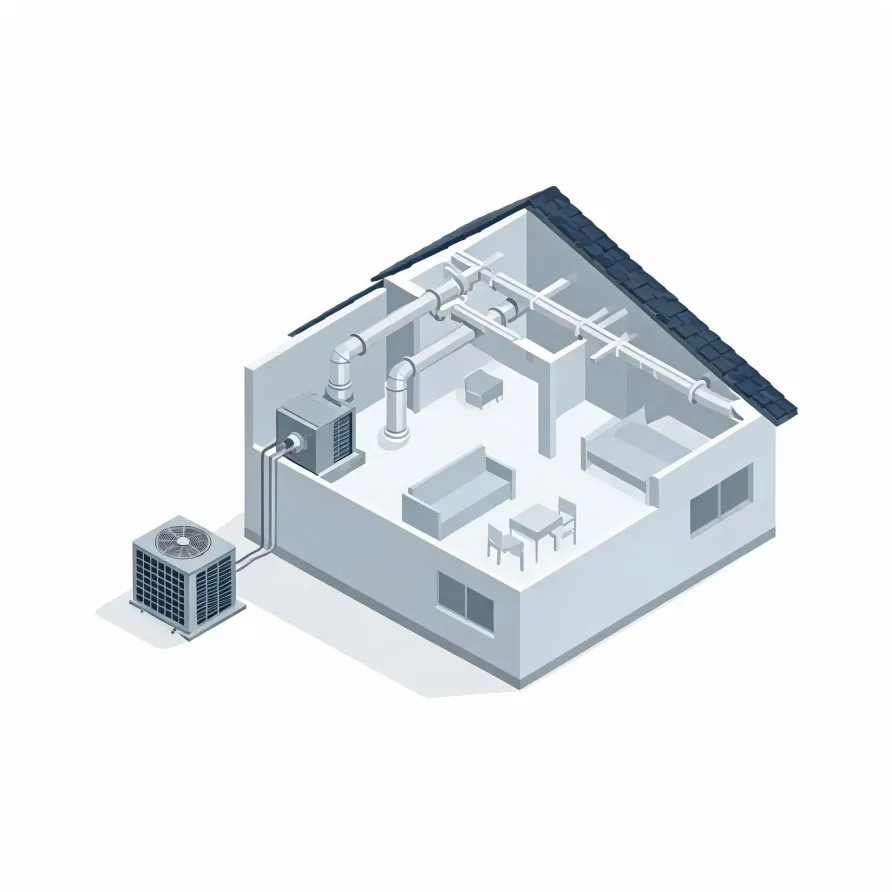
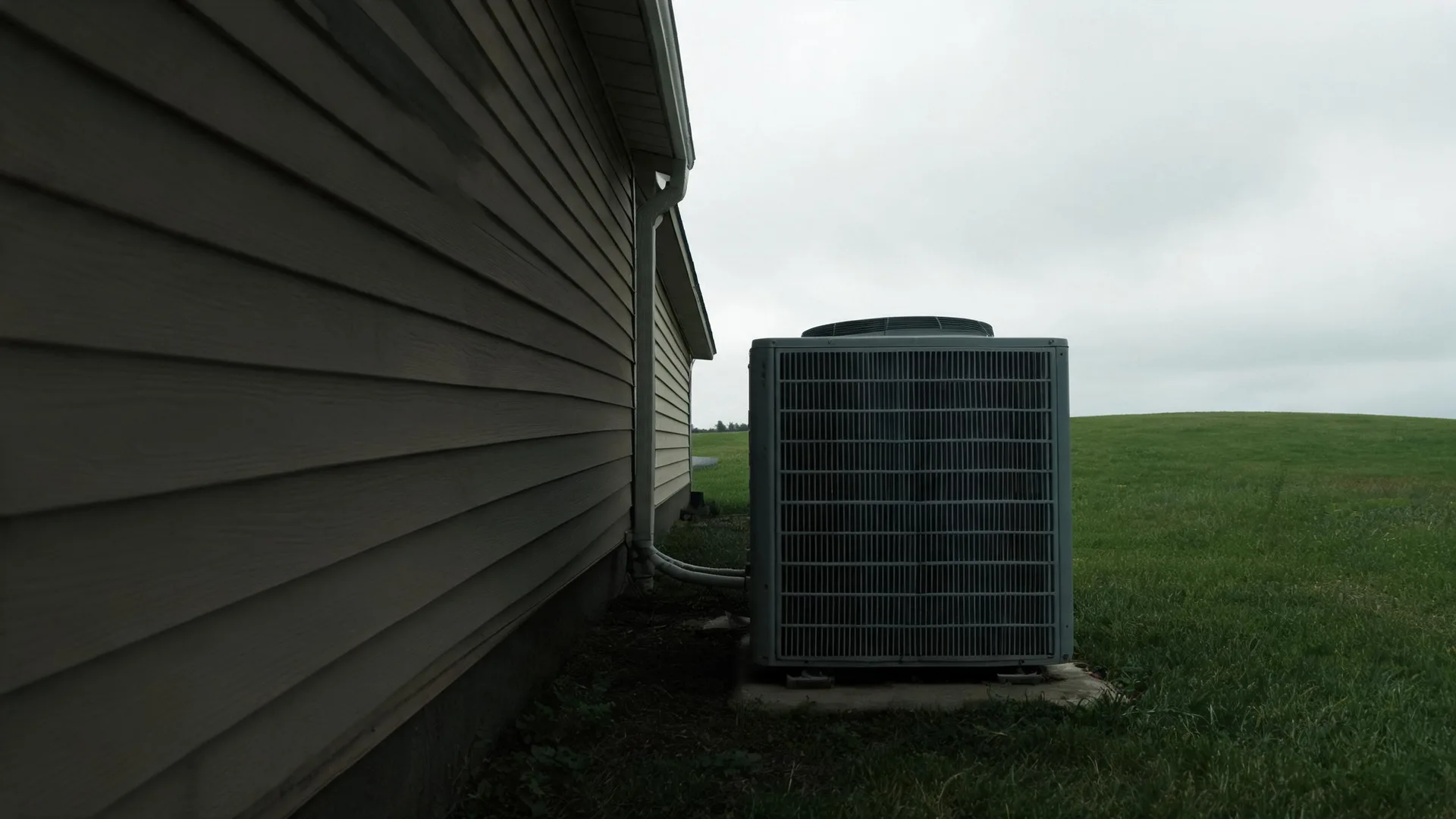
The outdoor condenser unit sits outside the house, usually on a concrete pad beside the foundation, and it holds the compressor and condenser coil. These are the parts a contractor reaches first when a system stops cooling. A failed compressor or a coil choked with debris are common starting points for a diagnosis.
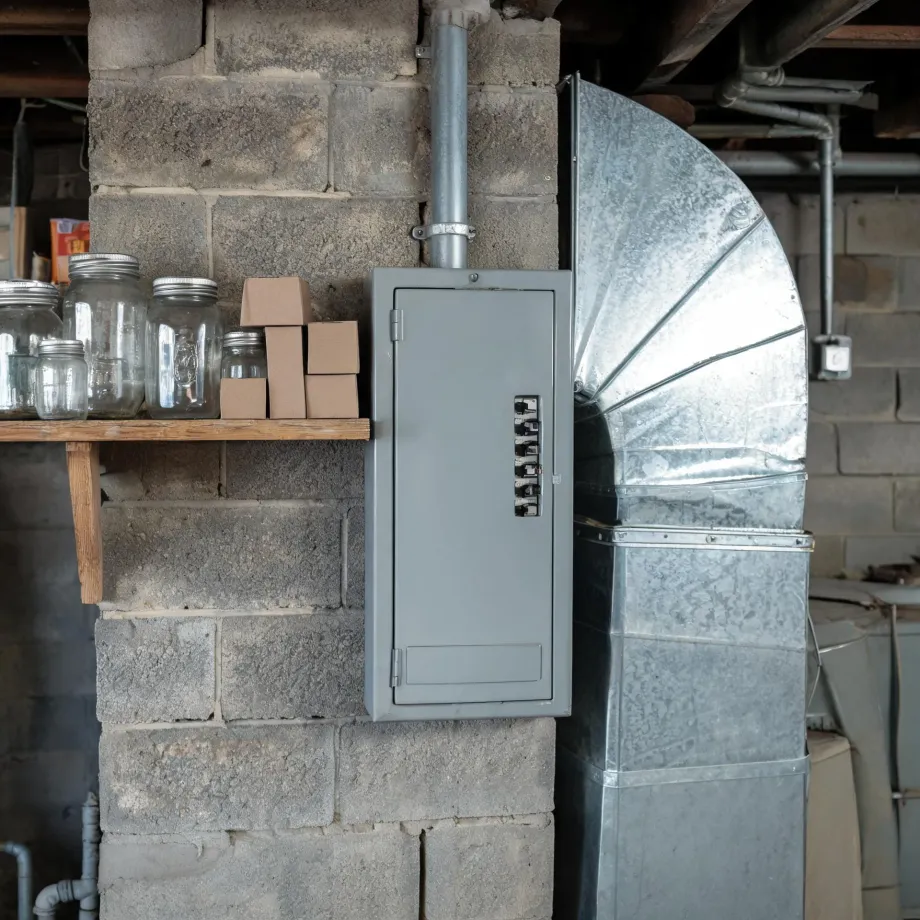
Inside the house, the air handler or furnace cabinet holds the evaporator coil and the blower that moves air across it. The refrigerant line set runs between the two units, and the thermostat on the wall tells the whole system when to run. A contractor checks the evaporator coil for ice or dirt, tests the blower motor, inspects the refrigerant lines for leaks, and confirms the thermostat is reading and signaling correctly.
The drawing shows a typical layout, and a licensed contractor determines what applies to your specific system and home.
Find a contractor in Wright CountyWright County, Minnesota, by the numbers
173 severe weather events were recorded in Wright County, Minnesota between 2015 and 2024.
NOAA National Centers for Environmental Information, Storm Events Database, bulk CSV export, events 2015-01-01 through 2024-12-31.Half the homes in Wright County, Minnesota were built in 1995 or earlier (2020-2024 ACS 5-year).
U.S. Census Bureau, 2020-2024 American Community Survey 5-Year EstimatesWright County, Minnesota holds 57,416 housing units (2020-2024 ACS 5-year).
U.S. Census Bureau, 2020-2024 American Community Survey 5-Year EstimatesOwners occupy 84.1% of the occupied homes in Wright County, Minnesota (2020-2024 ACS 5-year).
U.S. Census Bureau, 2020-2024 American Community Survey 5-Year EstimatesCodes & Standards Governing Central AC Repair in Wright County, Minnesota10 rules & standards
What HVAC Repair Looks Like in Wright County
Split-system central air conditioners rated below 45,000 Btu/h manufactured on or after January 1, 2023 must meet a federal minimum of 13.4 SEER2.
Split-system central air conditioners rated at or above 45,000 Btu/h manufactured on or after January 1, 2023 must meet a federal minimum of 13.4 SEER2.
Split-system central air conditioners manufactured between January 1, 2015 and December 31, 2022 had to meet 13 SEER, the metric that preceded SEER2.
Single-package central air conditioners manufactured on or after January 1, 2023 must meet a federal minimum of 13.4 SEER2.
Space-constrained central air conditioners manufactured on or after January 1, 2023 must meet a federal minimum of 11.7 SEER2.
Federal efficiency standards for split-system central air conditioners and heat pumps are set on each certified combination of outdoor unit and indoor coil rather than on the outdoor unit alone.
Residential and light commercial air conditioning and heat pump systems assembled in the field, including mini-splits and unitary systems, may not be installed on or after January 1, 2025 using a refrigerant with a global warming potential above 700.
A field-assembled system whose specified components were all manufactured or imported before January 1, 2025 carries no installation compliance date under the refrigerant restrictions and may still be installed.
Licensing and Legal Requirements in Wright County, Minnesota
Minnesota defines a mechanical contractor as a business that installs, repairs or maintains heating, ventilating, cooling or refrigeration systems — the definition that carries the exemption from the residential contractor licence.
Minnesota's residential contractor licence does not reach HVAC work: the licensing section carries its own exemption list, and a mechanical contractor is exempt from the licence requirement by name.
Severe Weather Events in Wright County
Weather in Wright County puts real stress on central AC systems, cycling them hard through heat and humidity and pushing components toward failure faster than calendar age alone would predict. Repair needs here follow local conditions, and the record below shows what those conditions look like.
173 severe weather events, 2015–2024. Source: NOAA National Centers for Environmental Information, Storm Events Database.