Tell us about the job
Takes about a minute. No obligation.

A central AC repair in Stearns County starts with a question a contractor cannot skip: what has this system been running against, and for how long. 203 severe weather events were recorded in Stearns County, Minnesota between 2015 and 2024. At that rate, severe weather is part of the normal load on every system in this county, and components like capacitors, contactors, and condenser fan motors carry that load directly. When one of them fails, a contractor has to establish whether the weather history drove the failure before they can say whether the rest of the system is sound. A unit that has worked through that kind of seasonal pressure warrants a closer look than the symptom alone would suggest.
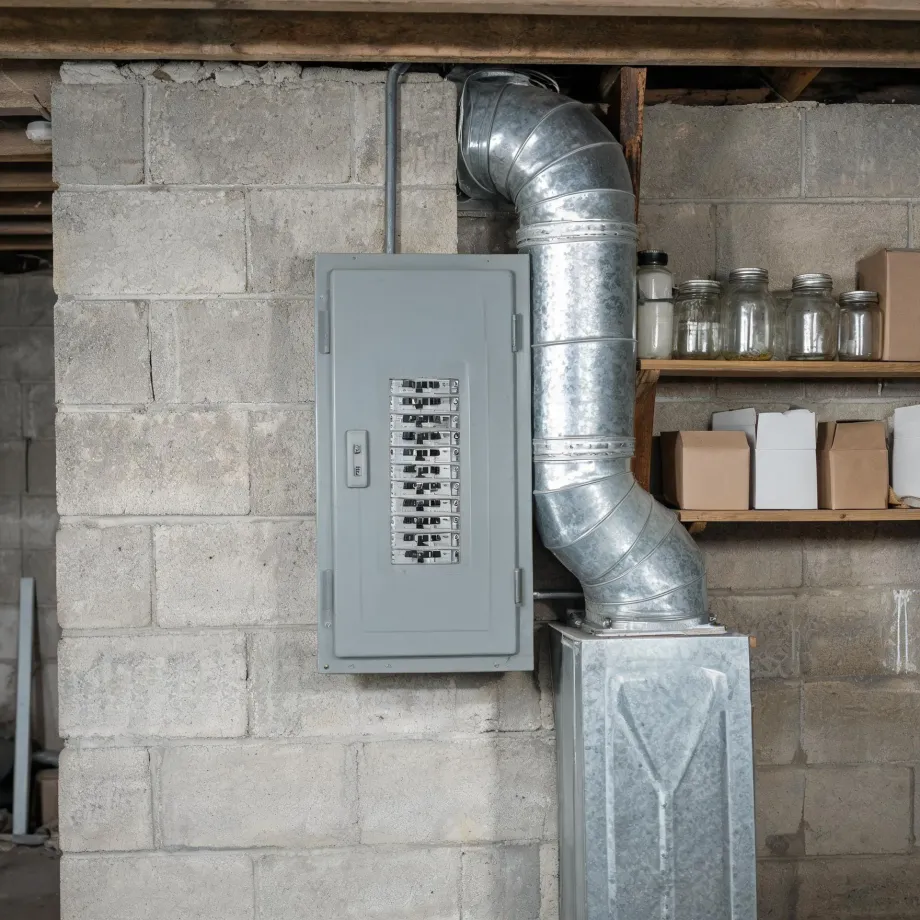
Ductwork in a house built for earlier equipment often runs undersized runs, gaps at the joints, and insulation that has long since compressed or separated. Half the homes in Stearns County, Minnesota were built in 1985 or earlier (2020-2024 ACS 5-year). A central AC system that has been adapted into that kind of shell can throw fault codes or freeze up for reasons that have nothing to do with the refrigerant circuit or the electrical components a contractor pulls first. When a technician opens the unit and the equipment itself checks out, the duct system is where the diagnosis moves next.
The Parts of a Central AC a Contractor Checks During a Repair
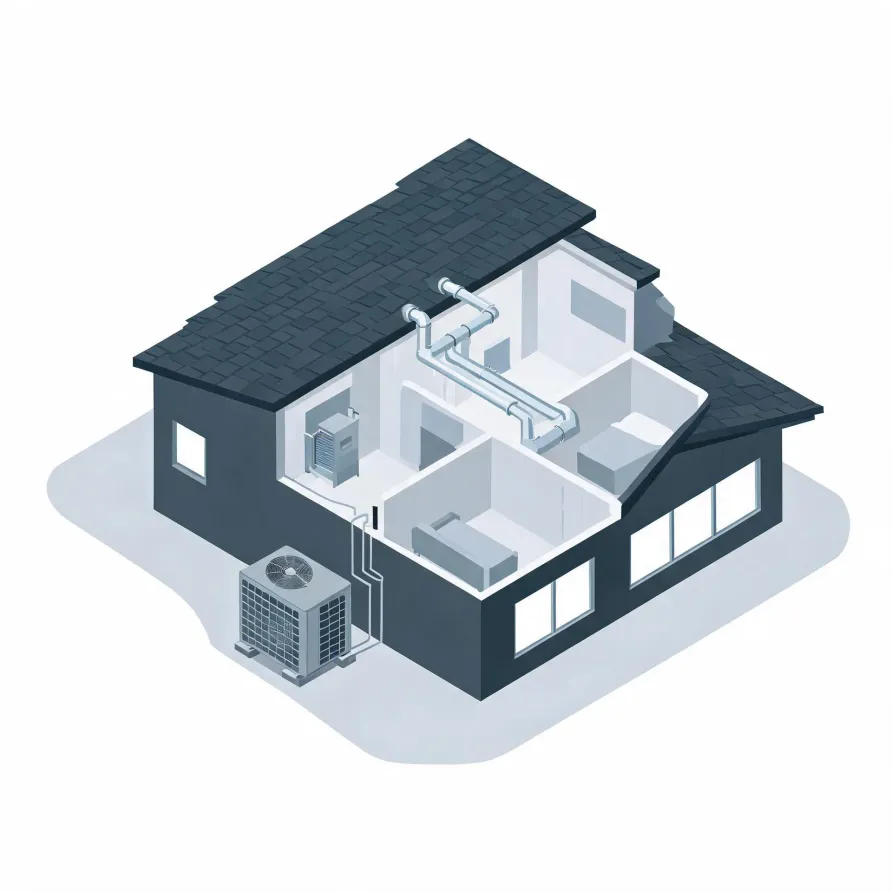
The outdoor condenser unit sits outside the house on a concrete pad and is the piece most homeowners recognize first. Inside it, the compressor pressurizes refrigerant and the condenser coil and fan release heat to the outside air. When the system runs but cools poorly, or shuts off without warning, a contractor starts here.
Inside the house, the air handler or furnace cabinet holds the evaporator coil and the blower that moves air across it. The refrigerant line set connects the two units, and the thermostat tells the whole system when to run. A failed blower motor, a frozen evaporator coil, a worn contactor in the outdoor unit, or a faulty thermostat signal can each stop a system cold.
The drawing shows a typical layout, and a licensed contractor determines which components apply and what the repair requires in your specific home.
Find a contractor in Stearns CountyStearns County, by the record
203 severe weather events were recorded in Stearns County, Minnesota between 2015 and 2024.
NOAA National Centers for Environmental Information, Storm Events Database, bulk CSV export, events 2015-01-01 through 2024-12-31.Half the homes in Stearns County, Minnesota were built in 1985 or earlier (2020-2024 ACS 5-year).
U.S. Census Bureau, 2020-2024 American Community Survey 5-Year EstimatesStearns County, Minnesota holds 66,625 housing units (2020-2024 ACS 5-year).
U.S. Census Bureau, 2020-2024 American Community Survey 5-Year EstimatesOwners occupy 67.9% of the occupied homes in Stearns County, Minnesota (2020-2024 ACS 5-year).
U.S. Census Bureau, 2020-2024 American Community Survey 5-Year EstimatesCodes & Standards Behind Central AC Repair in Stearns County, Minnesota10 sourced rules and standards
What happens when the contractor comes out
Split-system central air conditioners rated below 45,000 Btu/h manufactured on or after January 1, 2023 must meet a federal minimum of 13.4 SEER2.
Split-system central air conditioners rated at or above 45,000 Btu/h manufactured on or after January 1, 2023 must meet a federal minimum of 13.4 SEER2.
Split-system central air conditioners manufactured between January 1, 2015 and December 31, 2022 had to meet 13 SEER, the metric that preceded SEER2.
Single-package central air conditioners manufactured on or after January 1, 2023 must meet a federal minimum of 13.4 SEER2.
Space-constrained central air conditioners manufactured on or after January 1, 2023 must meet a federal minimum of 11.7 SEER2.
Federal efficiency standards for split-system central air conditioners and heat pumps are set on each certified combination of outdoor unit and indoor coil rather than on the outdoor unit alone.
Residential and light commercial air conditioning and heat pump systems assembled in the field, including mini-splits and unitary systems, may not be installed on or after January 1, 2025 using a refrigerant with a global warming potential above 700.
A field-assembled system whose specified components were all manufactured or imported before January 1, 2025 carries no installation compliance date under the refrigerant restrictions and may still be installed.
What Stearns County, Minnesota Requires for HVAC Repair
Minnesota defines a mechanical contractor as a business that installs, repairs or maintains heating, ventilating, cooling or refrigeration systems — the definition that carries the exemption from the residential contractor licence.
Minnesota's residential contractor licence does not reach HVAC work: the licensing section carries its own exemption list, and a mechanical contractor is exempt from the licence requirement by name.
Severe Weather Events in Stearns County
Extreme weather puts mechanical stress on central AC systems, running compressors and fans harder and longer than moderate conditions allow. How much of that load a unit carries over its life is a local question, shaped by what the weather in Stearns County actually does.
203 severe weather events, 2015–2024. Source: NOAA National Centers for Environmental Information, Storm Events Database.